When designing or upgrading a system that relies on position sensing, choosing the right type of sensor can have a huge impact on cost, accuracy, and durability. Two of the most commonly used linear position sensors are potentiometric sensors and LVDTs (Linear Variable Differential Transformers). But what exactly sets them apart?
Let’s explore the difference between these two, and help you choose the right one for your application.
🔍 What Are Position Sensors?
Position sensors detect the movement or displacement of an object and convert it into an electrical signal that can be used by control systems in automation, robotics, or industrial machines. They can be based on different sensing principles, including resistive, inductive, capacitive, or optical technologies.
🎛 What is a Potentiometric Position Sensor?
Potentiometric sensors—often called linear or rotary potentiometers—are contact-type sensors that rely on resistive sensing. Inside, a wiper moves across a resistive track, changing the resistance value as the object moves. This change is then interpreted as position.
✅ Pros:
-
Low cost and widely available
-
Simple to integrate
-
Available in multiple form factors (slide pots, rotary pots, trimmers)
-
Great for basic applications and low-budget projects
❌ Cons:
-
Mechanical contact leads to wear and tear
-
Friction causes inaccuracy over time
-
Shorter lifespan in high-use or harsh environments
-
Limited temperature resistance
🧲 What is an LVDT (Linear Variable Differential Transformer)?
An LVDT is a non-contact, electromagnetic position sensor. It consists of a primary coil and two secondary coils, with a movable ferromagnetic core. As the core moves, it alters the voltage difference between the secondary coils, which is then used to calculate position precisely.
✅ Pros:
-
No friction or wear (non-contact operation)
-
Excellent for harsh environments (vibration, extreme temperatures)
-
Highly accurate and reliable
-
Long life, ideal for critical applications
❌ Cons:
-
More expensive
-
Requires signal conditioning electronics
-
Larger in size than potentiometers
🆚 Key Differences at a Glance
| Feature | Potentiometric Sensor | LVDT |
|---|---|---|
| Sensing Method | Resistive (contact) | Electromagnetic (non-contact) |
| Wear & Tear | High | None |
| Accuracy | Moderate | High |
| Cost | Low | High |
| Lifespan | Shorter | Very long |
| Environmental Suitability | Limited | Excellent (shock, heat, cold) |
| Signal Type | Analog (direct) | Analog (requires signal conditioner) |
🏭 Where Are These Sensors Used?
Potentiometric Sensors are commonly used in:
-
Audio equipment
-
Consumer electronics
-
Light industrial automation
-
Simpler robotics
LVDTs are widely used in:
-
Aerospace (e.g., flap positioning)
-
Automotive testing rigs
-
Medical devices
-
Power turbines and heavy machinery
-
Structural health monitoring
🧠 Which One Should You Choose?
It comes down to application needs:
-
Choose Potentiometric Sensors if you’re working on low-cost, low-wear projects and can tolerate occasional recalibration or replacement.
-
Choose LVDTs for mission-critical, high-precision, or harsh-environment applications where durability and accuracy matter most.
🧩 Final Thoughts
Both sensor types have their place. Potentiometers offer affordability and simplicity. LVDTs bring precision and longevity. Understanding the trade-offs in cost, lifespan, and environment will help you choose the right fit for your project.
💡 Pro Tip: If you’re designing for automation or industrial use, consider future-proofing your system with LVDTs despite the upfront cost. Long-term reliability often outweighs initial savings.
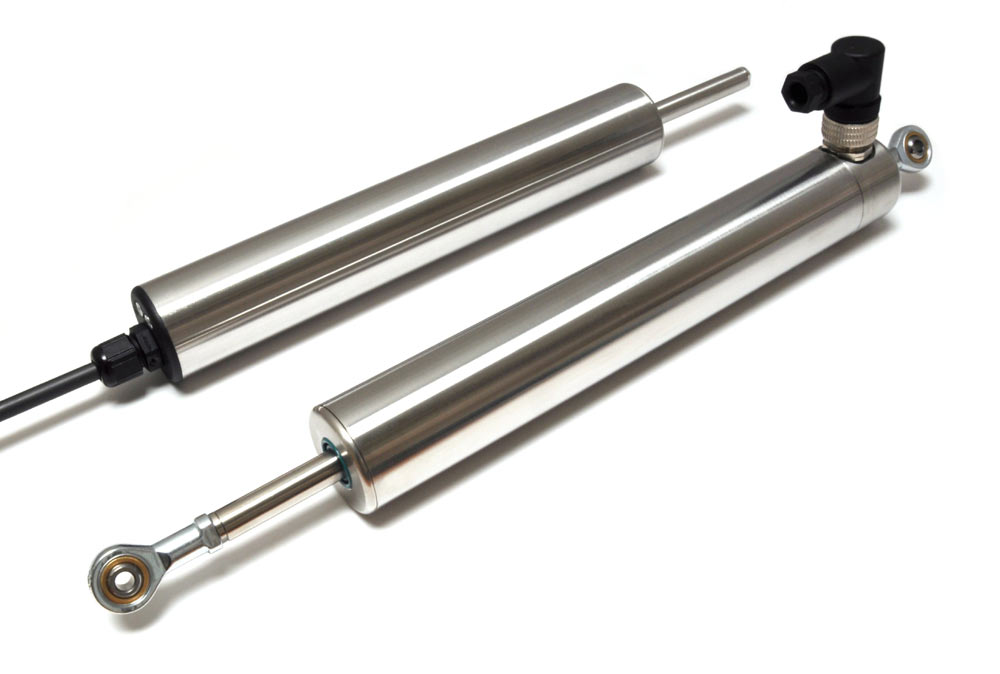
Image: http://www.positek.com/linear-position-sensor
Enjoy Worthview?
Add Worthview as a Preferred Source on Google to see more of our stories in Search.

Worthview Editorial Team is the shared byline for content created collaboratively by Worthview’s editors and contributors. Since 2008, we’ve published thousands of articles across technology, AI, finance, health, home, travel, and lifestyle. Our editorial process emphasizes original research, reputable sources, regular content updates, and clear attribution. Articles covering higher-trust topics, including health and finance, may also undergo review by qualified subject-matter experts.