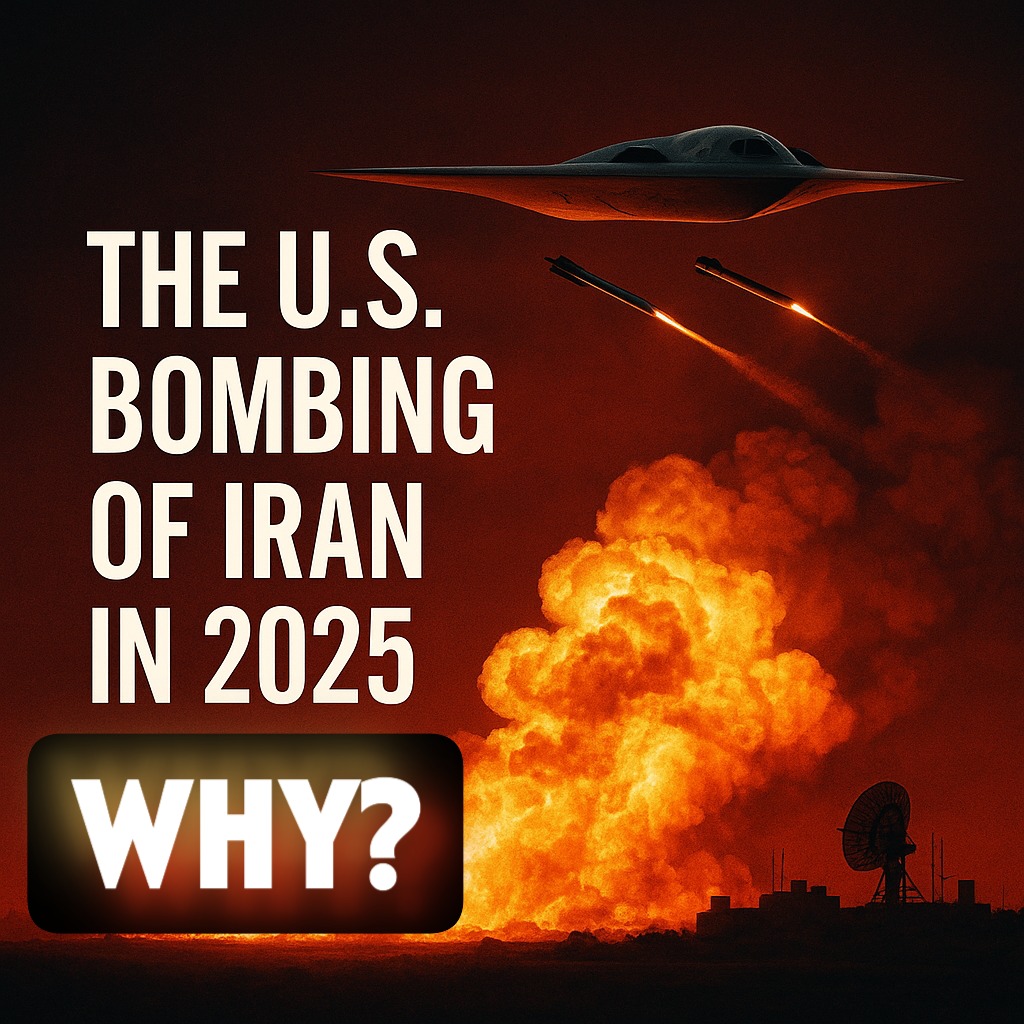
On June 21-22, 2025, the United States, under President Donald Trump, launched unprecedented airstrikes on three of Iran’s nuclear facilities—Fordow, Natanz, and Isfahan—marking a direct military intervention in the ongoing Israel-Iran conflict. This action represents a significant shift in U.S. foreign policy, as Trump had previously pledged to avoid military involvement in major foreign wars.
Why is the U.S. Bombing Iran?
1. Preventing Iran’s Nuclear Weapon Development:
— Donald J. Trump (@realDonaldTrump) June 21, 2025
2. Supporting Israel’s Regional Security:
3. Geopolitical Pressure and Domestic Politics:
Iran’s Reaction
-
🔥 Retaliatory Missile Strikes:
Iran launched multiple missiles targeting Israeli cities, including Tel Aviv and Haifa, shortly after the U.S. bombing of its nuclear sites. -
⚠️ Threats to U.S. Forces:
Iran warned of strikes against U.S. naval vessels in the Gulf and threatened to close the Strait of Hormuz to Western military ships. -
🛡️ IRGC Statement:
The Islamic Revolutionary Guard Corps (IRGC) vowed “regrettable responses”, hinting at broader military action against U.S. bases in the region. -
🌐 Diplomatic Moves:
Iran is preparing to file a formal complaint at the United Nations and has sent diplomats to Russia for consultations. -
🧨 Escalation Likely:
Tehran declared that its retaliation would be “precise and fierce,” signaling the potential for continued conflict in the coming days.
What Will the U.S. Gain from Participating in the Israel-Iran War?
Strategic Gains:
-
-
Weakening Iran’s Nuclear Capability:
-
If the strikes significantly set back Iran’s nuclear program, the U.S. could claim a strategic victory in preventing a nuclear-armed adversary. This would bolster Israel’s security and maintain U.S. dominance in the Middle East.
-
-
Countering Iran’s Regional Influence:
-
Degrading Iran’s military and nuclear infrastructure could limit its ability to support proxies like Hezbollah, reducing its leverage in conflicts in Syria, Lebanon, and Yemen.
-
-
Strengthening U.S.-Israel Alliance:
-
Direct military support reinforces the U.S.-Israel partnership, ensuring continued influence over Israeli policy and access to strategic bases in the region.
-
-
Economic Gains:
-
-
Defense Industry Boost: .
-
U.S. defense contractors, such as those producing B-2 bombers and GBU-57 bombs, benefit from increased military spending and potential arms sales to allies like Israel and Gulf states.
-
-
Energy Market Influence:
-
Strikes on Iran’s energy infrastructure, as reported, could disrupt its oil exports, potentially raising global oil prices. This could benefit U.S. energy exporters while pressuring Iran economically.
-
However, the quote’s critique applies here: bombing may destabilize energy markets further, harming global economies, including the U.S., if Iran retaliates by targeting oil facilities or shipping routes like the Strait of Hormuz.
-
-
Political Gains:
-
-
Domestic Support:
-
Trump’s administration may gain favor among pro-Israel constituencies and voters who prioritize a hardline stance against Iran.
-
-
Global Leadership Perception:
-
Successful strikes could project U.S. military prowess, reinforcing its role as a global superpower willing to act decisively.
-
-
Risks and Critical Perspective
Experts warn the strikes could provoke Iran to retaliate by:
-
Closing the Strait of Hormuz, a critical global oil passage.
-
Attacking U.S. military bases and allies in the region.
-
Intensifying missile attacks on Israel.
-
Mobilizing proxy forces against American and Israeli interests worldwide
-
The conflict risks escalating into a broader, prolonged war reminiscent of past U.S. engagements in the Middle East.
-
The Pentagon is on high alert, reinforcing U.S. forces in the region to prepare for possible Iranian retaliation.
Conclusion
Enjoy Worthview?
Add Worthview as a Preferred Source on Google to see more of our stories in Search.

Worthview Editorial Team is the shared byline for content created collaboratively by Worthview’s editors and contributors. Since 2008, we’ve published thousands of articles across technology, AI, finance, health, home, travel, and lifestyle. Our editorial process emphasizes original research, reputable sources, regular content updates, and clear attribution. Articles covering higher-trust topics, including health and finance, may also undergo review by qualified subject-matter experts.






2 thoughts on “The U.S. Bombing of Iran in 2025: What’s Going On and Why It Matters”
Comments are closed.