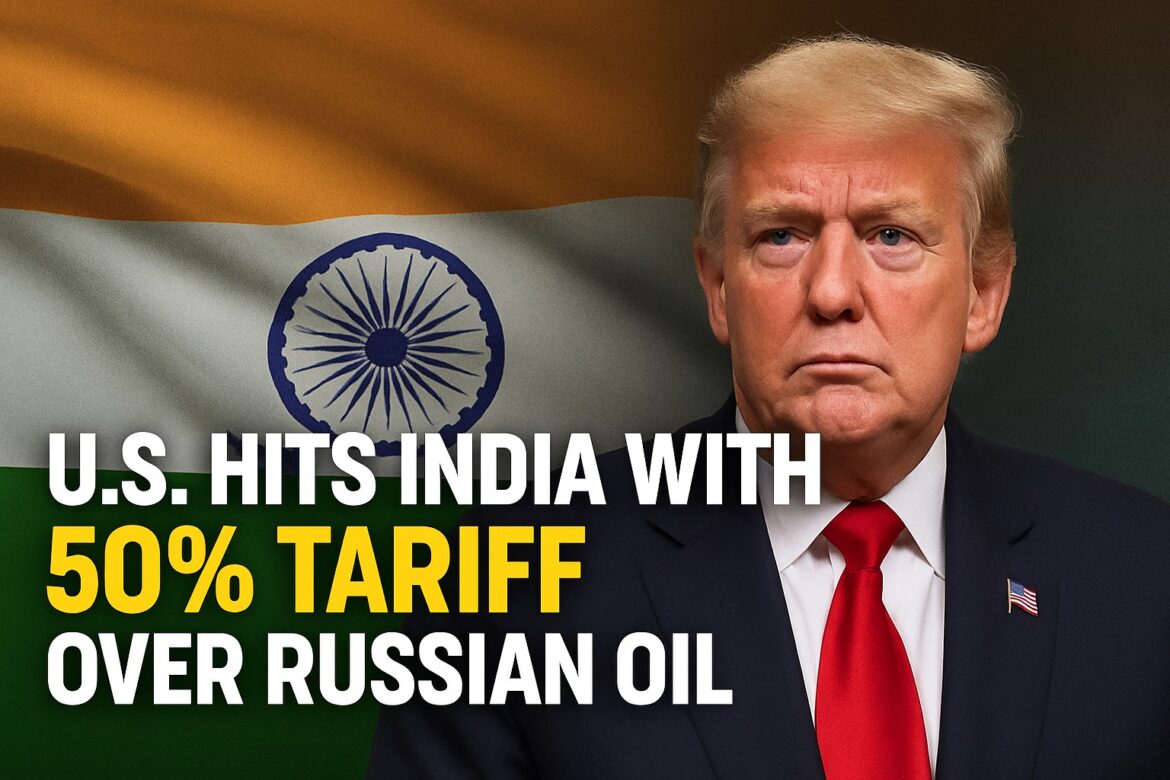
On August 6, 2025, U.S. President Donald Trump signed an executive order imposing an additional 25% tariff on Indian imports. This decision effectively doubles the existing tariff to 50%, sending shockwaves through diplomatic and economic circles. The move is in direct response to India’s continued purchase of Russian crude oil, which the U.S. claims is helping finance Russia’s war in Ukraine.
Here’s a complete 360-degree breakdown of what happened, why it happened, and what to expect next.
📅 Timeline of Events
| Date | Event |
|---|---|
| August 6, 2025 | President Trump signs executive order imposing an extra 25% tariff on Indian goods. |
| August 7, 2025 | India condemns the decision as unfair and politically motivated. |
| August 27, 2025 | Tariff implementation date – Indian exports to the U.S. will face 50% tariffs from this day. |
🇺🇸 Why Did the U.S. Impose the Tariff?
The Trump administration claims India’s oil deals with Russia are enabling the Kremlin’s war economy. The U.S. says that India, by purchasing and reselling Russian crude, is profiting while helping Moscow circumvent sanctions.
“India is buying Russian oil, refining it, and selling it worldwide. That’s not neutral — that’s funding the enemy.”
— Donald Trump, August 6, 2025
The order, issued under emergency economic powers, excludes essential imports such as:
- Semiconductors
- Steel
- Aluminum
- Electronics critical to U.S. national security
🇮🇳 How Did India Respond?
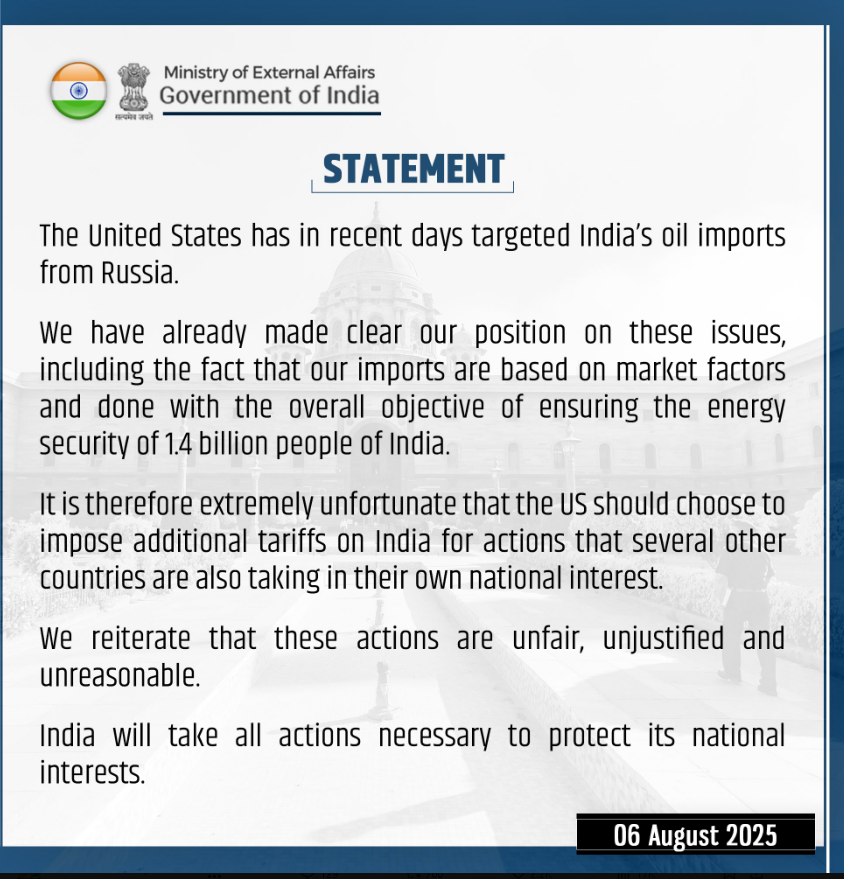
India quickly dismissed the move as “unfair, unjustified and unreasonable.”
“There are double standards. The U.S. continues to import uranium and other resources from Russia while penalizing India.”
— Shashi Tharoor, Congress MP
#WATCH | On US President Trump imposing an additional 25% tariff on India over Russian oil purchases, Congress MP Shashi Tharoor says, “I don’t think that’s particularly good news for us and that takes our total tariffs to 50 per cent then that’s going to make our goods… pic.twitter.com/uWwz9EwA4Q
— ANI (@ANI) August 6, 2025
Key points from India’s response:
- Energy security is a top priority for its 1.4 billion citizens.
- India emphasized that its oil imports are legal and market-driven.
- There are growing calls in India to retaliate with reciprocal tariffs on American exports.
📉 Economic Impact on India
The tariff escalation could have significant consequences for India’s export-dependent sectors.
🔻 Sectors Likely to Suffer:
- Textiles & garments
- Gems & jewelry
- Leather goods
- Seafood and agricultural exports
Experts warn these sectors could see a 40–50% drop in U.S.-bound exports.
📉 GDP Projections:
-
Goldman Sachs and other institutions have revised India’s 2025 GDP growth forecast downward due to trade headwinds.
However, U.S. tech giants like Apple, Google, and Tesla are not pulling out—thanks to India’s massive market and role in global supply chain diversification.
🤝 Diplomatic Fallout
This move sharply contrasts the narrative of deepening U.S.-India strategic ties in recent years.
🔥 Tensions Growing:
- India declined a proposed F-35 fighter jet deal after the tariff decision.
- Talks of a comprehensive U.S.–India trade deal have stalled.
- India is now exploring deeper trade partnerships with the EU, Japan, and ASEAN nations.
“If America continues down this path, we may have to realign our global trade priorities.”
— Indian Foreign Affairs Spokesperson
⚖️ Double Standards? India Points Fingers
India argues that:
-
China is importing far more Russian oil but received a 90-day grace period and lighter tariffs.
-
The U.S. itself continues to import uranium, palladium, and other critical minerals from Russia.
This has led to accusations of Western hypocrisy and a selective enforcement of sanctions.
🔄 What’s Next?
🧭 Possible Scenarios:
-
India retaliates with reciprocal tariffs on U.S. goods.
-
Diplomatic talks resume before August 27 to de-escalate.
-
India seeks alternative export markets, such as Southeast Asia, Europe, and Africa.
-
India strengthens its self-reliance agenda, including domestic energy investments.
🗣 Global Implications:
-
This standoff may embolden other U.S. allies to assert more autonomy.
-
China may leverage this rift to deepen its influence in South Asia.
-
The global energy trade could witness realignments if other nations are penalized for Russian ties.
🧾 Summary Table
| Area | Key Points |
|---|---|
| Tariff Level | 50% total tariff on most Indian goods from Aug 27 |
| U.S. Justification | India’s continued oil trade with Russia |
| Indian Response | Condemned as unjust and biased; may retaliate |
| Economic Risk | Key sectors may lose 40–50% of U.S. exports |
| Diplomatic Impact | Trade deal stalled; F-35 deal rejected |
| Exempt Items | Steel, semiconductors, aluminum, defense-related goods |
| Long-term Impact | India may diversify its global trade partnerships |
Enjoy Worthview?
Add Worthview as a Preferred Source on Google to see more of our stories in Search.

Worthview Editorial Team is the shared byline for content created collaboratively by Worthview’s editors and contributors. Since 2008, we’ve published thousands of articles across technology, AI, finance, health, home, travel, and lifestyle. Our editorial process emphasizes original research, reputable sources, regular content updates, and clear attribution. Articles covering higher-trust topics, including health and finance, may also undergo review by qualified subject-matter experts.