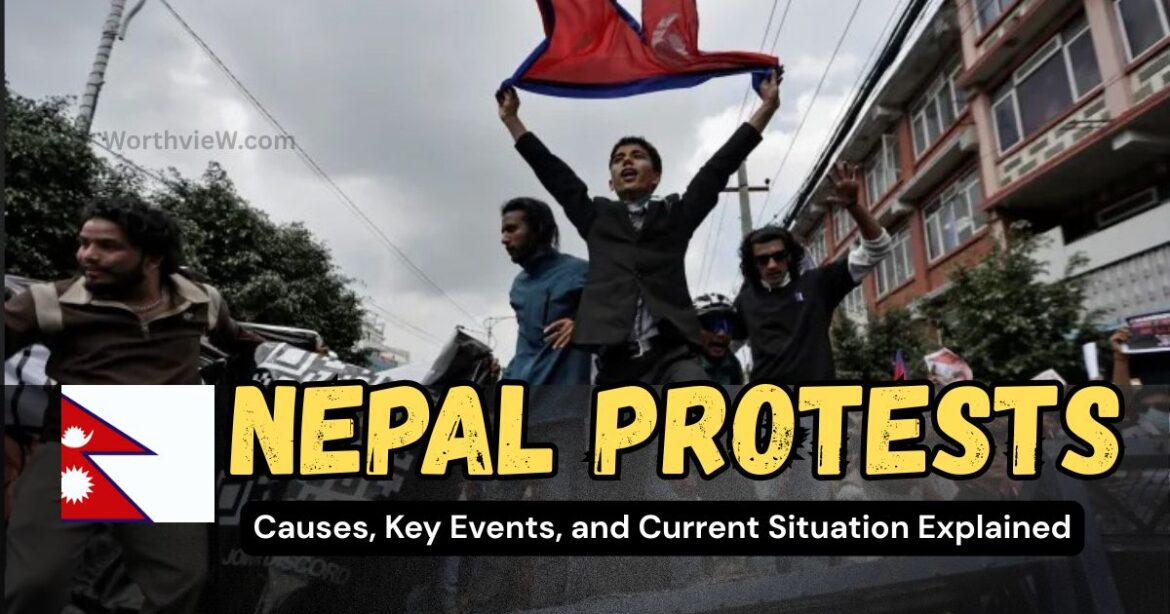
The Nepal protests of September 2025 have shaken the nation, leading to political turmoil, violent clashes, and the resignation of top leaders. What started as anger over a sudden social media ban has now grown into a nationwide movement against corruption and political elites. The current situation in Nepal is tense, with widespread demonstrations, heavy security presence, and uncertainty about the country’s political future.
Reasons for Protests in Nepal
The protests were triggered by two main factors:
-
Social Media Ban: On September 4, the government blocked 26 major social media platforms, including Facebook, Instagram, YouTube, and X (Twitter). The ban was seen as censorship and angered young Nepalis who rely on these platforms for communication, work, and self-expression.
-
Corruption and Nepotism: Beyond the ban, frustration had already been building among young people over long-standing issues such as corruption, political favoritism, and lack of opportunities. The ban acted as a spark for deeper grievances.
Together, these issues created the perfect storm for mass mobilization, especially among Nepal’s Gen Z population.
Nepal banned 26 social media platforms—including Facebook, Instagram, X (Twitter), YouTube, and others—after introducing a new law that required these platforms to register with the government and agree to monitoring rules. The government claimed the move was necessary to tackle fake news, online scams, and harmful content.
However, this decision backfired for several reasons:
-
Seen as Censorship: For most Nepalis, especially the youth, social media is not just entertainment—it’s a space for free speech, activism, and connecting with the world. The ban looked like an attempt to silence criticism and control information.
-
Impact on Daily Life and Work: Many young professionals, freelancers, and small businesses in Nepal rely on social platforms for jobs, marketing, and communication. Blocking them disrupted livelihoods.
-
Built-Up Frustration: The ban acted as the final trigger for deeper anger over long-standing issues like corruption, nepotism, and poor governance.
Because of this, what started as protests against the social media ban quickly grew into a broader youth-led uprising demanding accountability and systemic change in Nepal’s politics.
👉 In short: The ban symbolized government overreach, directly affected daily life, and tapped into existing frustrations—causing the massive protests.
Key Events in the Nepal Protests
The protests escalated quickly within days:
-
September 8: Clashes broke out in Kathmandu after police used tear gas, water cannons, and even live bullets against demonstrators. At least 19 people were killed and hundreds injured.
-
September 8 (Evening): Facing growing outrage, the government lifted the social media ban. Home Minister Ramesh Lekhak resigned.
-
September 9: Protesters stormed Parliament, the Prime Minister’s residence, and other government buildings. Fires broke out in parts of Kathmandu.
-
Prime Minister Resigns: Under pressure, PM K. P. Sharma Oli resigned and reportedly fled to a secure military area. Several ministers and MPs also stepped down.
-
Army Involved: The Nepal Army took control of key areas, including the international airport, to maintain order.
Groups Involved in the Movement
The protests are largely youth-led, with students and young professionals forming the core of the demonstrations. Gen Z activists used creative symbols, including the One Piece anime flag, to represent rebellion and freedom.
Civil society groups, human rights activists, and ordinary citizens have also joined the movement, turning it into one of the largest displays of Nepal political unrest in recent years.
Government Response
The government initially tried to suppress the movement with force, leading to tragic casualties. Later, it attempted to calm the situation by:
-
Lifting the social media ban
-
Accepting ministerial resignations
-
Declaring temporary security measures, with army deployment
However, these steps have not fully eased public anger. Many protesters are demanding systemic reforms, not just leadership changes.
Impact on People and Daily Life
The Nepal protests have had a major impact on daily life:
-
Loss of Lives: At least 19 people have died, with many more injured.
-
Transportation Disruptions: The closure of airports and blocked roads have caused chaos in travel and trade.
-
Internet & Communication: Although the social media ban was lifted, many remain worried about freedom of expression in Nepal.
-
Fear and Uncertainty: Ordinary citizens are anxious about the political instability and potential for further violence.
Conclusion
The Nepal protests began as a response to a social media ban but quickly grew into a powerful youth-led movement against corruption and political mismanagement. With the Prime Minister’s resignation and ongoing unrest, the current situation in Nepal is highly uncertain. The protests highlight the frustration of a generation demanding transparency, fairness, and accountability.
Whether these demonstrations bring lasting change or plunge the country into deeper turmoil remains to be seen. But one thing is clear: the voice of Nepal’s youth is louder than ever.
FAQs on Nepal Protests
1. What caused the Nepal protests?
The protests began after the government banned 26 social media platforms. This ban angered young people and quickly expanded into a movement against corruption and political elites.
2. Who is leading the protests in Nepal?
The movement is mainly led by young Nepalis—students, professionals, and activists from Generation Z—who are demanding transparency and accountability in politics.
3. How many people have died in the Nepal protests?
As of September 9, at least 19 people have died, and hundreds have been injured due to clashes between protesters and security forces.
4. What is the current situation in Nepal?
The Prime Minister has resigned, several ministers have stepped down, and the army is deployed in key areas. The situation remains tense, with uncertainty about the country’s political direction.
5. What are the demands of the protesters?
Protesters want more than just lifting the social media ban. They are calling for an end to corruption, nepotism, and unaccountable governance in Nepal.
Enjoy Worthview?
Add Worthview as a Preferred Source on Google to see more of our stories in Search.

Worthview Editorial Team is the shared byline for content created collaboratively by Worthview’s editors and contributors. Since 2008, we’ve published thousands of articles across technology, AI, finance, health, home, travel, and lifestyle. Our editorial process emphasizes original research, reputable sources, regular content updates, and clear attribution. Articles covering higher-trust topics, including health and finance, may also undergo review by qualified subject-matter experts.