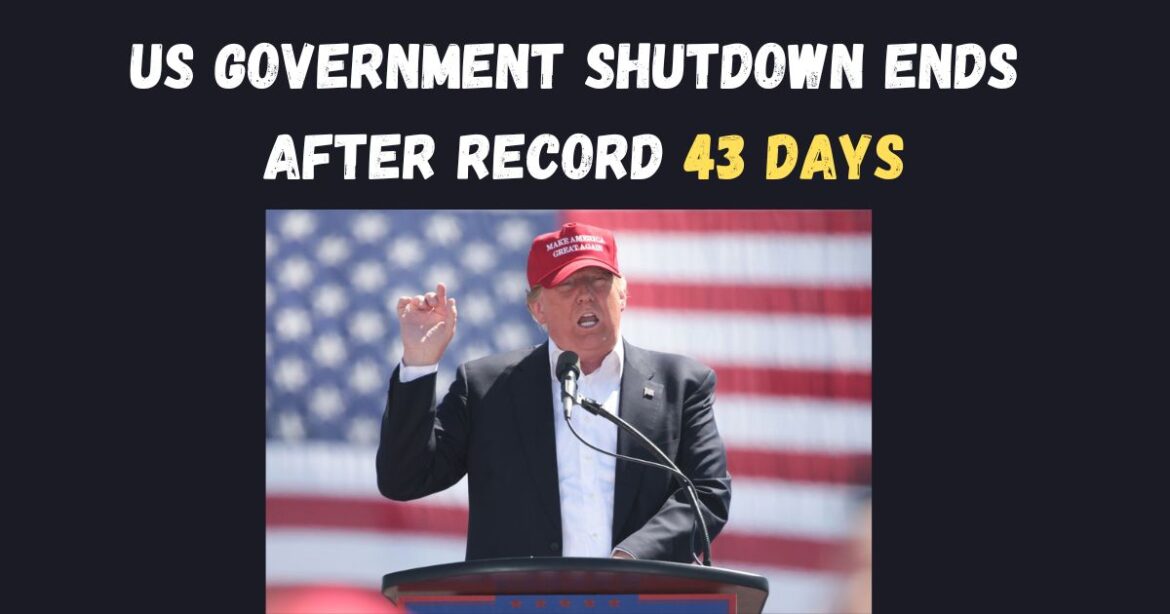
The longest government shutdown in U.S. history came to an end on November 12, 2025, when President Donald Trump signed a bipartisan funding bill into law. The historic 43-day shutdown had serious impacts on federal workers and public services, but the new legislation brings temporary relief and a roadmap for resuming normal government operations.
What Led to the Shutdown?
- The shutdown began on October 1, 2025, after Congress failed to pass appropriations legislation for the 2026 fiscal year.
- A key point of contention was the expiration of healthcare subsidies under the Affordable Care Act (ACA), which Democrats wanted extended but were excluded from the Republican-led funding bill.
- Approximately 900,000 federal employees were furloughed, and millions more worked without pay.
- Essential services like Medicare and the Department of Defense continued, but many other federal agencies partially or fully suspended operations.
How Was the Shutdown Ended?
- The turning point came on November 10 when the Senate passed a revised appropriations bill with bipartisan support.
- Two days later, the House of Representatives approved the bill, and President Trump signed it in an Oval Office ceremony that night.
- The bill funds government operations through January 30, 2026, and includes full-year appropriations for military construction, veterans affairs, the Department of Agriculture, and legislative branch security.
What Does the New Bill Include?
- Temporary funding for the government at current levels until January 30, 2026.
- Full-year funding for certain agencies, including military and veterans affairs.
- Rehiring and back pay for approximately 4,000 federal employees who were laid off or furloughed.
- Protection against mass federal worker layoffs through January.
- Additional security funding for Congress and the Capitol Police.
What’s Next for Federal Workers and Services?
- With the shutdown officially over, around 900,000 furloughed federal workers are expected to return to their jobs immediately.
- Essential programs disrupted by the funding gap, such as food assistance through the Supplemental Nutrition Assistance Program (SNAP), will resume normal operations in the coming days.
- However, the bill only provides a short-term solution, and Congress faces pressure to negotiate a longer-term budget to avoid another shutdown early next year.
Why the Shutdown Ended Now
- The shutdown ended after weeks of political gridlock marked by failed negotiations, Senate filibusters, and public pressure.
- Bipartisan cooperation in the Senate, including Democrats crossing party lines, was key to approving the revised bill.
- President Trump’s signing of the bill signals a temporary truce but also highlights ongoing divisions over healthcare and government spending that remain unresolved.
Conclusion
The 43-day shutdown of the U.S. federal government has finally come to a close, bringing relief to hundreds of thousands of federal workers and restoring many disrupted services. But the deal is clearly temporary. As the January deadline looms, Congress and the White House must still address the larger issues that triggered the shutdown — especially healthcare subsidies and long-term spending priorities.
If they fail to reach a consensus again, the country may face another shutdown next year.
Enjoy Worthview?
Add Worthview as a Preferred Source on Google to see more of our stories in Search.

Worthview Editorial Team is the shared byline for content created collaboratively by Worthview’s editors and contributors. Since 2008, we’ve published thousands of articles across technology, AI, finance, health, home, travel, and lifestyle. Our editorial process emphasizes original research, reputable sources, regular content updates, and clear attribution. Articles covering higher-trust topics, including health and finance, may also undergo review by qualified subject-matter experts.