When your welding output depends on a small pool of experienced hands, your schedule becomes fragile. A single absence can open coverage gaps that force overtime, and onboarding a new hire can take longer than your backlog will tolerate. At the same time, inconsistent weld quality adds hours through touch-ups, reinspection, and rework, stealing capacity from new production. If you want steadier throughput without rigid automation, a cobot laser welder is often the first technology you evaluate.
A Modern Welding Support Option
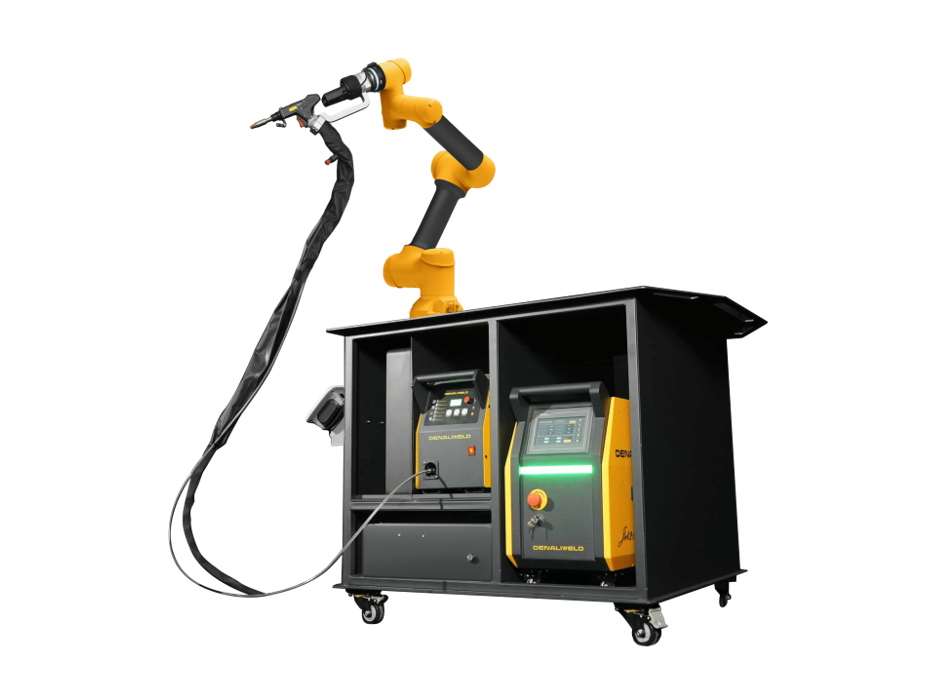
Denaliweld’s Cobot Series is built for collaborative use, with features designed to keep day-to-day operations simple: preset programs, welding data acquisition for tracking performance, and optional seam tracking to help with alignment when parts vary. For many shops, a cobot laser welding machine feels timely because it supports repeatable work without forcing you into a fully fixed automation cell.
The biggest workforce impact is role clarity. You can keep process setup and verification with your most skilled people, then train operators to repeat cycles within defined limits using a cobot laser welder. If staffing changes mid-shift, switching between handheld and automated operations can help you keep the line moving while redeploying talent to the work that truly requires judgment.
Labor Dependency in Welding Operations
Workforce Bottlenecks That Drive Dependency
Labor dependency is rarely just headcount. You may rely on a few people who can set parameters quickly, handle fit-up variation, and catch defects early. When they are stretched thin, quality becomes operator-dependent, and rework rises. Safety routines can slip, too, because fume control, guarding, and disciplined procedures need consistency. A cobot laser welder helps most when it turns repeatable work into a controlled routine instead of a shift-by-shift variable.
Where Cobot Welding Fits Staffing
Collaborative welding fits when you can separate expert decisions from routine execution. Your expert defines the path, validates samples, and sets acceptance checks. Operators load parts, start cycles, and monitor results. This model is strongest for repeat joints, predictable part flow, and fixtures that keep alignment stable. You can also use the cell to protect deadlines by keeping predictable seams running while experts handle exceptions.
Lower Skill Barriers and Faster Onboarding
Simplified Programming and Task Setup
Traditional automation can add a programming bottleneck during changeovers. Collaborative systems often reduce that barrier with guided setup and reusable programs. For you, that can mean fewer steps between a proven process and repeatable production, especially for short runs where changeover time matters.
Standardized Parameters and Guided Operation
Standard parameters reduce the hidden labor required to address inconsistency. When power, travel speed, and path are defined, you reduce variation across shifts and speed up troubleshooting. Your inspection flow becomes steadier, too, because defects are less likely to appear randomly.
Separating Program Creation from Daily Operation
Separating program creation from daily operation is a practical staffing move. Program creation includes path definition and allowable variation. Daily operation includes loading parts and running the cycle. When roles are clear, your experts can refine programs in batches and support multiple stations, while operators keep output flowing without constant supervision.
| Workflow Approach | Who You Rely on Daily | What Breaks When Short-Staffed |
| Fully manual welding | Skilled welders at every seam | Output and consistency drop fast |
| Cobot-assisted welding | Expert setup plus trained operators | Changeoversare slow, output continues |
| High-complexity automation | Specialists plus maintenance support | Downtime spikes without support |
Flexible Staffing with Hybrid Workflows
Switching Between Manual and Automatic Work
Hybrid operation matches real schedules. You can begin a job manually while you confirm fit-up, then run the repeat portion in guided cycles once it is stable. If a rush order hits or a key welder is pulled away, automated cycles can cover predictable seams, reducing overtime pressure.
Handheld vs Robotic Operation Planning
Routing work matters more than chasing full automation. Keep one-offs, awkward access, and high-variation seams in manual mode. Use guided cycles for repeat runs and stable joints where consistency is the priority. This keeps your best people on the hardest work and reduces hours spent on repetitive tasks.
Redeploying Cells Across Lines and Shifts
If you can redeploy a cell to where demand is highest, you reduce labor dependency more reliably. In high-mix environments, this protects capacity across multiple product lines rather than tying automation to a single part number. The result is fewer emergency schedule changes and fewer stations that sit idle because the right skill level is unavailable.
Quality Controls That Cut Rework Labor
Repeatability and Process Stability
Rework is labor you did not plan for, and it often arrives at the last minute. Repeatable paths and stable parameters reduce variation, so you spend less time grinding, rewelding, and rechecking. Stability also helps you spot real issues faster, such as a drifting fixture or inconsistent part prep.
In-Process Adjustments and Seam Alignment
Parts vary, and seams can drift. Systems that support in-process adjustments and seam alignment reduce the labor required to correct misalignment. When alignment improves, you often see fewer touch-ups and fewer pauses that break the flow.
Safety and Collaborative Operation Basics
Collaboration does not remove hazards. You still need safe laser practices, fume management, and clear procedures for loading and guarding. A more structured, repeatable workflow can reduce improvisation, helping you maintain consistent safety steps even on busy shifts.
Factors That Decide Real Labor Savings
Integration and Shop-Floor Connectivity
Labor savings depend on fit. You want the system to match your fixturing, material handling, and inspection flow. If you can capture cycle and performance data, you can identify where labor is being consumed through stops, touch-ups, or repeated changeovers, then fix the real constraint.
Maintenance, Uptime, and Support Needs
Downtime creates labor, because people scramble to recover. Denaliweld highlights modular design and welding data acquisition as part of its approach, helping you plan maintenance, monitor performance, and diagnose issues before they become schedule-breaking failures.
Right-Sizing Payload, Reach, and Mounting
Right-sizing decides whether you save labor. Too little reach adds repositioning steps: too little payload limits tooling and cable management. An awkward mounting choice adds handling and setup time. Use published payload and reach ranges to match the cell to your parts and layout, and plan fixtures that make seam location as repeatable as possible.
Conclusion
Reducing labor dependency in welding is less about removing people and more about protecting your schedule from work that drains hours and attention. When you standardize repeatable seams, separate program creation from daily operation, and build hybrid workflows, you can keep output steadier even when hiring is difficult. If you want an example of how this style of automation is packaged for shop-floor use, Denaliweld is one option to review, and a cobot laser welder can be a strong fit when you are trying to stabilize output with fewer last-minute staffing surprises.
Enjoy Worthview?
Add Worthview as a Preferred Source on Google to see more of our stories in Search.

Worthview Editorial Team is the shared byline for content created collaboratively by Worthview’s editors and contributors. Since 2008, we’ve published thousands of articles across technology, AI, finance, health, home, travel, and lifestyle. Our editorial process emphasizes original research, reputable sources, regular content updates, and clear attribution. Articles covering higher-trust topics, including health and finance, may also undergo review by qualified subject-matter experts.