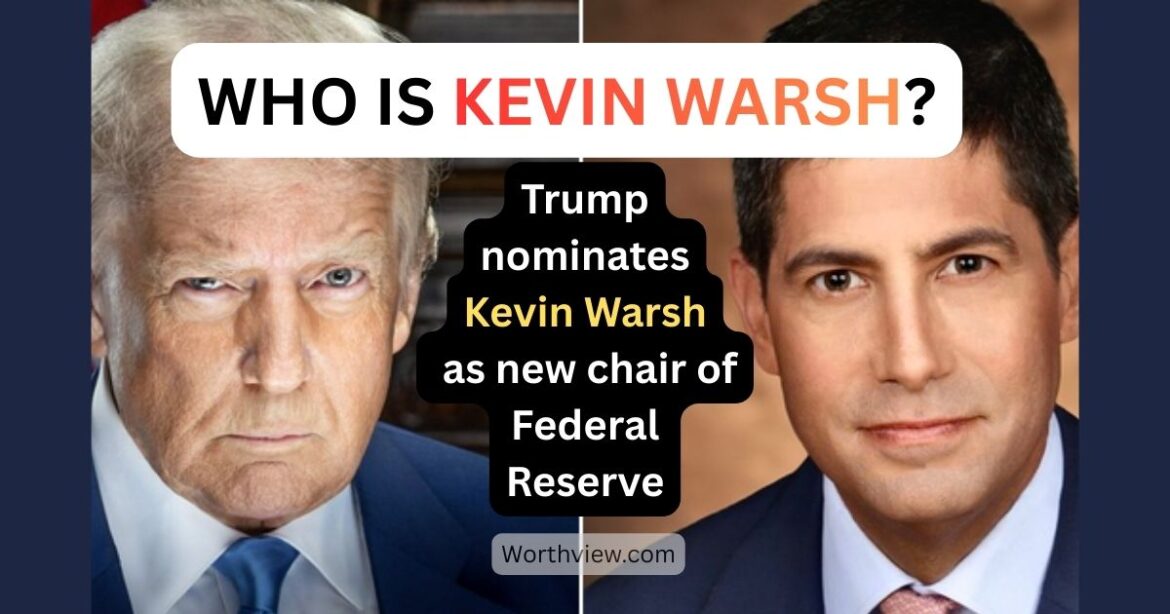
In a move that could reshape the future of US monetary policy, Donald Trump has announced his intention to nominate a new chair of the US Federal Reserve, replacing Jerome Powell. The choice has sparked intense debate across financial markets and policy circles: former Federal Reserve governor Kevin Warsh.
The announcement triggered an immediate market reaction, with gold and silver prices falling sharply as investors priced in a potentially tighter and more disciplined Federal Reserve under Kevin Warsh.
Why Trump Is Moving to Replace Jerome Powell
Jerome Powell, who has served as chair of the Federal Reserve since 2018, has frequently faced criticism from Trump—especially over aggressive interest rate hikes aimed at taming inflation.
Trump has repeatedly argued that:
-
High interest rates hurt economic growth and stock markets
-
The Fed has been “too restrictive” for too long
-
Monetary policy should be more growth-oriented
By nominating a replacement, Trump appears keen to steer the Fed toward a more accommodative stance if he regains the presidency.
Who Is Kevin Warsh?
Kevin Warsh is a well-known figure in US economic and financial policy circles.
Key Background
-
Former Federal Reserve Governor (2006–2011)
-
Served during the 2008 global financial crisis
-
Previously worked at Morgan Stanley
-
Former economic adviser in the George W. Bush administration
Kevin Warsh is a seasoned American policymaker, economist, and financial insider who has long been part of the inner circle shaping US monetary and economic policy. Known for his sharp critiques of central banking excesses and his emphasis on credibility and discipline, Warsh represents a more traditional, rules-based view of how the Federal Reserve should operate.
To supporters, he is a steady hand with deep crisis-management experience who understands both Wall Street and Washington. To critics, he is a hardliner whose skepticism of aggressive monetary support could make economic slowdowns more painful. Either way, Warsh is widely seen as one of the most intellectually influential Fed officials of the past two decades—despite serving only one term.
His possible return as Fed chair would signal a clear philosophical shift in how the central bank approaches inflation, interest rates, and its role in supporting markets.
Background and Career
Kevin Warsh served as a Governor of the US Federal Reserve from 2006 to 2011, a period that included the 2008 global financial crisis, the most severe economic shock since the Great Depression.
Before joining the Fed:
-
He worked at Morgan Stanley, advising on mergers, acquisitions, and financial strategy
-
He served as a senior economic adviser in the George W. Bush administration, including on the National Economic Council
-
He built strong connections across Wall Street, the US Treasury, and global financial institutions
Notably, Warsh was one of the youngest Fed governors ever appointed, gaining a reputation early on as a sharp, articulate policymaker.
Role During the 2008 Financial Crisis
During the crisis, Warsh was directly involved in:
-
Emergency lending facilities
-
Coordination between the Fed, US Treasury, and global central banks
-
Decisions around stabilizing major financial institutions
This experience gives him rare firsthand exposure to how central banks act under extreme stress—something markets still value today amid geopolitical risks and financial fragility.
Economic Philosophy and Views
Warsh is often described as ideologically conservative on monetary policy, though not rigid.
His core beliefs include:
-
Inflation control is central to economic stability
-
The Fed should avoid becoming a permanent backstop for markets
-
Excessive money printing and balance-sheet expansion distort asset prices
-
Central bank credibility is easily lost and hard to regain
Interestingly, Warsh has been critical of both loose and overly experimental monetary policy, arguing that prolonged low rates after crises can create bubbles and long-term instability.
Relationship With Donald Trump and the Fed Debate
Although Warsh is sometimes labeled a Trump-aligned nominee, the relationship is nuanced. In the past, Warsh has:
-
Criticized political pressure on the Federal Reserve
-
Defended central bank independence
-
Expressed concern over short-term policymaking driven by markets
This makes him an unconventional but powerful choice—someone who may not always align with political demands but shares Trump’s frustration with the Fed’s recent direction.
Why Warsh Matters Now
If appointed as Fed chair, Kevin Warsh could:
-
Push for a tighter, more disciplined monetary framework
-
Reduce the Fed’s role in directly supporting financial markets
-
Signal a long-term shift away from crisis-era stimulus thinking
For investors and policymakers alike, Warsh represents a return to an older Fed philosophy—one that prioritizes stability, restraint, and institutional credibility over constant intervention.
In short, Kevin Warsh is not just a replacement name. He symbolizes a deeper debate about what the Federal Reserve should be in the post-crisis world.
Warsh’s Economic Views
Kevin Warsh is widely considered more hawkish on inflation but skeptical of prolonged monetary intervention.
His known positions include:
-
Criticism of excessive money printing
-
Concerns over the Fed’s expanding balance sheet
-
Emphasis on clear rules-based monetary policy
-
Strong belief in the Fed’s credibility and long-term discipline
At times, Warsh has also criticized the Fed for keeping interest rates too low for too long—an irony that adds complexity to Trump’s choice.
Why Markets Are Paying Close Attention
A potential Warsh-led Federal Reserve could mean:
-
A shift in how quickly rates are cut or raised
-
Changes in the Fed’s approach to inflation targeting
-
Increased debate over central bank independence
-
Short-term volatility in equities, bonds, gold, and the US dollar
Investors globally are watching closely, as leadership changes at the Fed often ripple across emerging markets, commodities, and global currencies. Also read,
Political and Institutional Challenges Ahead
Replacing a sitting Fed chair is not straightforward. Any nomination must:
-
Be confirmed by the US Senate
-
Withstand scrutiny over political influence on monetary policy
-
Reassure markets about the Fed’s independence
Critics argue that frequent political pressure on the central bank could undermine investor confidence. Supporters, however, see the move as necessary to realign policy with economic growth.
The Bigger Picture
Trump’s nomination of Kevin Warsh underscores a broader debate in the US:
Should the Federal Reserve prioritize inflation control at all costs, or balance it more carefully with growth and employment?
As global inflation, geopolitical risks, and economic uncertainty persist, the leadership of the world’s most powerful central bank has rarely mattered more.
One thing is clear—this decision could redefine US monetary policy for years to come.
Enjoy Worthview?
Add Worthview as a Preferred Source on Google to see more of our stories in Search.

Worthview Editorial Team is the shared byline for content created collaboratively by Worthview’s editors and contributors. Since 2008, we’ve published thousands of articles across technology, AI, finance, health, home, travel, and lifestyle. Our editorial process emphasizes original research, reputable sources, regular content updates, and clear attribution. Articles covering higher-trust topics, including health and finance, may also undergo review by qualified subject-matter experts.