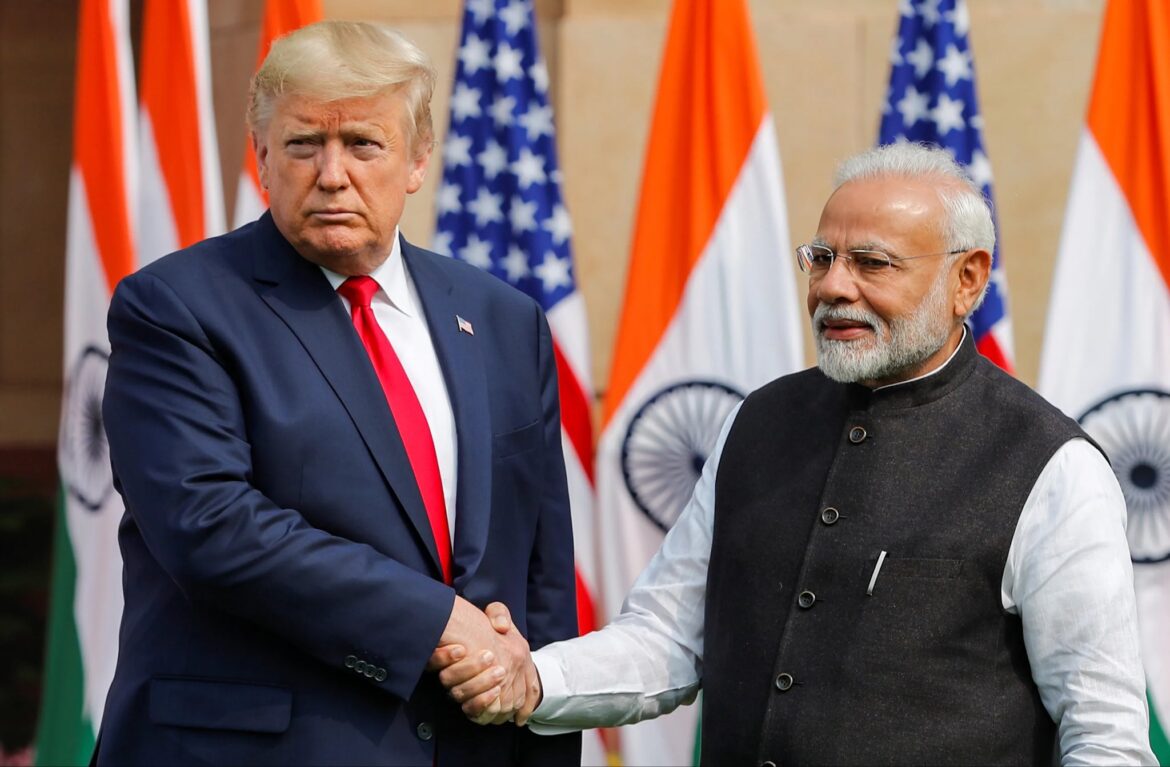
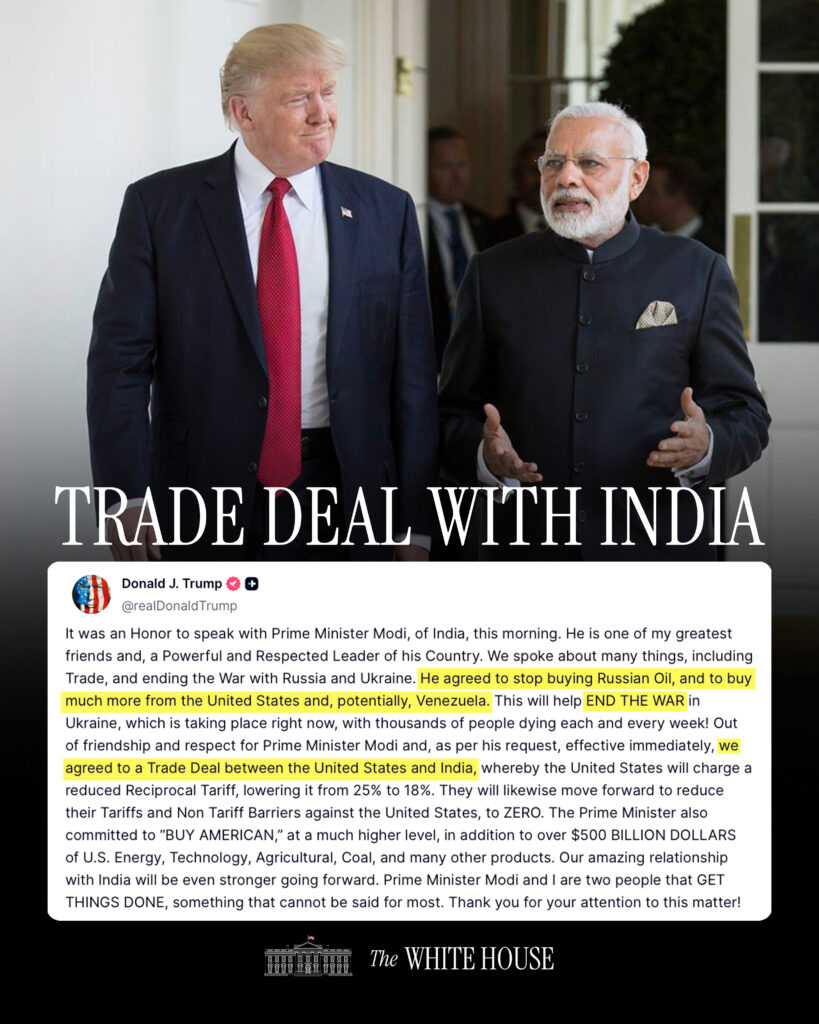
Donald Trump said the United States and India have reached a trade deal that will lower U.S. tariffs on Indian goods immediately, marking a reset in bilateral trade relations. The announcement follows recent trade frictions and comes as both countries seek to strengthen economic and strategic ties.
While detailed legal texts and tariff schedules are still awaited, the announcement itself signals a shift toward reduced trade barriers between the world’s largest and fifth-largest economies.
Trade deal announced: The U.S. will cut tariffs on Indian imports; India is expected to lower barriers and expand purchases from the U.S.
Key benefit: Cheaper trade, higher exports, and stronger supply-chain links for both sides.
Why it matters: The deal supports growth, markets, and long-term strategic alignment.
Key Benefits for the United States
1. Stronger Export Growth
Lower Indian trade barriers could help U.S. exporters across sectors:
-
Agriculture and food products
-
Energy (oil, gas, LNG)
-
Advanced manufacturing and industrial goods
Improved market access to India’s large and growing consumer base strengthens U.S. export competitiveness.
2. Energy and Strategic Gains
India is one of the world’s fastest-growing energy consumers. Increased purchases of U.S. energy products:
-
Support U.S. energy producers
-
Reduce dependence on geopolitically sensitive suppliers
-
Strengthen U.S. influence in global energy markets
This aligns trade policy with broader geopolitical objectives.
3. Reduced Trade Tensions
Lower tariffs ease long-standing disputes and reduce the risk of retaliatory trade measures. For U.S. businesses, this means:
-
Greater pricing stability
-
More predictable trade rules
-
Improved long-term investment confidence
Key Benefits for India
1. Boost to Exports and Manufacturing
Reduced U.S. tariffs directly benefit Indian export-oriented sectors such as:
-
Pharmaceuticals
-
Textiles and apparel
-
Engineering goods and auto components
-
Electronics and specialty chemicals
This supports India’s manufacturing ambitions and export-led growth strategy.
2. Improved Global Competitiveness
Cheaper access to the U.S. market improves India’s cost competitiveness versus other exporting nations. Over time, this could:
-
Attract more foreign direct investment
-
Encourage global firms to expand India-based supply chains
-
Support job creation in manufacturing and exports
3. Market and Investor Confidence
Trade certainty with the U.S. — India’s largest trading partner — is positive for:
-
Equity markets
-
Currency stability
-
Corporate earnings visibility
This explains why markets closely track trade developments for cues on growth and capital flows.
1. Stronger Supply Chains
Lower tariffs encourage companies to diversify supply chains away from concentration risks. Deeper U.S.–India trade ties:
-
Improve supply-chain resilience
-
Reduce dependency on single-country manufacturing hubs
-
Support long-term industrial cooperation
2. Strategic and Geopolitical Alignment
Beyond economics, the deal reinforces strategic alignment between Washington and New Delhi:
-
Greater cooperation in trade, energy, and technology
-
Stronger positioning in Indo-Pacific geopolitics
-
A counterweight to global trade uncertainty
3. Positive Signal to Global Markets
At a time of global trade fragmentation, the agreement sends a message that:
-
Major economies are still willing to lower barriers
-
Bilateral deals can move faster than multilateral negotiations
-
Trade can be used as a tool for stability rather than conflict
What Still Needs Clarity
While the benefits are significant, several points remain unconfirmed:
-
Exact tariff lines and products covered
-
Duration of the tariff reductions
-
Legal and administrative implementation timelines
-
Whether reported large purchase commitments are binding or indicative
Markets and businesses will watch official documents closely before fully pricing in the impact.
Conclusion
The U.S.–India trade deal announcement marks a meaningful step toward deeper economic cooperation. If implemented as outlined, it offers clear benefits for exporters, manufacturers, energy producers, investors, and supply chains on both sides.
The next phase — detailed agreements and execution — will determine how much of this potential translates into real economic gains. For now, the direction is clear: lower barriers, stronger ties, and higher trade flows between two major global economies.
Enjoy Worthview?
Add Worthview as a Preferred Source on Google to see more of our stories in Search.

Worthview Editorial Team is the shared byline for content created collaboratively by Worthview’s editors and contributors. Since 2008, we’ve published thousands of articles across technology, AI, finance, health, home, travel, and lifestyle. Our editorial process emphasizes original research, reputable sources, regular content updates, and clear attribution. Articles covering higher-trust topics, including health and finance, may also undergo review by qualified subject-matter experts.