Christmas is one of the most wonderful times of the year, but it can also be one of the most expensive. Between gifts for family and friends, holiday decorations, food, travel, wrapping supplies, and other festive expenses, Christmas spending can quickly get out of hand.
If you start shopping without a clear plan, it’s easy to spend more than you intended—especially when sales, last-minute purchases, and tempting gift ideas come into play.
The good news is that you don’t need to spend a fortune to make Christmas special. With a little planning, a realistic budget, and a list of gifts you need to buy, you can enjoy the holiday season without worrying about overspending.
In this guide, we’ll show you how to plan a Christmas gift budget and stick to it, with practical tips to help you decide how much to spend, organize your gift list, track purchases, and avoid common holiday spending mistakes.
Want to Make Christmas Budgeting Easier?
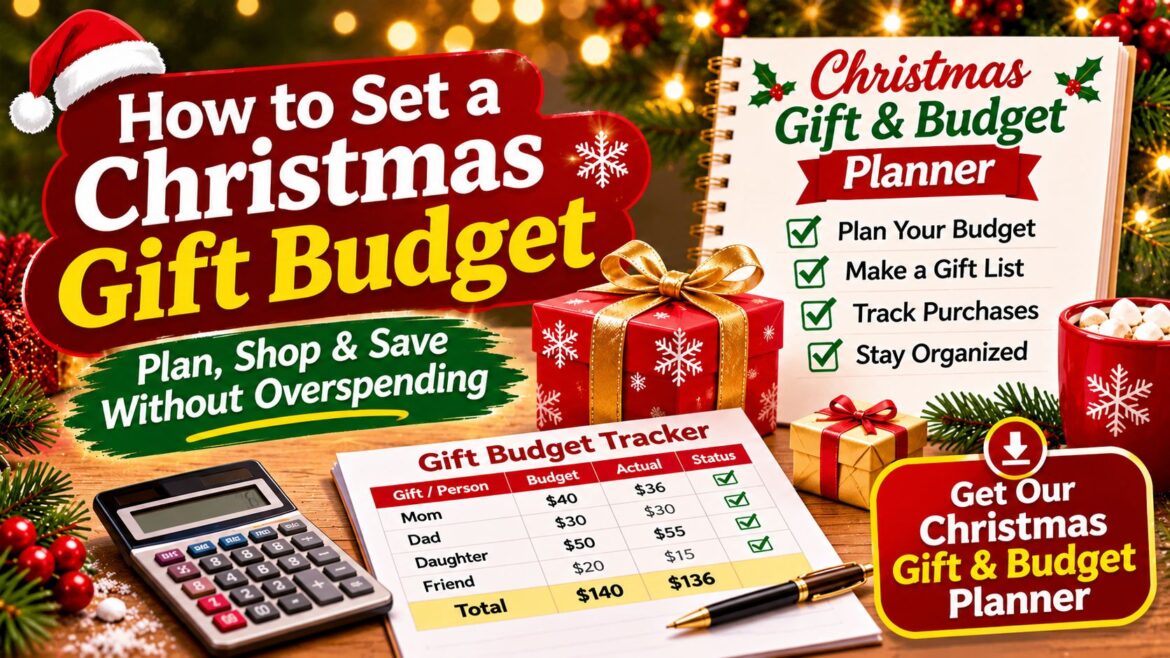
Planning your Christmas gifts, tracking expenses, and keeping your spending under control can be much easier with the right tools. Our Christmas Gift & Budget Planner helps you organize your gift list, set spending limits, track purchases, and keep your Christmas budget on track.
→ Get the Christmas Gift & Budget Planner
Why You Should Set a Christmas Gift Budget
Christmas gift shopping can be exciting, but without a spending limit, it’s easy to lose track of how much you’re spending. A few extra gifts, unexpected purchases, and last-minute shopping can quickly push your expenses beyond what you planned.
Setting a Christmas gift budget helps you:
- Avoid overspending: Decide how much you can afford to spend before you start shopping.
- Reduce financial stress: Enjoy the holidays without worrying about credit card bills or expenses in January.
- Plan gifts more thoughtfully: Focus on meaningful gifts instead of buying something simply because it’s on sale.
- Keep spending fair: Allocate reasonable amounts for different people without feeling pressured to spend equally on everyone.
- Shop with confidence: Know how much money you have left and when you’ve reached your spending limit.
A Christmas budget doesn’t mean spending less on the people you care about. It means making intentional spending decisions so you can enjoy the holidays without putting unnecessary pressure on your finances.
Step 1: Decide How Much You Can Afford to Spend on Christmas Gifts

Before you start making a gift list or looking for deals, decide how much money you can comfortably spend on Christmas gifts this year.
Look at your monthly income, regular expenses, savings goals, and any other financial commitments. Your Christmas gift budget should come from money you can afford to spend without borrowing or affecting essential expenses.
For example, if you can comfortably set aside $500 for Christmas gifts, make that your total spending limit. You don’t need to increase it just because you see expensive gifts, attractive discounts, or other people spending more.
Once you decide on your budget, treat it as a limit—not a target you need to exceed.
If you have several weeks or months before Christmas, consider setting aside a small amount regularly. Saving $50 a week for 10 weeks gives you $500 to spend, making holiday shopping easier to manage without a large expense all at once.
The key is to choose a number that works for your finances and stick with it.
Step 2: Make a List of Everyone You Need to Buy Gifts For
Before deciding what to buy, make a complete list of everyone you plan to give gifts to. This prevents forgotten people, duplicate purchases, and unplanned spending later.
Think beyond immediate family. Your list might include:
- Children
- Parents and grandparents
- Brothers and sisters
- Other relatives
- Friends
- Coworkers
- Teachers
- Neighbors
- Hosts you may visit during the holidays
Once you have everyone listed, you can prioritize recipients and assign a spending limit to each person based on your overall budget.
You may also want to categorize your list into groups such as immediate family, extended family, friends, and others. This makes it easier to see where most of your gift budget will go and identify areas where you may need to adjust your spending.
Don’t start shopping just yet. First, make sure everyone is on your list and that your total planned gift spending stays within the budget you decided on in Step 1.
Step 3: Set a Budget for Each Person
Once you have a complete list of everyone you need to buy gifts for, the next step is to assign a spending limit to each person.
Start with your total Christmas gift budget and divide it among the people on your list. You don’t have to spend the same amount on everyone. Instead, consider your relationship with each person, your priorities, and what you can comfortably afford.
For example, if your total gift budget is $500, you might divide it like this:
| Recipient | Budget |
|---|---|
| Children | $150 |
| Partner | $100 |
| Parents | $100 |
| Siblings & other family | $75 |
| Friends | $40 |
| Coworkers, teachers & others | $35 |
| Total | $500 |
This is just an example. Adjust the amounts based on your family, priorities, and financial situation.
Once you assign a budget to each person, you’ll have a clearer idea of how much you can spend on individual gifts. If someone has a more expensive gift in mind, you can decide whether to adjust their budget or look for a more affordable alternative.
A helpful tip: Leave a little room for unexpected expenses if possible. You may remember someone you forgot to include, need to buy an additional gift, or find that a gift costs more than expected.
The goal is to have a spending limit for every person on your list before you begin shopping.
Step 4: Create a Gift List and Brainstorm Gift Ideas
Now that you have a budget for each person, start thinking about what you want to buy them.
Instead of immediately purchasing the first gift you find, take some time to brainstorm ideas for each person. Think about their interests, hobbies, needs, and things they have mentioned wanting.
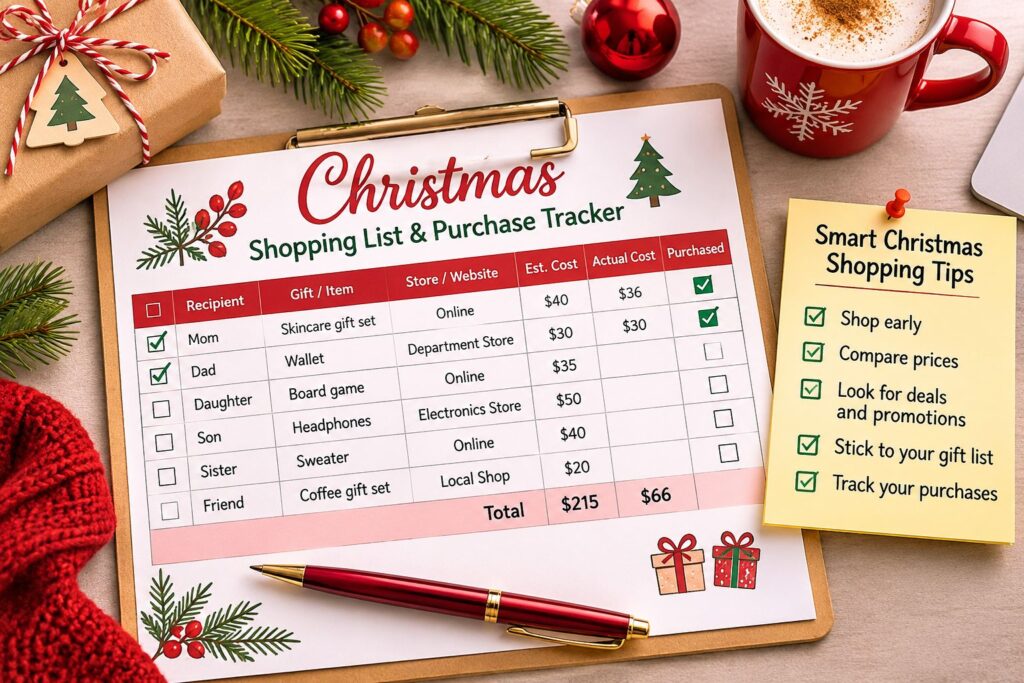
For each person, try to come up with two or three gift ideas. This gives you alternatives if your first choice is too expensive, unavailable, or doesn’t fit your budget.
For example:
| Person | Gift Idea | Estimated Cost |
|---|---|---|
| Daughter | Toy or educational game | $30 |
| Dad | Shirt or wallet | $25 |
| Mom | Handbag or skincare set | $40 |
| Friend | Book or coffee gift set | $20 |
| Coworker | Mug or small gift | $15 |
Before finalizing a gift, compare its estimated cost with the budget you assigned to that person in Step 3. If the gift exceeds the limit, look for alternatives or adjust your plans without increasing your overall Christmas budget.
You can also take advantage of gift ideas you’ve saved throughout the year. Keeping a list of things people mention they would like makes Christmas shopping easier and helps you avoid buying random gifts at the last minute.
Remember: A thoughtful gift doesn’t have to be expensive. Often, the most meaningful gifts are the ones that show you know the person and have put some thought into what they would appreciate.
Step 5: Start Shopping Early and Look for Deals
One of the easiest ways to stay within your Christmas gift budget is to start shopping early. Waiting until December can lead to rushed decisions, limited choices, higher prices, and unnecessary last-minute purchases.
Once you have finalized your gift list and budget, start looking for gifts well in advance. Keep an eye on sales, seasonal promotions, Black Friday, Cyber Monday, and other discounts throughout the year.
However, don’t buy something just because it’s on sale. A discount is only worthwhile if the item is something you actually planned to buy.
Here are a few tips to help you shop smarter:
- Compare prices: Check different stores and websites before purchasing a gift.
- Take advantage of sales: Look for genuine discounts on items already on your gift list.
- Set price alerts: Monitor prices for gifts you plan to purchase.
- Buy in advance: Avoid the rush and potential price increases closer to Christmas.
- Avoid impulse purchases: Stick to your gift list instead of buying additional items simply because they look attractive.
- Keep track of purchases: Record every gift you buy so you don’t accidentally exceed your budget.
Shopping early also gives you more time to find thoughtful gifts at affordable prices instead of settling for whatever is available at the last minute.
Step 6: Track Every Purchase and Your Remaining Budget
Once you start buying gifts, it’s important to keep track of how much you’ve spent. Even small purchases can add up quickly, and without tracking them, you may end up exceeding your Christmas budget.
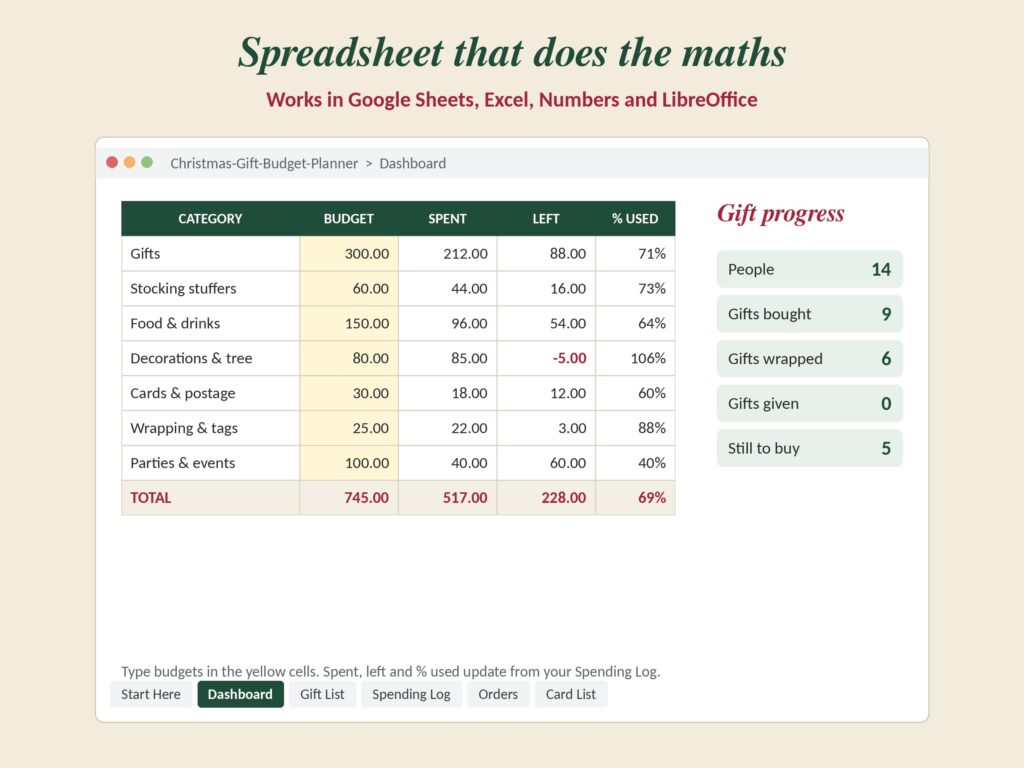
Every time you purchase a gift, update your gift list with the actual amount you paid. Compare it with the amount you originally planned to spend.
For example:
| Gift | Planned Budget | Actual Cost | Difference |
|---|---|---|---|
| Mom’s gift | $40 | $36 | $4 under |
| Dad’s gift | $30 | $30 | $0 |
| Daughter’s gift | $50 | $55 | $5 over |
| Friend’s gift | $20 | $15 | $5 under |
| Total | $140 | $136 | $4 under |
Tracking purchases helps you see where you’re spending more or less than expected. If you save money on one gift, you may be able to use that amount toward another gift—without increasing your overall budget.
Make it a habit to update your spending tracker immediately after each purchase rather than waiting until the end of your shopping trip or month.
You should also keep track of:
- Gifts you have purchased
- Gifts you still need to buy
- Gifts that have been wrapped
- Gifts that have been delivered or given
- Your total amount spent
- How much money remains in your budget
A simple spreadsheet can make this process much easier by automatically calculating your spending, remaining balance, and budget differences.
Step 7: Avoid Last-Minute Christmas Shopping
Last-minute Christmas shopping is one of the easiest ways to overspend. When you’re running out of time, you may end up buying whatever is available, paying more for gifts, or making rushed decisions that don’t fit your budget.
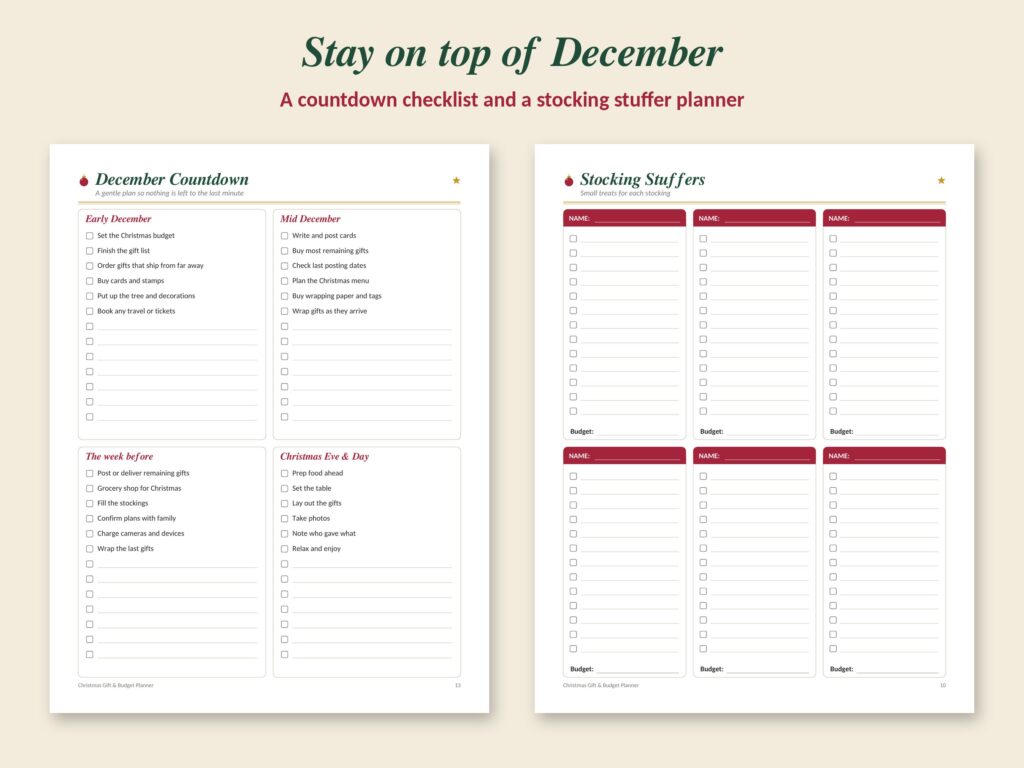
Planning ahead and keeping track of your shopping progress can help you avoid this situation.
Here are a few ways to stay ahead of your Christmas shopping:
- Set a shopping deadline: Aim to complete your gift shopping a few days or weeks before Christmas.
- Check your list regularly: Review which gifts you’ve purchased and which ones are still pending.
- Order online gifts early: Allow enough time for shipping, delivery delays, and returns if necessary.
- Don’t leave wrapping until the last minute: Set aside time to wrap gifts as you purchase them.
- Keep a backup gift idea: Have an alternative in mind if a planned gift becomes unavailable.
- Avoid panic buying: Don’t purchase expensive gifts simply because Christmas is approaching and you feel pressured.
You can also set weekly shopping goals. For example, if you have 10 gifts to purchase and 5 weeks remaining, aim to buy approximately two gifts each week.
This makes shopping more manageable and spreads your expenses over several weeks instead of putting everything on your credit card during December.
Step 8: Consider Affordable Alternatives and DIY Gifts
You don’t have to spend a lot of money to make Christmas special. Sometimes, thoughtful and personalized gifts can mean more than expensive store-bought items.
If a gift idea exceeds your budget, consider looking for a more affordable alternative rather than increasing your spending limit.
Here are some budget-friendly gift ideas:
- DIY gifts: Homemade candles, crafts, photo albums, baked goods, or handmade decorations.
- Personalized gifts: Customized mugs, framed photographs, handwritten letters, or memory books.
- Experience gifts: A movie night, homemade dinner, picnic, game night, or a special activity together.
- Practical gifts: Items people genuinely need, such as books, accessories, kitchen items, or everyday essentials.
- Gift bundles: Combine a few inexpensive items into a thoughtful gift basket.
- Digital gifts: E-books, printable planners, digital artwork, subscriptions, or online experiences.
You can also consider organizing a Secret Santa exchange among friends, coworkers, or extended family members. Instead of everyone buying gifts for multiple people, each person buys one gift for a selected recipient. This can significantly reduce holiday spending while keeping the gift-giving tradition fun.
Remember, the value of a Christmas gift isn’t determined by its price tag. A thoughtful gift that fits your budget is always better than an expensive purchase that creates financial stress.
Step 9: Set Spending Limits for Other Christmas Expenses
Christmas spending isn’t limited to gifts. There are several other expenses that can add up during the holiday season, including decorations, food, parties, travel, wrapping supplies, and Christmas cards.
If you’re focusing only on your gift budget, you may underestimate how much you’re actually spending on Christmas.
Consider creating separate spending limits for other holiday expenses, such as:
| Expense Category | Example |
|---|---|
| Christmas food & drinks | Groceries, baking, snacks, beverages |
| Decorations | Christmas tree, lights, ornaments |
| Wrapping supplies | Gift wrap, ribbons, gift bags, tags |
| Christmas parties | Hosting, outings, celebrations |
| Travel | Flights, fuel, accommodation |
| Christmas cards | Cards, postage |
| Activities | Advent activities, family outings |
| Charity & giving | Donations, charitable gifts |
Setting separate budgets for these categories helps you see the bigger picture and prevents expenses from quietly adding up.
For example, you may have a $500 gift budget, but if you also spend $200 on food, $100 on decorations, and $150 on travel, your total Christmas spending will be $950.
By planning for all major holiday expenses in advance, you can make better financial decisions and avoid surprises when January arrives.
Step 10: Review Your Christmas Budget Regularly
Creating a Christmas budget is only the first step. To stay on track, you need to review it regularly throughout the holiday season.
Set aside a few minutes every week to check your gift list, spending tracker, and remaining budget. This helps you identify potential problems early and make adjustments before your expenses get out of control.
During your weekly review, check:
- Total spending: How much have you spent so far?
- Remaining budget: How much money do you still have available?
- Gifts purchased: How many gifts have you already bought?
- Gifts remaining: What still needs to be purchased?
- Overspending: Are any gifts or categories exceeding their planned budgets?
- Upcoming expenses: Are there any additional Christmas expenses you haven’t accounted for?
- Shopping progress: Are you on track to finish shopping before Christmas?
If you’re spending more than planned in one category, look for ways to reduce spending elsewhere. If you’ve saved money on certain purchases, keep that money within your overall Christmas budget rather than treating it as extra money to spend.
A regular review helps you stay in control, avoid last-minute surprises, and enjoy Christmas without worrying about your finances.
Make Christmas Planning Easier with Our Christmas Gift & Budget Planner
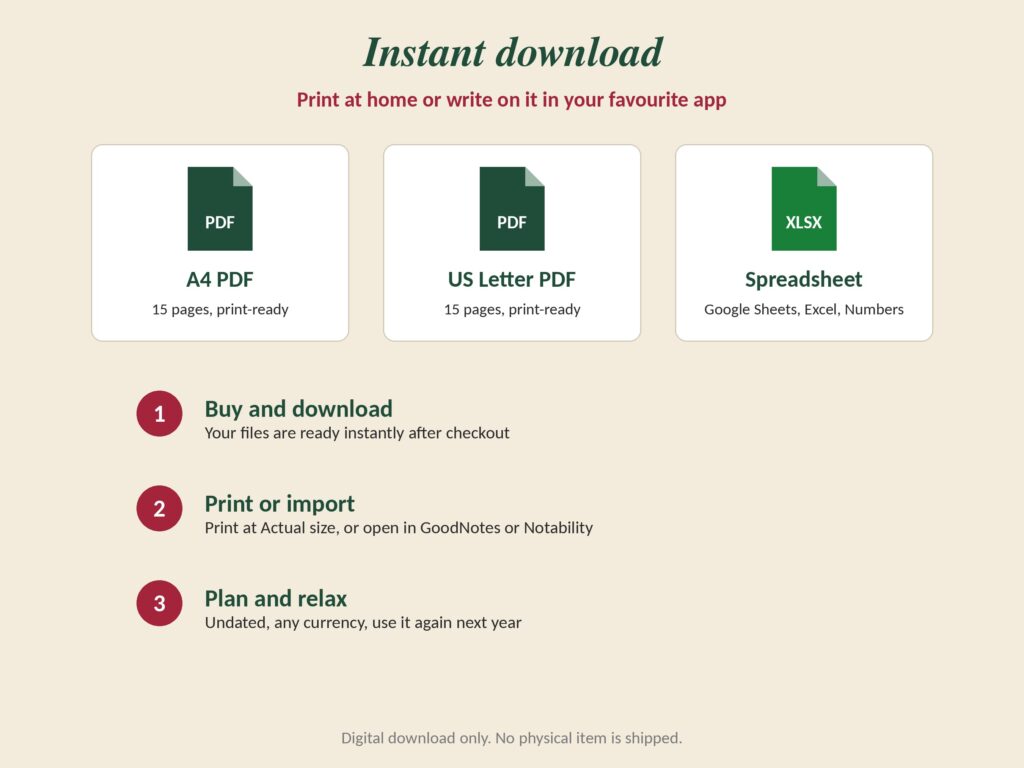
If you want to put these Christmas budgeting tips into practice without managing everything in separate lists, notes, and spreadsheets, our Christmas Gift & Budget Planner can help you organize everything in one place.
This printable and digital planner is designed to help you plan your Christmas spending, organize gift ideas, track purchases, and stay on top of your holiday preparations.
What’s Included?
- Christmas Budget Overview – Plan your spending across gifts and other Christmas expenses.
- Christmas Savings Plan – Prepare for Christmas by saving money in advance.
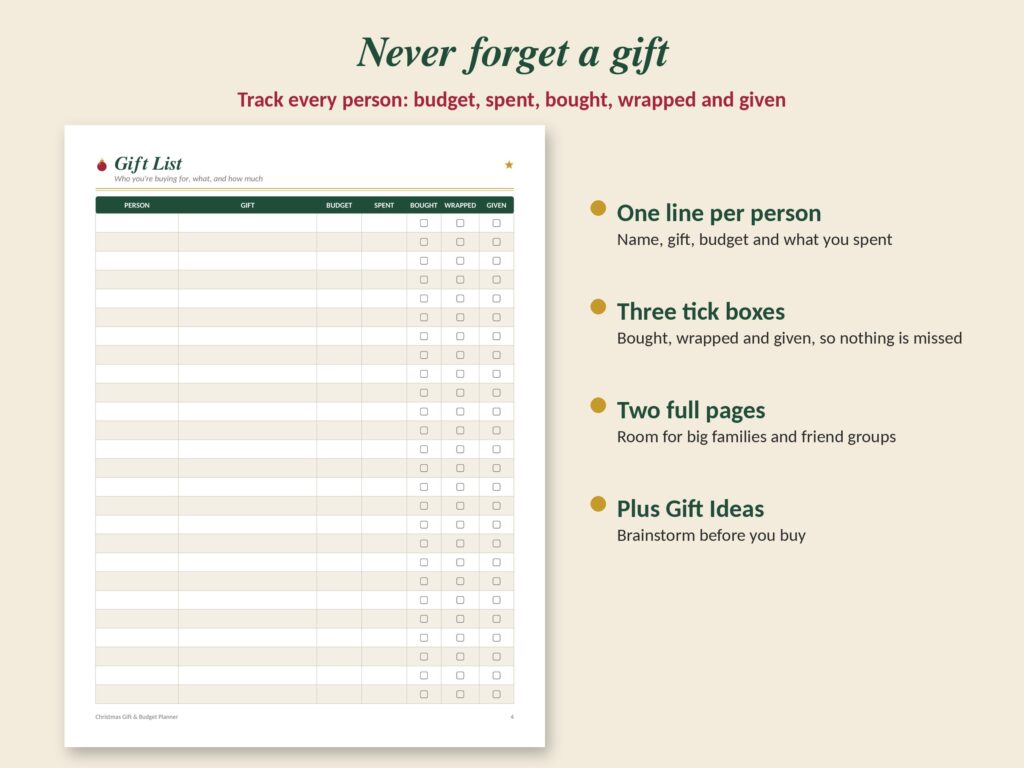
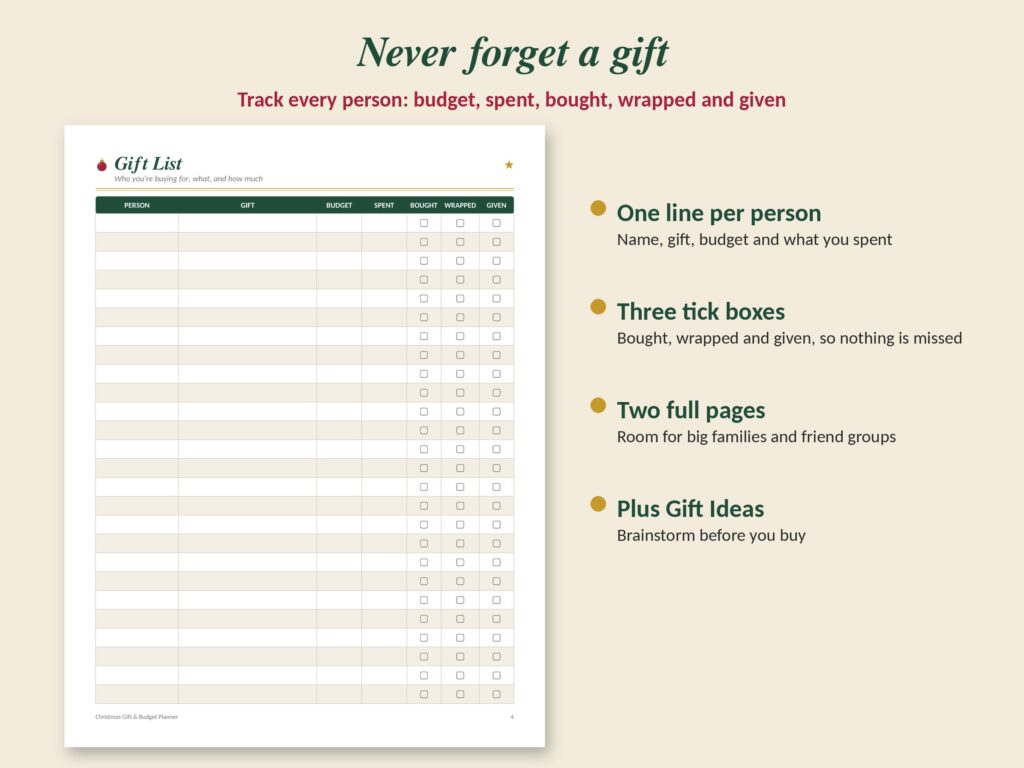
- Gift Lists – Organize recipients, gift ideas, budgets, and actual spending.
- Shopping List – Keep track of the gifts and items you need to buy.
- Orders & Deliveries Tracker – Monitor online orders and deliveries.
- Spending Log – Record purchases and keep track of your expenses.
- Christmas Countdown – Stay organized as Christmas approaches.
- Additional Planning Pages – Manage stocking stuffers, Christmas cards, wrapping, thank-you notes, and more.
The planner includes printable PDF pages and a spreadsheet to help you track your Christmas budget and spending. Use it digitally or print the pages and fill them in by hand.
Whether you’re shopping for a few people or preparing gifts for a large family, this planner can help you stay organized, avoid overspending, and enjoy a more stress-free Christmas.
Start planning a more organized Christmas today!
Get Your Christmas Gift & Budget Planner
Final Thoughts
Christmas doesn’t have to mean overspending or financial stress. With a little planning, a realistic budget, and a well-organized gift list, you can enjoy the holiday season while keeping your finances under control.
Start planning early, spend thoughtfully, track your purchases, and remember that the best Christmas gifts aren’t necessarily the most expensive ones. What matters most is the thought, love, and memories you create with the people around you.
Plan ahead, stay within your budget, and enjoy a wonderful Christmas!
Enjoy Worthview?
Add Worthview as a Preferred Source on Google to see more of our stories in Search.

Worthview Editorial Team is the shared byline for content created collaboratively by Worthview’s editors and contributors. Since 2008, we’ve published thousands of articles across technology, AI, finance, health, home, travel, and lifestyle. Our editorial process emphasizes original research, reputable sources, regular content updates, and clear attribution. Articles covering higher-trust topics, including health and finance, may also undergo review by qualified subject-matter experts.