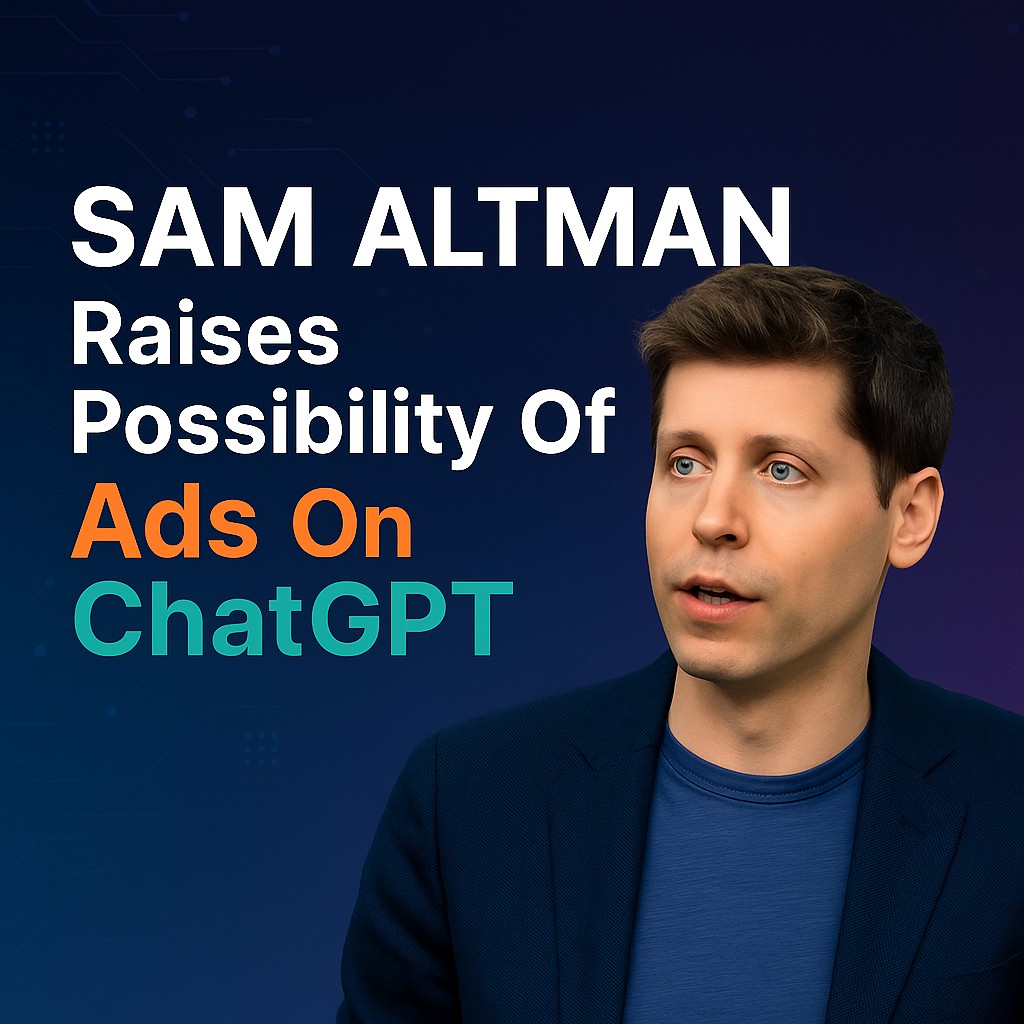
For the first time, OpenAI CEO Sam Altman has openly suggested that ads might come to ChatGPT in the future.
While he has long emphasized that ChatGPT should remain a “trusted assistant” — not an ad-driven tool — his latest comments show that OpenAI is re-evaluating how it earns money from its wildly popular AI platform.
What Sam Altman Said
Speaking recently about ChatGPT’s future, Altman made it clear that he’s “not totally against ads”, though any move in that direction would require a lot of care.
He explained that ChatGPT currently provides plenty of value to users — for example, recommending products, restaurants, or travel options — but doesn’t earn anything in return.
“People get value when ChatGPT recommends something, but ChatGPT doesn’t get a dime,” Altman said.
This has sparked a broader discussion inside OpenAI about sustainable monetization and the possibility of introducing ads without breaking user trust.
A Delicate Balancing Act
Altman also took a clear jab at how some search engines, like Google, operate.
He pointed out that ads can sometimes misalign incentives — search engines make more money when users click ads, not necessarily when they find the best answer.
“Ads on Google search are dependent on Google doing badly… so you’re like, that thing’s not quite aligned with me,” Altman explained.
His message was simple: OpenAI doesn’t want to follow that path.
If ChatGPT ever introduces ads, they’ll need to serve the user’s interests first, not the advertiser’s.
Why OpenAI Is Considering Ads
Running an advanced AI model like ChatGPT isn’t cheap.
Every conversation requires massive computational power, data processing, and cloud resources — all of which cost money.
So far, OpenAI’s main income sources have been:
-
ChatGPT Plus subscriptions ($20/month)
-
Enterprise plans for large organizations
-
API usage for developers
But with millions of free users worldwide, an ad-supported model could help offset costs and expand access — similar to how YouTube and Spotify balance free and paid tiers.
Interestingly, OpenAI has even started hiring for monetization and ad strategy roles, showing the idea is being explored seriously.
Also read, Google Plans to Put Ads Inside Gemini and other AI products — What that means
Possible Ad Models for ChatGPT
While no official details have been shared, experts are speculating about what ads in ChatGPT might look like:
-
Sponsored recommendations: e.g., when you ask for “best travel destinations,” ChatGPT might include a sponsored option.
-
Affiliate links: OpenAI could earn a commission when users buy something recommended by ChatGPT.
-
AI-native ad formats: subtle integrations that blend into conversations rather than flashy pop-ups or banners.
Whatever the approach, transparency and trust will be key. Users will expect to clearly know when an answer is sponsored.
The Risks and Challenges
Introducing ads could bring benefits, but also potential problems:
-
🧠 Loss of trust: Users might question whether ChatGPT’s answers are truly objective.
-
⚖️ Bias in responses: Ads could influence what information is shown.
-
🔒 Privacy concerns: Ad targeting could involve new levels of data collection.
OpenAI knows these risks — and Altman has emphasized the need to get it right.
What This Means for Users and the AI Industry
If OpenAI moves ahead with ads, it could reshape the AI assistant market.
ChatGPT would become the first major AI chatbot to test a large-scale ad model — something that could influence Google Gemini, Anthropic’s Claude, and others.
For users, it could mean more free access to ChatGPT — but with the trade-off of occasional sponsored content.
For advertisers, it opens up a powerful new channel: conversational ads driven by real user intent.
The Bottom Line
As of now, ChatGPT doesn’t have ads, and Sam Altman insists that trust remains the top priority.
However, his latest comments make it clear — OpenAI is thinking about it.
If done right, ChatGPT ads could make AI tools more accessible while keeping quality high.
If done wrong, it could damage the very trust that made ChatGPT so popular in the first place.
What’s Next
There’s no timeline yet, but the discussion has started.
And in the fast-moving world of AI, today’s “maybe” could easily become tomorrow’s “launch.”
Stay tuned — the way we interact with ChatGPT may soon change in ways we’ve never seen before.