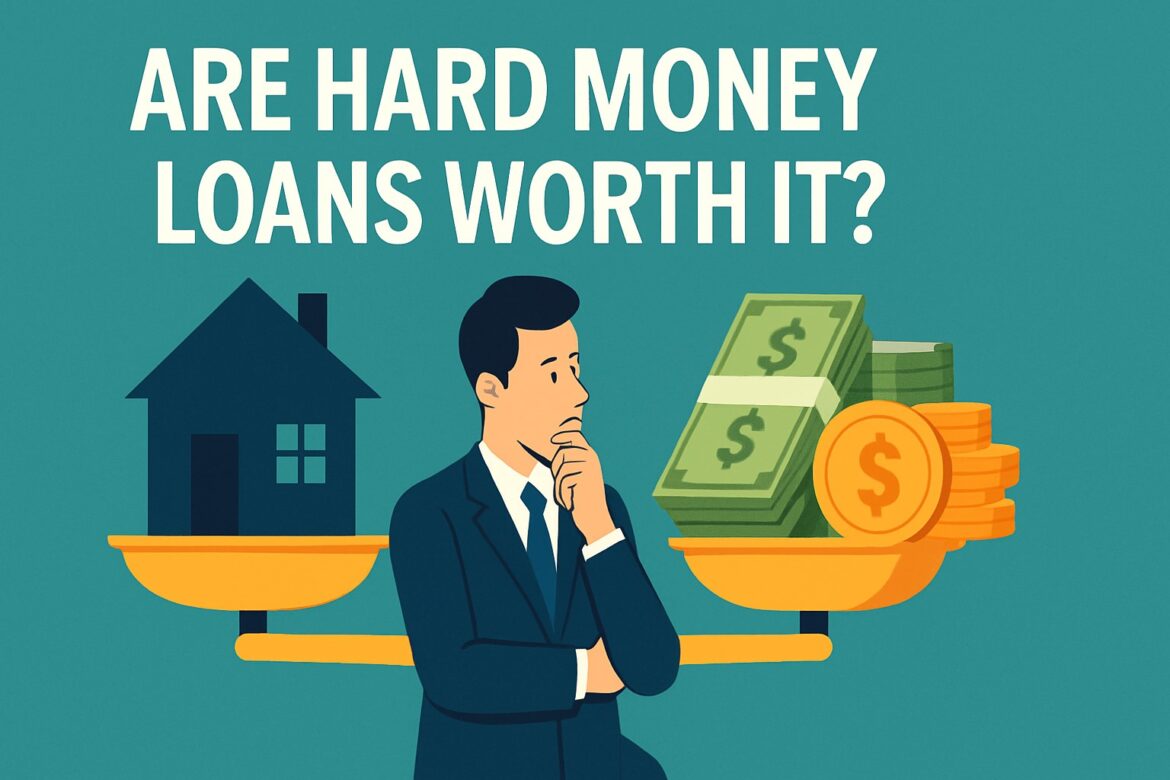
One of the most attractive financing options for real estate projects is the hard money loan. It’s easy to see why these loans are so appealing: you can get approved quickly, and you don’t need to have a perfect credit score.
But how do you know whether hard money loans are worth it for your next real estate investment? Here’s a breakdown of everything you should know when you’re deciding whether or not to apply for this financing.
How Much Do Hard Money Loans Really Cost?
To determine whether or not a hard money loan is worth it for you, you need to be aware of all the costs associated with this lending option.
One of the key things to note is that interest rates for hard money loans are generally quite high, ranging from 9 to 14%. You’ll also pay points upfront—usually 2 to 5% of the loan amount—as a fee to the lender. On top of this, it’s standard for a lot of hard money lenders to issue processing fees and appraisal costs that will also need to be factored in.
These fees aren’t so bad when you consider the fact that hard money loans are designed for short-term projects, with the goal being to pay them off as quickly as possible. That means, if you need a hard money loan for a quick project, you won’t end up making too many interest payments.
Let’s say you get a £200,000 hard money loan with a 12% interest for 12 months, and you pay 3 points (£6,000) up front. Over the course of the year, you’ll pay £24,000 in interest, plus the £6,000 in fees, so the total cost of the loan is £30,000.
The Cost of Hard Money Loans For Property Flipping
Now assume you use a hard money loan to flip a property, which is one of the most common ways that these loans are used. Again, we’ll imagine that you buy a property for £200,000, and you spend £40,000 on renovations and sell it for £300,000.
In this case, your total out-of-pocket might be £70,000 (the £30,000 loan cost, plus the £40,000 renovations). If your net profit after other expenses is £30,000 or more, then the loan was a tool that helped you make money fast.
The whole point of hard money loans is that they give you the speed that you wouldn’t have with a traditional bank loan. In reality, you probably won’t hold your loan for a full year—ideally, you’ll pay it off in 6 months or less, reducing the interest cost.
If we stick with the example above, holding the loan for just 6 months would set you back £12,000 in interest, not £24,000, which massively improves your margins.
Final Word
No, hard money loans aren’t cheap, but they’re not supposed to be. If you want cheap, go with a traditional bank loan. But if you want speed and flexibility, a hard money loan is probably the best choice.
This article speaks pretty generically about these loans, and you’ll obviously want to run the numbers and work out what kind of profit you’ll make to decide whether or not hard money lending is for you.