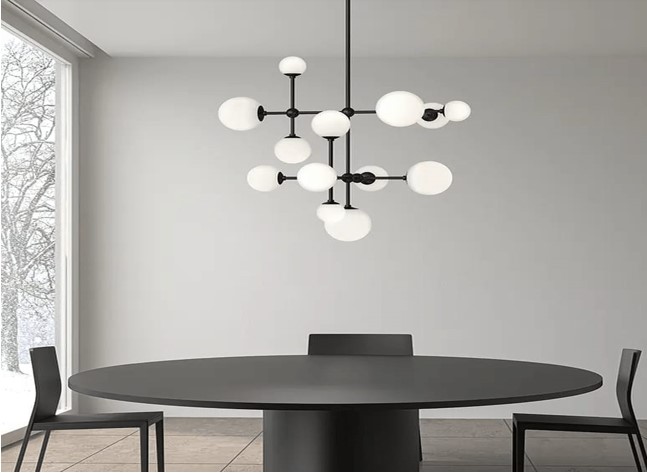
Do you know that the right ceiling lights can either turn your living room into an absolute signature room of your house or make it a total disappointment? Yes, living room lights do have this tendency.
If you are downplaying the role of the ceiling lights you will install in the living room, you’re doing it all wrong.
The right ceiling lamps are a total game changer! They add the right vibe to the overall environment and instantly upgrade the living space. They also make sure all your next pictures in the living room are completely Instagram worthy!
In this guide, we shall talk about lights for the living room. No matter whether you are trying to redo your living room or move to your new apartment, this guide will clear up all your confusion.
Types of Lighting
Well, lighting is not as simple as ABC. You need to know that there are different types of ceiling lamps, as each comes with its own functions and features. It’s not just the on and off feature of a light that you need to know about, but there is a necessity to learn about the different types of lights if you really want to vibe up your living room.
A. Ambient Lights
Now, these are the main lights for the living room. These ceiling lamps are the ones that are going to give some ‘brightness’ to the room. Also, they would most probably be the first ones to be lit once you enter the living room.
Also known as base lights for living room, they are there to set the tone of the room. These lights include pendant lights, ceiling fixtures, and even LEDs.
Currently, the most common ambient lights used in the living rooms are warm white lights that give a soft glow to the entire room. Check out this Gold Spot Light that would absolutely add glamour to your room and give a warm vibe to it.
B. Task Lights
Compared to the ceiling lamps, they are specific lights that get particular tasks done. They help the home dwellers get their reading activities accomplished, without straining their eyes.
These lights, as the name suggests, are for specific tasks and activities. Be it a standing floor lamp right behind a couch where you read a book, or a lamp on the table, task lights are worth adding to your living room.
They make your living rooms fancy while ensuring you can click lots of pictures with them and post on your Instagram! They are a MUST-HAVE along with your ceiling lamps.
C. Accent Lights
Accent lights come with the sole purpose of adding a lot of glam and drama to your living room. They are not the ‘main lights’ of the room, nor do they get ‘specific tasks’ done. Rather, they will bring the onlooker’s attention to a specific part of the room.
For instance, you’ll place the light right above an artwork, and it will highlight it. Or, you’ll place it with a bookshelf and the guests will straight go to check your book collection!
Choosing the Right Ceiling Lamps
Lamps are expensive! Ceiling lamps are even more pricey!
If you are on a budget while buying lights for the living room, you need to make the choice after enough deliberation. The first thing you need to do is to map out the entire room and decide where you need to place accent lights and which would be the right area to add a task light.
Once you have planned everything out in your head, only then step out to buy the lamps. If you already have a lot of natural light entering the room, there will be no need to buy lots of additional light sources. However, if you plan to turn your living room into a cosy hangout place for your friends or a chilling space, get the lights that serve the purpose.
Connect With Your Innate Aesthetics
Everyone has a different personality, and so are their aesthetics. Where some people opt for loud and extensive room decor, others prefer simple ceiling lamps. Similarly, a lot of homeowners look for boho chic vibes while choosing lights for living room and want to add a lot of paper lanterns and rattan pandats. Contrarily, there are some vintage enthusiasts as well who love getting industrial hanging bulbs in their homes.
Before choosing your new living room lamps, be clear about what you really want. Select an aesthetic vibe you’ll be following and then choose your lamps accordingly.
Aesthetics also imply the usage of colour temperature in the room. If you want a cosy environment that is soft yet inviting, you need to get your hands on warm white light. On the other hand, for a bright living space that is energetic and fun, cool white light would serve the purpose.
Mostly, it’s the warm light that people prefer while choosing lights for the living room as it offers an aesthetic upgrade.
Whenever you feel too much light in the room, as soon as you turn on the ceiling lamp, you can always use a dimmer to dim it out. Dimmers are a MUST in modern homes. They don’t only help you save a lot of energy and get a lower electricity bill, but also add a lot of versatility to your living room lighting.
Final Thoughts
Relying merely on the ceiling lights makes your living room appear dull. It is not only flat but is also very harsh at times. It is always a better idea to mix a lot of lights for living room and give a new vibe to the entire space. Layering all three lights, ie, ambient, task, and accent ones, is a great way to make your living room aesthetically pleasing. Corners are especially the areas that need your attention. Light them up and make them cosy!
Ceiling Lights – Frequently Asked Questions
1. What types of ceiling lights are available?
Ceiling lights come in various styles, including flush mount, semi-flush mount, chandeliers, pendant lights, recessed lights, and track lighting. The right choice depends on your room size, ceiling height, and design preference.
2. How do I choose the right ceiling light for my room?
Consider the room’s function, size, and ceiling height. For example:
Flush mount: Best for low ceilings.
Pendant lights: Ideal over kitchen islands or dining tables.
Chandeliers: Great for large rooms or entryways with high ceilings.
Recessed lighting: Perfect for modern, minimalistic spaces.
3. What size ceiling light do I need?
A general guideline is to add the room’s length and width (in feet) and convert the total to inches. That number is the approximate diameter of the ideal light fixture. For example, a 10’ x 10’ room = 20 inches in diameter.
4. Are ceiling lights dimmable?
Many ceiling lights are dimmable, but it depends on the fixture and the type of bulbs used. Make sure to check the product description and use compatible dimmable bulbs and a dimmer switch.
5. Can I install a ceiling light myself?
If you’re comfortable with basic electrical work, you can install it yourself by following the manufacturer’s instructions. However, if you’re unsure, hiring a licensed electrician is recommended for safety.
6. What kind of bulbs do ceiling lights use?
Ceiling lights can use LED, incandescent, CFL, or halogen bulbs. Always check the fixture’s specifications for bulb type, wattage, and base size.
7. Are LED ceiling lights better than traditional lights?
Yes. LED lights are more energy-efficient, longer-lasting, and produce less heat. They’re a smart choice for both residential and commercial spaces.
8. How do I clean and maintain ceiling lights?
Turn off the power and let the bulbs cool before cleaning. Use a soft, dry or slightly damp cloth to wipe the fixture. Avoid abrasive cleaners and water near electrical parts.
9. Do I need a junction box to install a ceiling light?
Yes, most ceiling lights require a junction box for secure and safe electrical connection.
10. Can ceiling lights be used in bathrooms or outdoor areas?
Yes, but make sure they are rated for damp or wet locations, especially in bathrooms or outdoor settings. Look for an IP (Ingress Protection) rating suitable for moisture-prone areas.
To know more about lights, please visit our website: mafeemushkil.com