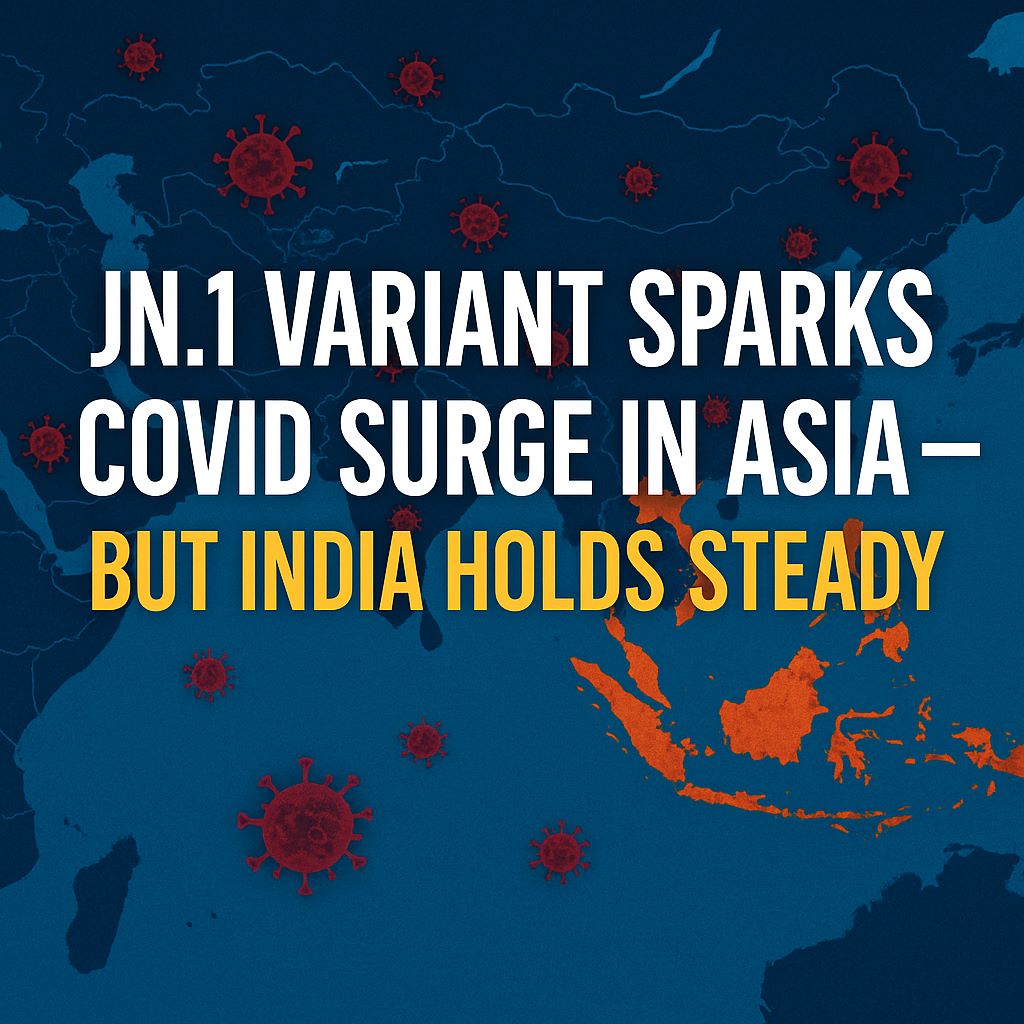
As several Asian nations witness a sharp increase in COVID-19 cases, India has managed to keep the virus largely under control—with just 257 active cases reported as of May 19, 2025. However, the regional surge linked to the JN.1 variant has raised health officials’ vigilance across the continent.
Asia’s COVID-19 Surge: A Quick Look
COVID-19 is making a comeback in Asia, driven by the JN.1 variant—a descendant of the Omicron BA.2.86 (also known as Pirola). While JN.1 is not known to cause more severe illness, its high transmissibility is a cause for concern.
-
Singapore has seen weekly cases rise from 11,100 in late April to 14,200 in early May. Hospitalizations increased from 102 to 133 daily. However, ICU admissions have slightly declined.
-
Hong Kong recorded a dramatic spike in test positivity—from 6.21% to 13.66% between early and mid-April. The city hit a 12-month high in severe cases in early May. Experts believe Hong Kong is now experiencing COVID-19 as an endemic disease with waves every 6 to 9 months.
-
Thailand reported over 33,000 new infections in a single week in May, largely concentrated in Bangkok. The post-Songkran holiday travel boom likely contributed to the rise.
-
In mainland China, COVID-19 positivity among patients with flu-like symptoms more than doubled—from 7.5% in late March to 16.2% in early May.
In Singapore and Hong Kong, newer sub-lineages of JN.1—specifically LF.7 and NB.1.8—are believed to be fueling these surges.
India’s COVID Status: Low and Stable
Despite the regional spike, India’s COVID-19 numbers remain low and manageable. As of mid-May:
-
Active cases: 257
-
Most cases are mild, with no unusual severity or deaths reported.
-
Hospitalizations are minimal, and many patients recover without medical intervention.
States with the most active cases include:
-
Kerala: 69 cases
-
Maharashtra: 44 cases
-
Tamil Nadu: 34 cases
-
Mumbai alone: 53 cases with no recent COVID-related deaths
Health authorities have assured the public that the situation is under control. No new SOPs have been introduced, although monitoring and precautionary efforts are ongoing.
JN.1 Variant: What You Need to Know
The JN.1 variant carries around 30 mutations, allowing it to spread easily and potentially evade prior immunity. Still, it is not known to cause more severe disease.
Common symptoms of JN.1 include:
- Fever
- Runny nose
- Sore throat
- Headache
- Fatigue
- Muscle weakness
- Mild gastrointestinal issues
These symptoms typically resolve within 4 to 5 days.
Authorities Urge Caution, Not Panic
Indian health officials continue to recommend standard precautions:
-
Practice hand hygiene
-
Wear masks in crowded areas
-
Seek medical advice if symptoms develop
There is no cause for panic, but staying alert is crucial, especially as the virus evolves.
Bottom Line: While COVID-19 is once again surging across parts of Asia, India’s case numbers remain low and stable. The government is watching the JN.1 variant closely, and citizens are encouraged to stay cautious without alarm.