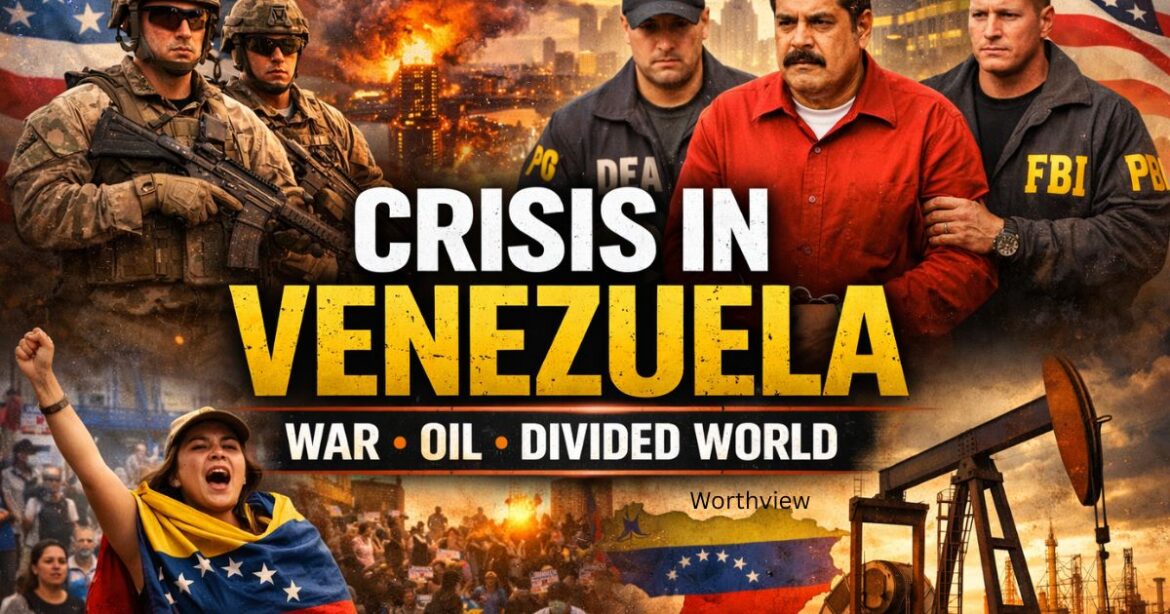
Venezuela is once again at the center of global attention after dramatic political and military developments involving the United States and President Nicolás Maduro.
The events have triggered international debate, fear of instability, and deep questions about sovereignty, democracy, and global power.
This article explains what happened, why it matters, and what could happen next — in plain, easy-to-understand terms.
What Happened in Venezuela ?
In early January 2026, the United States carried out a direct military operation in Venezuela, targeting the country’s leadership.
According to U.S. officials:
- Venezuelan President Nicolás Maduro was removed from power
- He was taken into U.S. custody to face long-standing legal charges
- The operation was described as necessary to end authoritarian rule and restore democracy
U.S. President Donald Trump stated that the United States would oversee a temporary transition period until Venezuela could hold what Washington calls “free and fair elections.”
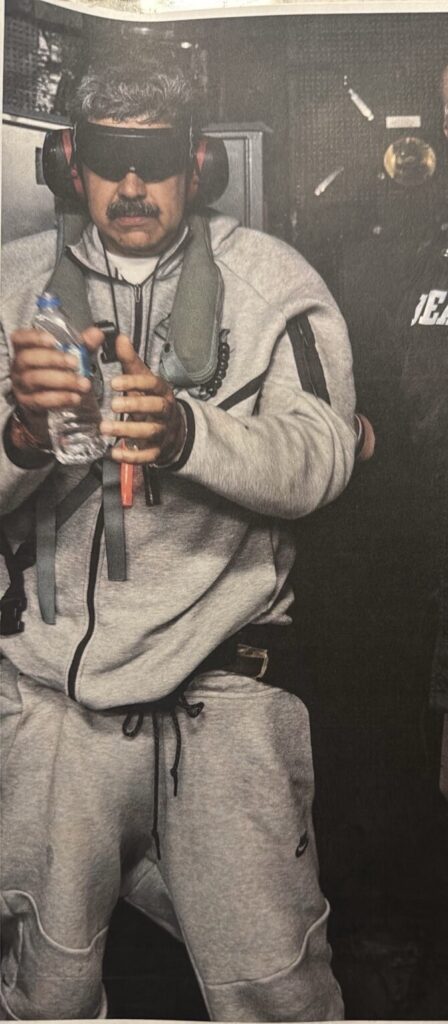
This marks one of the most direct U.S. interventions in Latin America in decades.
How Did Venezuela Reach This Point?
To understand this moment, we need to look at Venezuela’s long crisis.
For more than a decade:
- The economy collapsed due to mismanagement and corruption
- Inflation destroyed savings and salaries
- Millions of Venezuelans fled the country
- Elections under Maduro were widely questioned by international observers
- Opposition voices were jailed or silenced
The U.S. and several other countries accused Maduro’s government of:
- Drug trafficking
- Human rights abuses
- Undermining democracy
Maduro, in turn, accused the U.S. of economic warfare and regime change.
This standoff had been building for years.
How Are Venezuelans Reacting?
Inside Venezuela, reactions are deeply divided.
Supporters of the change say:
- Maduro’s rule had become unbearable
- Any path away from dictatorship is welcome
- The country needs urgent economic and political rebuilding
Critics say:
- Foreign military action violates Venezuela’s sovereignty
- A leader should be removed by Venezuelans, not outside forces
- The risk of chaos and violence has increased
For ordinary citizens, the biggest concerns are simple:
- Will food and fuel become more available?
- Will violence increase?
- Will daily life improve or worsen?
For now, uncertainty dominates.
Global Reaction: The World Is Split
The international response has been sharp and divided.
Countries condemning the action include:
- Cuba
- China
- Russia
- Several Latin American nations
They argue the move:
- Violates international law
- Sets a dangerous precedent
- Could destabilize the entire region
Countries cautiously supportive argue:
- Maduro’s government lost legitimacy long ago
- Venezuela had no peaceful path left
- Intervention may open the door to democratic transition
The United Nations has called for restraint, protection of civilians, and respect for international norms.
Why Oil Matters So Much
Venezuela has one of the largest oil reserves in the world.
But years of poor management and sanctions caused production to collapse.
The U.S. has signaled interest in:
- Rebuilding Venezuela’s oil sector
- Allowing international companies to operate
- Using oil revenue to stabilize the economy
Supporters say this could revive the country.
Critics warn it could turn Venezuela into a geopolitical resource battleground.
Legal and Moral Questions
This crisis raises difficult questions:
- Can foreign intervention ever be justified?
- Does removing an authoritarian leader excuse violating sovereignty?
- Who decides what “legitimate government” means?
There are no easy answers — and international law experts are deeply divided.
Risks Going Forward
Several dangers remain:
- Armed resistance from Maduro loyalists
- Internal power struggles
- Long-term instability
- Refugee flows to neighboring countries
- Proxy tensions involving major global powers
History shows that removing a leader is easier than rebuilding a nation.
What Happens Next?
In the coming weeks, the world will watch closely:
- Whether a credible interim government forms
- If elections are announced and trusted
- How the economy and security situation evolve
- Whether violence escalates or calms
For Venezuela, this moment could become:
- The start of recovery
or - Another chapter of prolonged instability
Much depends on what happens after the headlines fade.
Final Thought
Venezuela’s crisis is not just about one leader or one country. It reflects larger global tensions about power, democracy, and intervention.
For ordinary Venezuelans, however, the hope is simple:
a normal life, dignity, and a future without fear.
Whether this moment delivers that remains uncertain.
Related Posts

One thought on “Crisis in Venezuela Explained”
Comments are closed.