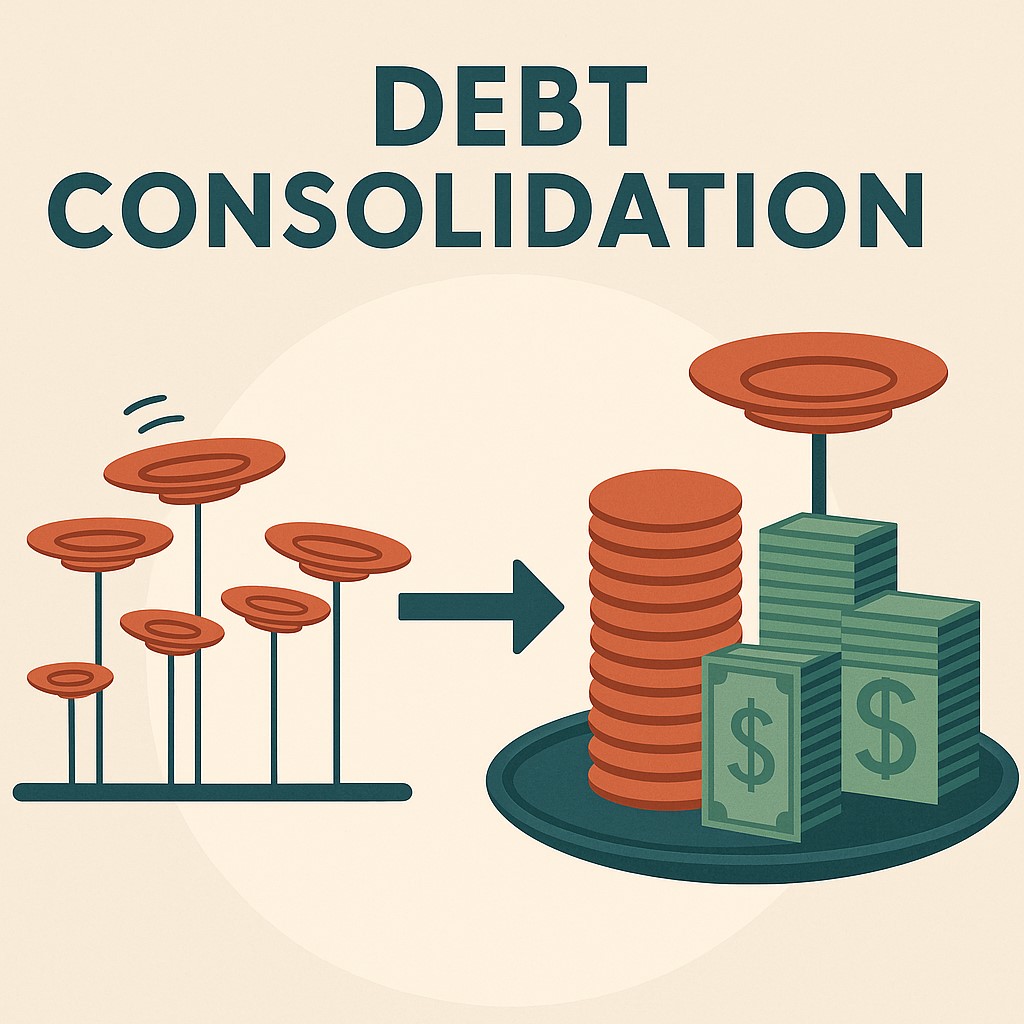
If you’ve ever tried to keep multiple spinning plates in the air, you know the stress of wondering which one will crash first. Juggling five, six, or even 10 separate credit lines feels the same way: every plate is a due date, an interest rate, and a nagging “minimum payment” notice. Debt consolidation gathers those plates, stacks them neatly, and hands you one sturdy platter to manage instead.
What is debt consolidation?
At its core, debt consolidation rolls a handful of high‑interest balances into a single, lower‑interest account—most commonly through a personal loan or balance‑transfer card. The upshot is simple arithmetic: fewer due dates mean fewer late fees, and a reduced rate means more of each payment attacks principal rather than feeding interest. Because the new account is installment‑style rather than revolving, many borrowers also notice a quick boost to their credit‑mix ratio, an often overlooked slice of your FICO pie.
The psychological benefits are just as tangible. With one predictable monthly figure from a company like Symple Lending, budgeting stops feeling like a game of Whac‑A‑Mole. Clients frequently describe the moment of consolidation approval as “taking a breath for the first time in years.” That calm matters; decision-making improves when panic subsides, which can ripple into better choices in other areas of personal finance.
Does debt consolidation really work?
Critics sometimes warn that consolidation only “moves the debt around.” True enough—no magic wand erases balances overnight—but shifting from 28 percent variable APRs to a fixed 10 percent loan with a clear payoff date hardly counts as sleight of hand. It’s a disciplined strategy that relies on math, not mysticism.
To maximize the payoff, prepare three steps before applying:
- Pull a free copy of your credit report and dispute any inaccuracies
- List every unsecured debt with current balances and APRs
- Sketch a lean, three‑month budget that shows the payment you can comfortably maintain.
Lenders reward borrowers who demonstrate control, and your prep work helps you shop for terms instead of praying for them. Debt consolidation experts can help you find the balance to pay off your debts in a responsible manner.
The result? A single payment, a defined payoff horizon, and interest savings you can quantify on day one. In the end, debt consolidation isn’t about escaping responsibility; it’s about reclaiming command of it—one plate, firmly in hand. And, this can be the best way to handle your financial future.
Who Should Consider Debt Consolidation?
Debt consolidation isn’t a one-size-fits-all solution, but it can be a smart choice for certain borrowers. If you’re managing multiple high-interest credit cards, struggling to keep track of payments, or feeling overwhelmed by inconsistent billing cycles, consolidation may offer clarity and relief.
Ideal candidates typically have:
-
A steady income that supports a consistent monthly payment
-
A fair to good credit score (generally 620 or higher)
-
A sincere commitment to not racking up new debt post-consolidation
If you’re only slightly behind or dealing with one or two manageable balances, simpler methods—like the snowball or avalanche payoff strategies—may be enough. But if you’re feeling buried or your interest rates are eating into your progress, consolidation provides both structure and savings.
What to Watch Out For
Debt consolidation can be empowering—but only if done with eyes wide open. Some pitfalls to avoid include:
-
Fees that outweigh the savings: Some loans come with origination fees or balance transfer costs that undercut your interest reduction. Always run the numbers.
-
Scams and predatory lenders: Stick with reputable financial institutions. If a lender promises instant approval or pressures you into upfront payments, walk away.
-
Falling back into old habits: Once accounts are paid off, it’s tempting to use them again. Consider closing or freezing unused cards to prevent relapsing into debt.
Above all, remember: consolidation is a tool, not a cure. When paired with healthy budgeting, financial education, and spending awareness, it can transform your money mindset—and your future.