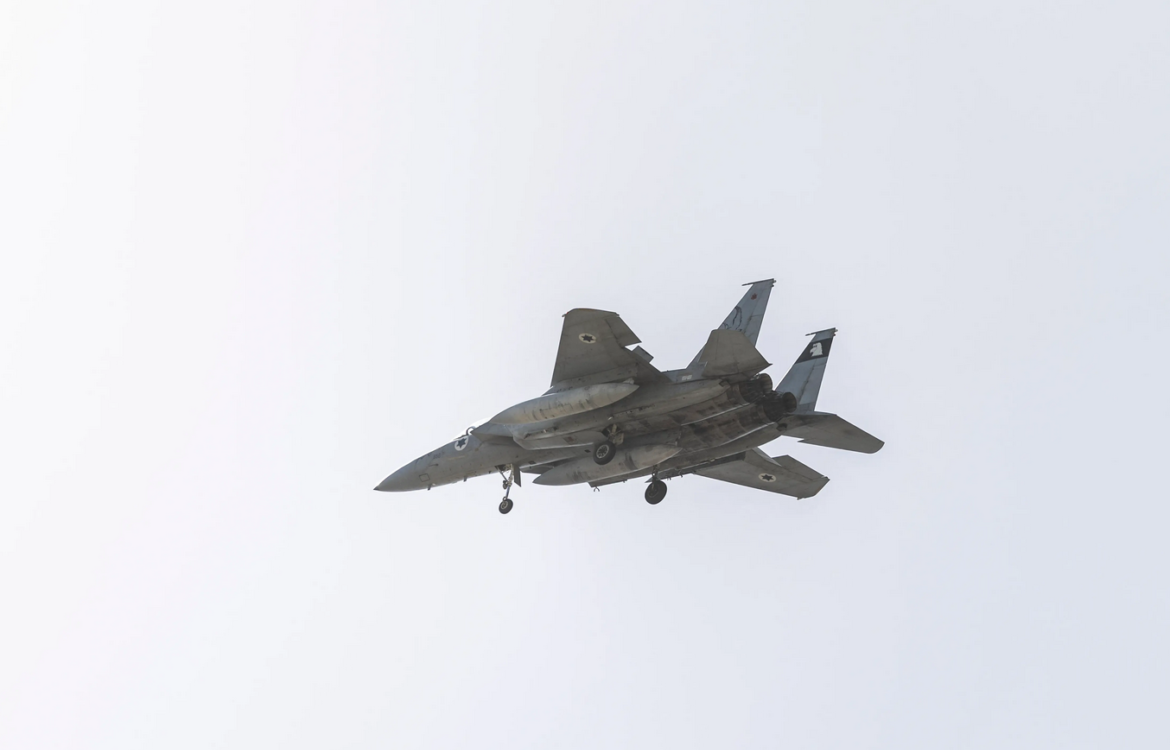
On April 3, 2026, Iran shot down a US Air Force F-15E Strike Eagle during Operation Epic Fury — the ongoing US-Israeli war against Iran that began on February 28. Both crew members ejected. One was quickly rescued; the second went missing deep inside Iranian territory before being rescued on April 5 after a dramatic operation involving dozens of US aircraft. It marks the first confirmed combat shootdown of a crewed American warplane in the conflict.
What Just Happened in the Skies Over Iran
Six weeks into a war that the Pentagon said America was winning decisively — something went very wrong over Iran.
On April 3, 2026, a US Air Force F-15E Strike Eagle was shot down over Iran. Both crew members ejected from the aircraft. One crew member was rescued quickly and is alive. The search immediately began for the second.
This wasn’t a minor incident. It was the kind of moment that forces governments to recalibrate their messaging — and makes the public ask hard questions.
Just days before the shootdown, President Trump had declared in a prime-time address that Iran had “no anti-aircraft equipment,” that “their radar is 100% annihilated,” and that the US was “unstoppable as a military force.”
Then an Iranian missile brought down one of America’s most capable fighter jets.
What Is the F-15E Strike Eagle — And Why Does It Matter?
For readers unfamiliar with military hardware, here’s the quick version.
The F-15E Strike Eagle is a multirole fighter — meaning it can fight enemy aircraft in the air AND strike ground targets. It carries both a pilot and a weapons systems officer (WSO), making it a two-person crew.
It is one of the most battle-tested jets in the US Air Force’s arsenal — a workhorse that has flown missions in Iraq, Afghanistan, Syria, and Libya. It’s fast, powerful, and carries sophisticated electronic warfare systems designed to defeat enemy air defenses.
The jet that was shot down bore tail flash stripe markings from the 48th Fighter Wing, based at RAF Lakenheath in the United Kingdom — the largest US fighter operation in Europe, and a key hub of American activity heading to the Middle East.
So this wasn’t just any plane. It was a frontline combat aircraft from a top-tier US Air Force wing, on an active war mission.
How Did Iran Shoot It Down?
This is where things get murky — and interesting.
Iran’s military initially claimed it had shot down a US F-35 — America’s most advanced stealth fighter — using “a new type of air defense system” operated by the Islamic Revolutionary Guard Corps (IRGC). But photos published from the crash site told a different story.
Images from the crash site clearly showed debris belonging to an F-15E Strike Eagle, not an F-35. Aviation experts and open-source analysts confirmed the wreckage, including a visible tail fin matching the markings of the 494th Fighter Squadron.
Iran overclaimed — as it often does. But the underlying fact remained: a US warplane was down on Iranian soil.
A US aircraft mobilized to support the search and rescue mission was also struck by Iranian fire. That aircraft — a single-pilot A-10 Thunderbolt, known as a “Warthog” — made it to Kuwaiti airspace, where the pilot safely ejected. Two US Black Hawk helicopters involved in rescue efforts were also struck by Iranian fire, though crew members were unharmed.
In other words, the rescue effort itself came under attack. This was not a clean operation.
The Search for the Missing Airman — Inside Enemy Territory
After the first crew member was quickly rescued, attention turned to the second — a weapons systems officer believed to have ejected somewhere over central Iran.
Videos circulated showing what appeared to be US search and rescue aircraft flying in southwestern Iran. NPR geolocated one video to a bridge in Khuzestan province, approximately 100 miles inland.
Meanwhile, Iran turned the search into a public spectacle.
An Iranian regional governor offered a cash bounty for the crew. Iranian state media broadcast an on-screen crawl urging the public to “shoot them if you see them.” Videos circulated claiming to show locals firing at US helicopters with guns.
It was a tense, dangerous, and deeply public manhunt — playing out on social media in real time, deep inside a country the US was actively bombing.
The Rescue: “No One in the World But the US Could Pull This Off”
Then came the breakthrough.
🚨“WE GOT HIM! My fellow Americans, over the past several hours, the United States Military pulled off one of the most daring Search and Rescue Operations in U.S. History, for one of our incredible Crew Office Members, who also happens to be a highly respected Colonel, and who I… pic.twitter.com/FNPWV6MPvA
— The White House (@WhiteHouse) April 5, 2026
On April 5, President Trump confirmed the missing crew member had been rescued. “The airman sustained injuries, but he will be just fine,” Trump said, adding that the rescue operation involved “dozens of aircraft.”
A retired general described it as a rescue “no one in the world but the US could pull off.” The crew member had reportedly made contact with the military early on Friday, allowing rescue teams to track and extract him.
But even in the moment of relief, Iran wasn’t done.
Hours after Trump announced the rescue, Iran claimed it had shot down two US C-130 transport planes and two Black Hawk helicopters. State television broadcast footage of what it said was wreckage from one of the aircraft.
The US military had not confirmed or denied those claims at the time of publication.
Why This Matters Beyond the Headlines
The shootdown of the F-15E — and the chaotic rescue operation that followed — exposed something important: the gap between what officials say publicly and what’s actually happening on the battlefield.
Iran’s successful downing of the US jet came despite repeated claims from Defense Secretary Pete Hegseth and other officials that the US had achieved complete dominance of Iranian skies.
Military experts were quick to push back on the White House narrative.
Marina Miron, a researcher at King’s College London, said the shooting down of the F-15 directly undercuts statements from Trump and Pentagon chief Pete Hegseth that the US had established complete control over Iranian airspace.
Retired Lt. Gen. David A. Deptula, dean of AFA’s Mitchell Institute for Aerospace Studies, offered a more measured take: “High-end combat against a capable, integrated air defense system is never risk-free. What distinguishes modern Western airpower is not invulnerability, but the ability to survive, penetrate, and sustain operations while keeping losses exceptionally low.”
Both perspectives are worth holding at the same time. The US did rescue its airman from inside a hostile country — that’s a genuine military feat. But Iran also proved it can still reach American aircraft — and that matters enormously for the weeks ahead.
The Bigger Picture: What This Means for the War
This was the first known combat loss of a crewed US aircraft during the conflict. Prior losses included three F-15Es shot down in a friendly fire incident by Kuwaiti aircraft on March 2, with all six crew members ejecting safely, and a KC-135 tanker that crashed in western Iraq after a midair collision, killing six airmen.
The incident also gave Iran something it desperately needed — leverage.
Experts warned that the possible Iranian capture of the pilot could have created a crisis for Washington, giving Tehran a major leverage point that could have complicated any diplomatic resolution.
With Trump’s Monday deadline for Iran to reopen the Strait of Hormuz now hours away, and oil prices up more than 60% since the war began, the pressure on both sides is immense. The rescue of the airman removes one potential bargaining chip from Iran’s hands — but the broader war remains deeply unresolved.
What Happens Next
The immediate crisis around the downed F-15E has been resolved — both crew members are safe. But the larger questions it raised are not going away.
Can Iran still threaten US air superiority despite weeks of bombardment? The answer, it seems, is yes — at least partially. And with Trump’s ultimatum expiring Monday and indirect talks still producing no breakthrough, the skies over Iran are likely to get more dangerous, not less.
The F-15E that fell over central Iran may be wreckage now. But the questions it raised are very much still flying.
Related Posts
 America’s 15-Point Peace Plan for Iran: What It Demands, What Tehran Said, and What It Means for India
 Trump’s 5-Day War Pause vs Iran’s Flat Denial: What’s Really Happening?
 🇮🇳 What India Must Learn from the Middle East Crisis: Energy Security Lessons
 Strait of Hormuz Crisis: Which Countries Trump Called On — And Why They All Said No