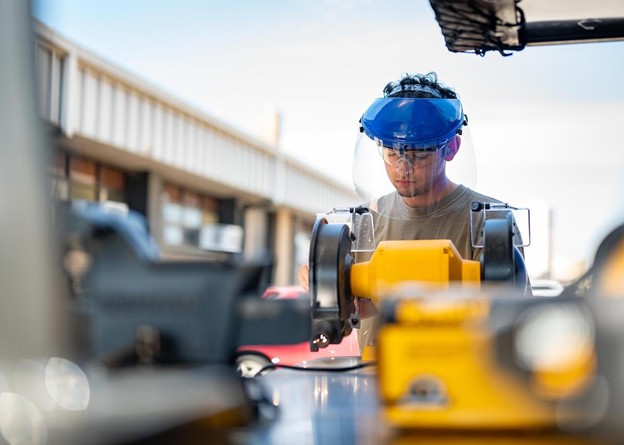
The evolution of healthcare delivery is increasingly tied to how well it can move. Fixed facilities remain essential, but they are no longer sufficient on their own. As populations grow and geographic disparities persist, the ability to bring healthcare directly to patients has become a defining advantage. This shift has placed industrial fabrication at the center of a new kind of healthcare infrastructure—one that is mobile, adaptable, and engineered with precision.
Mobile medical vehicles are not simply retrofitted vans or trailers. They are purpose-built environments designed to meet clinical standards while operating outside traditional settings. Behind each unit is a complex fabrication process that blends engineering, materials science, and healthcare expertise into a cohesive system.
- Industrial fabrication is central to the evolution of healthcare, enabling a new, mobile, and adaptable infrastructure that brings care directly to patients to address geographic disparities and population growth.
- Mobile medical units address healthcare access disparities in rural and underserved areas, offering flexibility for quick response to seasonal campaigns, community outreach, and disasters.
- The engineering requires structural integrity to handle weight distribution and vibration control, along with integrating complex medical systems like diagnostic imaging and telehealth within confined spaces.
- Custom fabrication is essential to tailor each unit to specific clinical workflows—such as primary care or emergency response—while maintaining compliance with healthcare regulations.
- Challenges include navigating complex, varied regulatory requirements, designing for durability and ease of maintenance against constant movement, and addressing deployment logistics like terrain compatibility.
Why Mobility Is Reshaping Healthcare Access
Healthcare accessibility has long been uneven, particularly in rural regions and underserved urban areas. Mobile units address this imbalance by delivering care where it is needed rather than requiring patients to travel. This approach reduces delays in diagnosis and treatment, which can have a significant impact on long-term outcomes.
Beyond accessibility, mobility introduces flexibility. Healthcare providers can respond quickly to emerging needs, whether that involves seasonal health campaigns, disaster response, or community outreach. This adaptability has made mobile medical units an increasingly valuable asset across both public and private healthcare systems.
The Engineering Behind Mobile Medical Vehicles
Structural Integrity and Design Precision
Designing a mobile medical unit requires more than fitting equipment into a confined space. Engineers must account for weight distribution, vibration control, and structural durability. The vehicle must remain stable during transit while protecting sensitive medical instruments that demand consistent performance.
Fabricators use advanced modeling tools to simulate real-world conditions, allowing them to refine designs before production begins. This process ensures that each unit meets both safety standards and operational requirements, reducing the likelihood of costly modifications later.
Integrating Complex Medical Systems
Modern mobile units often include diagnostic imaging equipment, laboratory capabilities, and telehealth systems. Integrating these technologies into a mobile environment presents unique challenges, particularly in terms of power management and spatial efficiency. Every component must be carefully positioned to maximize usability without compromising accessibility.
The ability to seamlessly integrate these systems is what transforms a vehicle into a fully functional medical facility. It also highlights the importance of collaboration between engineers, designers, and healthcare professionals throughout the fabrication process.
Custom Fabrication for Mobile Healthcare Solutions
Customization lies at the heart of effective mobile healthcare design. Different use cases—such as primary care, dental services, or emergency response—require distinct configurations. Fabricators must tailor each unit to align with specific clinical workflows while maintaining compliance with healthcare regulations.
Industry leaders like Craftsmen Industries demonstrate how specialized fabrication can support these needs. By combining engineering expertise with an understanding of medical requirements, they produce mobile units that balance durability, functionality, and patient comfort. This approach ensures that healthcare providers can deliver consistent, high-quality care regardless of location.
Lessons from Automotive Manufacturing
The development of mobile medical vehicles shares many similarities with the automotive industry. Both rely on precision engineering, efficient production processes, and continuous innovation. Looking at the history of automotive manufacturing provides useful context for understanding how these capabilities have evolved.
For example, the origins of companies like Honda highlight the role of innovation in shaping modern manufacturing practices. This historical perspective on Honda’s incorporation illustrates how engineering advancements can drive entire industries forward. These same principles are now being applied to the fabrication of mobile healthcare units, where efficiency and reliability are equally critical.
The Influence of Market Trends on Design
Fabrication does not exist in a vacuum; it is influenced by broader market trends and technological developments. As industries evolve, so do expectations around performance, sustainability, and user experience. These factors play a significant role in shaping the design of mobile medical units.
Marketing trends, for instance, often reflect shifts in consumer behavior and technological adoption. Understanding these patterns can provide valuable insights into how industries adapt to change. A useful example can be found in this guide on 5 ways to promote a local event for free, alongside this overview of emerging automotive marketing trends, which highlights the growing emphasis on innovation and personalization—both of which are relevant to mobile healthcare solutions.
Challenges in Mobile Medical Fabrication
Despite their advantages, mobile medical units present several challenges. Regulatory requirements can vary by region, making compliance a complex process. Fabricators must ensure that each unit meets stringent standards related to safety, sanitation, and equipment performance.
Maintenance is another critical consideration. Mobile units are subject to wear and tear from constant movement, which can affect both structural components and medical systems. Designing for durability and ease of maintenance is essential to ensure long-term reliability.
Logistics also play a role, particularly when deploying units in remote or difficult-to-access areas. Factors such as fuel efficiency, terrain compatibility, and operational support must be carefully evaluated during the design phase.
Looking Ahead: The Future of Mobile Healthcare Engineering
The future of mobile medical vehicles is closely tied to advancements in technology. Developments in lightweight materials, renewable energy systems, and digital connectivity are expected to enhance both performance and sustainability. These innovations could enable longer deployment periods, reduced operational costs, and improved patient experiences.
Artificial intelligence and data analytics may also play a role, particularly in optimizing workflows and supporting clinical decision-making. As these technologies become more integrated, mobile units could evolve into highly intelligent systems capable of adapting to changing conditions in real time.
Conclusion
Mobile medical vehicles represent a convergence of engineering and healthcare that is reshaping how care is delivered. Through advanced fabrication techniques, these units provide a flexible and reliable solution to some of the most persistent challenges in healthcare access. Their impact extends beyond convenience, offering a practical way to reach communities that might otherwise remain underserved.
As industrial fabrication continues to evolve, its role in healthcare innovation will only become more significant. The ability to design and build mobile environments that meet rigorous clinical standards is not just a technical achievement—it is a meaningful step toward a more accessible and responsive healthcare system.
FAQs
Q: What is the main role of industrial fabrication in the evolution of healthcare?
A: Industrial fabrication is central to creating a new, mobile, and adaptable healthcare infrastructure that brings care directly to patients.
Q: What primary challenge do mobile medical units help resolve?
A: They address healthcare accessibility imbalances, particularly in rural regions and underserved urban areas, by delivering care where it is needed.
Q: What are the key engineering challenges when designing a mobile medical unit?
A: Engineers must account for structural integrity, including weight distribution and vibration control, while integrating complex systems like diagnostic imaging and telehealth within a confined space.
Q: Why is custom fabrication important for mobile healthcare solutions?
A: Customization is necessary to tailor each unit to specific clinical workflows—such as primary care or emergency response—while maintaining compliance with healthcare regulations.
Q: What technological advancements are expected to influence the future of mobile healthcare?
A: Future developments include lightweight materials, renewable energy systems, digital connectivity, and the integration of Artificial Intelligence (AI) and data analytics to optimize performance