Furniture manufacturer in North Carolina spent $8,400 on a two-day photoshoot last April. Rented warehouse space, hired three people to move sofas around, brought in a photographer who needed specific lighting conditions. Got 47 usable images. Three months later, they needed the same sofa in different fabric – another $3,200 because you can’t just change fabric color in a photograph.
That’s why companies switch to digital. Not because physical photography is bad, but because products change faster than shooting schedules allow.
What happens during 3D modeling
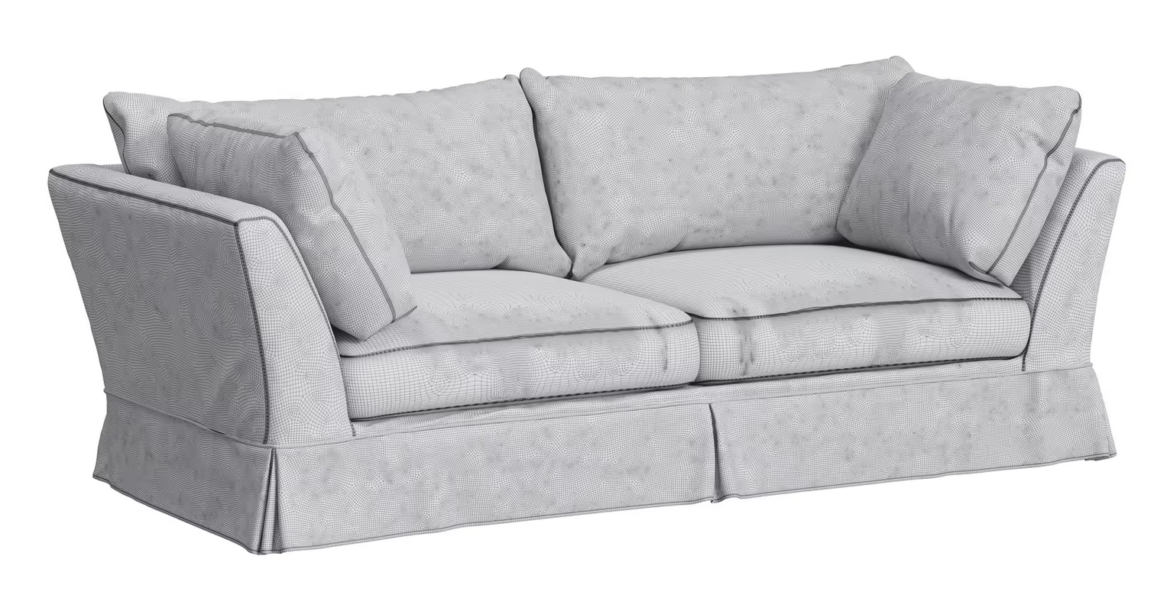
Someone sends technical drawings – dimensions, materials, how parts connect. Modeler builds it in software, polygon by polygon. A chair might be 150,000 polygons if it’s getting close-up renders, maybe 8,000 if it’s background furniture in an architectural scene. You pick resolution based on how close the camera gets.
Here’s the thing – modeling isn’t the time sink. Texturing is. Getting fabric to look like fabric, wood grain to follow the right direction, metal to reflect light correctly. Subsurface scattering matters for materials like marble or wax where light penetrates the surface, bounces around inside, exits somewhere else. Miss that detail and marble looks like painted plastic.
Designer in Austin spent six hours on one camera angle for a product launch. Moved it 2.3 degrees, got approval. That level of control doesn’t exist with physical photography – you’re working with real physics, real light, real space constraints.
According to CGTrader’s 2024 industry report, 67% of furniture retailers now use 3D models for at least half their product catalog, up from 34% in 2021.
Professional 3D modeling service teams work in stages. First pass is basic geometry – does it look like the product? Second pass adds materials and textures. Third pass is lighting and rendering tests. Some projects need a fourth pass for client revisions, which happen faster than reshooting anything physical. Change a cushion color in software: forty minutes. Change it in photography: new shoot.
Why companies actually make the switch
Cost shows up in conversations, but timelines drive decisions. Product launch scheduled for September, photography happens in June because you need buffer time for retouches and approvals. With 3D, you model in August, render in late August, launch on schedule. Manufacturer showed me their timeline spreadsheet – photography path had 23 decision points where delays stack up, 3D path had 11.
Automotive industry figured this out years ago. McKinsey reported in 2023 that 73% of car manufacturers create marketing assets before physical prototypes exist. They’re selling cars that won’t be built for six months, showing interiors with fabric options that haven’t been sourced yet. All 3D.
Revisions work differently in digital space. Client wants to see a sofa in eight fabric options – that’s eight renders from the same model, maybe four hours of work. Same request with photography means either shooting all eight versions (expensive) or Photoshop work that never looks quite right because lighting and texture are baked into the original photo.
Architectural Digest’s 2023 production survey found that furniture brands using 3D visualization reduced time-to-market by an average of 6.8 weeks compared to traditional photography workflows.
Here’s what changed in the last three years: rendering quality crossed a threshold where most people can’t tell the difference between a photograph and a render. Not professionals looking closely – they can still spot it – but customers scrolling through a website. That’s the threshold that matters for e-commerce.
Technical decisions that affect output
Resolution matters more than people expect. A model for web display needs different detail than a model for print catalog. Web version might be 2K renders, print needs 8K minimum. File size scales with resolution – 8K render of a complex scene can be 400MB before compression.
Some decisions lock you in early:
- Modeling approach – polygon modeling gives you control, procedural modeling speeds up repetitive elements like fabric weave or wood grain patterns
- Texture resolution – 4K textures are standard for hero products, 2K works fine for supporting elements, anything lower starts looking soft on modern displays
- Lighting setup – studio lighting (controlled, consistent) versus environmental lighting (realistic, harder to control), choice affects every subsequent render
- Output format – static images, 360-degree spins, or full animation paths, each requires different asset preparation
Real-time rendering changed the workflow recently. Used to be you’d set up a render and wait – maybe 20 minutes per image, maybe four hours for complex scenes with lots of glass and reflections. Now GPU rendering gives you near-instant feedback. Designer can spin the camera around, try different angles, see results immediately. That’s why iteration speed increased.
Format flexibility is underrated. Same 3D model works for website product pages, Instagram posts, print catalogs, AR try-before-you-buy features, and design presentations to retail buyers. Shoot it with a camera and you get photographs – one format, fixed perspective. Model it digitally and you get a source asset that adapts.
Most professional 3D modeling services charge by complexity, not by time. Simple product like a cutting board might be $400-600 for modeling and three standard renders. Complex piece like a tufted sofa with visible stitching and multiple fabric types runs $2,800-4,200. High-end architectural visualization with full room context and custom lighting can hit $15,000 for a series of hero images. Price reflects polygon count, material complexity, and rendering requirements.
But cost isn’t why companies switch. It’s timelines and flexibility. Make a change to a product line, and you’re updating assets same day instead of scheduling another shoot three weeks out.