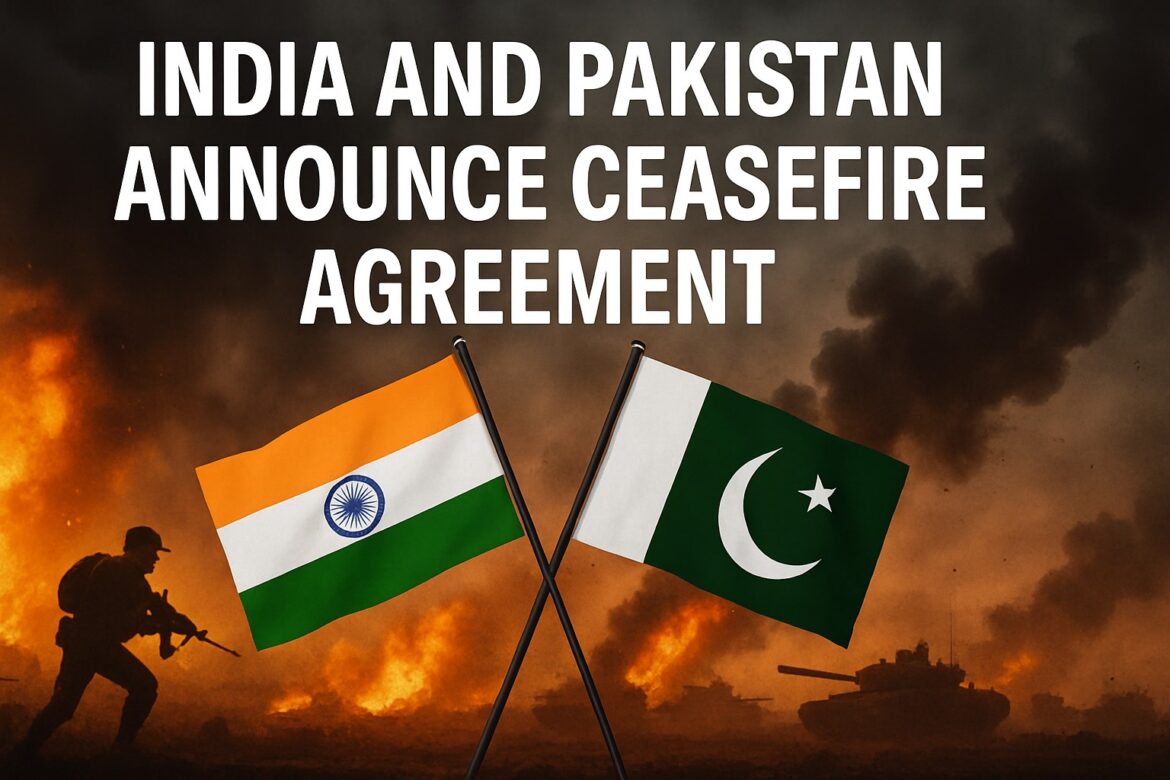
In a dramatic turn of events following weeks of heightened tensions, India and Pakistan have agreed to a full ceasefire effective from 5 PM on May 10, 2025. The ceasefire—covering land, sea, and air—was brokered through urgent U.S.-led diplomatic talks, marking a significant step back from the brink of a potentially catastrophic conflict between the two nuclear-armed neighbors.
Key Points
Ceasefire Effective: India and Pakistan agreed to a full ceasefire on land, sea, and air from 5 PM, May 10, 2025.
Trigger Incident: The April 22 terror attack in Pahalgam, Kashmir, killed 26 civilians and sparked military escalation.
Indian Response – Operation Sindoor: India launched a precision strike on May 7 targeting nine terrorist bases in Pakistan and PoK.
Pakistan’s Retaliation: Pakistan responded with drone and missile attacks across 26 Indian locations on May 8–9.
Civilian & Military Casualties: Artillery shelling and aerial strikes led to casualties on both sides before the ceasefire was agreed.
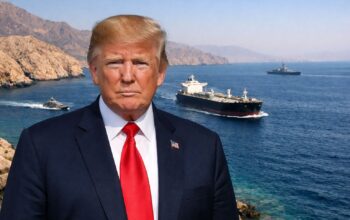
US Mediation Role: President Donald Trump, with Secretary of State Marco Rubio and VP JD Vance, brokered the ceasefire.
Diplomatic Fallout: India suspended key treaties and expelled diplomats; Pakistan withdrew from the Simla Agreement.
Terror Group Involvement: The Resistance Front (linked to LeT) initially claimed the Pahalgam attack, then retracted.
A Violent Spark: The Pahalgam Terror Attack
The crisis erupted on April 22 when a gruesome terrorist attack in Pahalgam, Kashmir, left 26 civilians dead. Five armed militants launched a brutal assault in Baisaran Valley, primarily targeting Hindu tourists. Witnesses described harrowing scenes as attackers forced victims to identify their religion and recite Islamic prayers before executing them. Among the dead were Indian government officials, tourists from several Indian states and Nepal, and a local Muslim pony operator who tried to fight back.
The Resistance Front (TRF), a group believed to be linked to Pakistan-based Lashkar-e-Taiba, initially claimed responsibility but later retracted. The Indian government responded with outrage, accusing Pakistan of supporting cross-border terrorism. In retaliation, India suspended the Indus Waters Treaty, expelled Pakistani diplomats, and sealed its borders. Pakistan denied involvement, offered an international probe, and withdrew from the 1972 Simla Agreement.
Operation Sindoor: India Strikes Back
On May 7, India launched Operation Sindoor, a swift and precise military operation targeting nine terrorist bases across Pakistan and Pakistan-Occupied Kashmir. The strike, lasting just 23 minutes, involved Rafale jets deploying SCALP missiles and Hammer glide bombs to hit high-value targets associated with Jaish-e-Mohammed and Lashkar-e-Taiba. Key facilities in Bahawalpur and Muridke were among the main objectives. This marked the first Indian airstrike across the international border with Pakistan since the 1971 war.
Pakistan’s Retaliation and Escalation
Pakistan retaliated on May 8 and 9 with drone and missile attacks targeting Indian military sites at 26 locations stretching from Leh to Sir Creek. The Indian Air Force reported intercepting several of these attacks, including downing a Pakistani F-16 fighter jet. Explosions were reported across Srinagar and at multiple Pakistani airbases. Heavy artillery fire and shelling along the border led to additional civilian casualties on both sides, pushing the region to the edge of open warfare.
Trump Steps In: A Surprise Diplomatic Breakthrough
With the situation spiraling, it was U.S. President Donald Trump who emerged as the unexpected mediator. On May 10, Trump announced that a “full and immediate ceasefire” had been agreed upon after an intense night of negotiations led by the United States.
Taking to his Truth Social platform, Trump praised both nations for using “Common Sense and Great Intelligence” and emphasized the importance of diplomacy over war. His administration, including Secretary of State Marco Rubio and Vice President JD Vance, played key roles in brokering the deal. They held back-channel discussions with Indian Prime Minister Narendra Modi and Pakistani Prime Minister Shehbaz Sharif, urging both leaders to prioritize peace.
Despite earlier skepticism, including Vance’s previous comment that the India-Pakistan conflict was “none of our business,” the White House rallied to de-escalate the crisis. Press Secretary Karoline Leavitt highlighted President Trump’s “good relationships” with both leaders and his commitment to ensuring regional stability.
A Fragile Peace Going Forward
While the ceasefire offers hope, it remains a fragile agreement amid decades of mistrust. Both nations face internal and external pressures, and the threat of future conflict cannot be ruled out. However, the swift diplomatic intervention by the U.S. may have prevented a dangerous spiral into full-scale war.
For now, the guns have fallen silent. But the world watches closely, hoping this latest ceasefire marks the beginning of a more sustained peace in South Asia.
Related Posts
 Over 400 Drone Attacks: Pakistan’s Escalation Sparks Alarms Across Indian Borders
 India-Pakistan Tensions: Home Ministry Orders Nationwide Civil Defence Mock Drills on May 7
 PM Modi on Operation Sindoor: A New Normal in India’s Fight Against Terrorism
 Understanding the International Monetary Fund (IMF): What It Does and Who Runs It