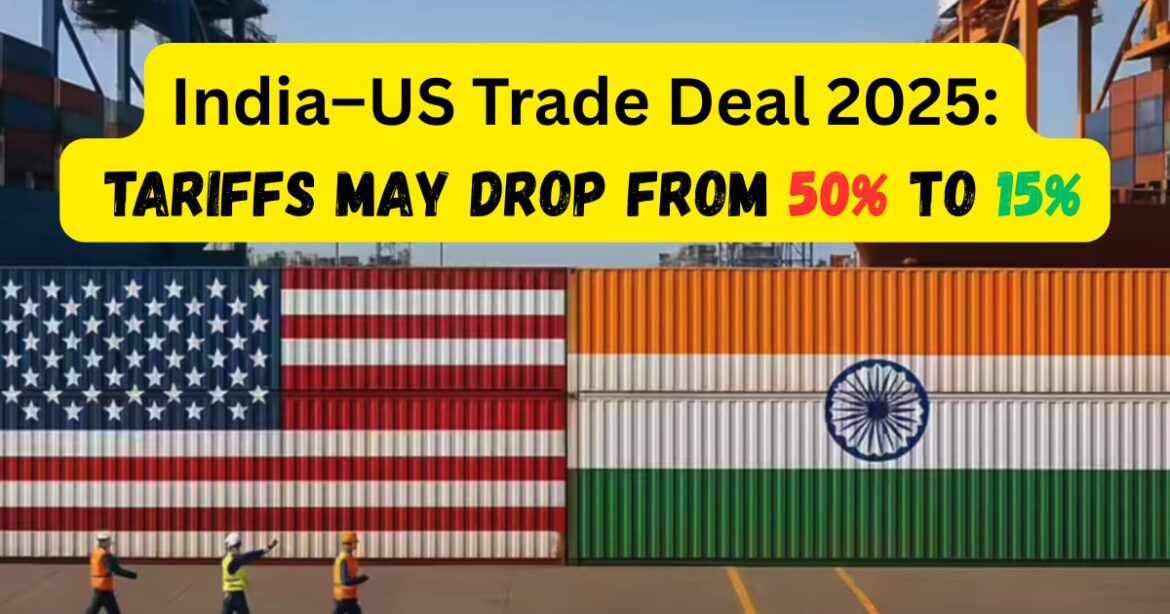
The U.S. and India are reportedly close to finalising a trade deal under which U.S. tariffs on Indian exports could be cut from about 50% down to around 15–16%. The arrangement is tied to India reducing its imports of Russian crude and allowing greater access for U.S. agricultural goods. Exporters in India’s textiles, engineering and pharma sectors stand to benefit — but energy-and-geopolitical risks remain.
After months of tense negotiations and rising tariff pressure, India and the United States appear close to sealing a landmark trade agreement. Reports suggest that the two countries are nearing a deal that could sharply lower U.S. import duties on a wide range of Indian goods. The development marks a turning point in the strained trade relationship between Washington and New Delhi and could have a significant impact on global trade flows, especially as both nations navigate their strategic energy interests.
What happened
-
Earlier this year, the U.S. had imposed tariffs of about 50% on many Indian exports.
-
As of October 22, 2025, multiple sources say India and the U.S. are nearing a trade agreement that would lower those tariffs to 15–16%.
-
The deal reportedly links tariff relief to India gradually reducing its imports of Russian crude oil, and opening up to more U.S. corn and soymeal.
-
No full official statement has yet confirmed the final terms, but an announcement is expected around a forthcoming summit.
Earlier this year, the Trump administration imposed tariffs of up to 50% on many Indian exports, citing trade imbalances and India’s continued imports of Russian crude oil. Those tariffs hurt Indian exporters, especially in sectors such as textiles, engineering goods, and pharmaceuticals.
Now, fresh reports indicate that both governments are close to finalising a bilateral trade deal that would bring those tariffs down to around 15–16%. According to Reuters and Mint, the proposed agreement links tariff relief to India gradually cutting back on its Russian oil imports. In addition, India may open its markets to certain U.S. agricultural products, such as corn and soymeal, which have long faced import barriers.
While neither side has officially announced the deal, sources suggest that an official statement could come soon, possibly around an upcoming high-level meeting between U.S. President Donald Trump and Indian Prime Minister Narendra Modi.
Why it matters
- The U.S. is using trade leverage to tie economic concessions to strategic aims — namely reducing India’s dependence on Russian oil.
- For India, such a large tariff cut offers major relief to exporters who have been squeezed by high duties and uncertain access to the U.S. market.
- The deal comes amid broader global trade stress and shifting energy alliances — both nations have reason to recalibrate.
- If successful, it could mark a shift from confrontation to cooperation in U.S.–India trade relations.
The proposed trade deal carries deep economic and strategic importance. For the United States, it aligns trade policy with foreign policy goals — mainly to reduce Russia’s oil revenues and strengthen U.S. agricultural exports. For India, the tariff cuts would provide a much-needed boost to exporters who have faced steep costs and reduced competitiveness in the U.S. market over the past year.
Both economies stand to benefit if the deal materialises. Lower tariffs could make Indian goods more affordable for American consumers and businesses, while U.S. farmers would gain access to one of the world’s largest and fastest-growing markets. Beyond trade, the agreement could also reinforce political and strategic ties between the two democracies at a time when global supply chains are being realigned.
Impact on India — which sectors are hit
For India, the immediate impact would likely be positive. Exporters in sectors such as textiles, apparel, engineering goods, auto components, and pharmaceuticals would regain lost ground in the U.S. market once tariffs drop. Many Indian firms have been struggling with reduced orders and thinner profit margins since the tariff hikes, and a rollback could bring a revival in export volumes.
However, the deal also comes with conditions. India’s commitment to reduce its dependence on Russian oil may create short-term challenges. Russian crude has been a cheaper alternative for Indian refiners, helping the country manage inflation and fuel costs. A gradual shift away from it could raise costs unless India secures new long-term supply contracts with other producers.
Despite this, the Indian stock market and exporters’ associations have reacted positively to reports of a potential deal, viewing it as a sign that trade stability could soon return.
Sectors likely to gain
- Textiles & apparel: With tariffs potentially cut to 15–16%, many Indian clothing exporters will regain pricing competitiveness.
- Engineering goods / auto-components: Lower tariffs may revive demand from U.S. buyers.
- Pharmaceuticals / generics: Although some segments face other hurdles, lower duties would ease one barrier.
Sectors under strain
- Some Indian firms dependent on low-cost Russian oil may face higher input costs or supply risks if India must shift suppliers.
- Smaller exporters may require time to adjust to new contract terms, currency risk or supply-chain shifts.
Short-term effects
- Exporters may see an immediate morale boost but actual order increases might lag until the deal is formally signed & implemented.
- Stock markets in India are already responding positively to the hope of tariff relief.
India’s Response
The Indian government has not yet confirmed the final terms of the deal but has acknowledged that discussions are progressing. Officials have stressed that any changes in energy sourcing or trade policy will be guided by national interest and energy security. India continues to maintain that its oil imports are based on economic needs rather than political alignments.
At the same time, trade negotiators in New Delhi have indicated willingness to explore limited concessions on agricultural imports from the United States, particularly for non-GM corn and soymeal. These moves are seen as part of India’s broader effort to maintain a balanced and pragmatic foreign policy — strengthening economic ties with Washington while safeguarding its strategic autonomy.
Global Reactions
-
Market watchers say such a deal could calm a major trade risk and improve confidence in Indian exports. m
-
Some U.S. farm-industry groups are optimistic: greater access to India’s large market could help U.S. agriculture.
-
However, some analysts caution that tying trade relief to energy policy is risky — if India fails to deliver on oil reduction, the deal could unravel.
Expert Take / What Happens Next
Experts expect that the trade deal, once finalised, will be announced jointly by both governments within the next few weeks. Implementation will likely happen in stages, with tariff reductions rolling out gradually and subject to review.
The agreement could also establish a new mechanism for monitoring trade balances and adjusting tariffs based on compliance. If successfully implemented, the deal would strengthen India–U.S. economic ties and reduce one of the biggest sources of friction between the two nations in recent years.
However, analysts also caution that the agreement must balance economic gains with political sensitivities — particularly in India’s energy and agricultural sectors. How both sides manage this balance will determine whether the deal becomes a long-term success or a temporary patch.
Conclusion
The possibility of U.S. tariffs on Indian exports dropping from ~50% to ~15–16% marks a potential turning point in U.S.–India trade policy. But this is not yet done — many moving pieces remain, especially around energy dependence and strategic commitments. If sealed, the deal could restore momentum to India’s export sector and recalibrate the bilateral relationship.
FAQs
What is the new India–U.S. trade deal about?
The deal aims to cut U.S. tariffs on Indian exports from about 50% to roughly 15–16%, in return for India gradually reducing imports of Russian crude and opening up to more U.S. farm goods.
Why did the U.S. impose tariffs on India?
The Trump administration imposed high tariffs in 2025 to address trade imbalances and pressure India over its energy ties with Russia.
Which Indian industries will benefit most?
Textiles, engineering goods, pharmaceuticals, and auto components are expected to gain significantly once tariffs are reduced.
How has India responded so far?
India has welcomed the progress but insists that any changes in oil imports must protect national interests and energy security.
When will the deal be announced?
No official date is confirmed yet, but reports suggest a formal announcement could come soon, possibly during an upcoming bilateral meeting or trade summit.