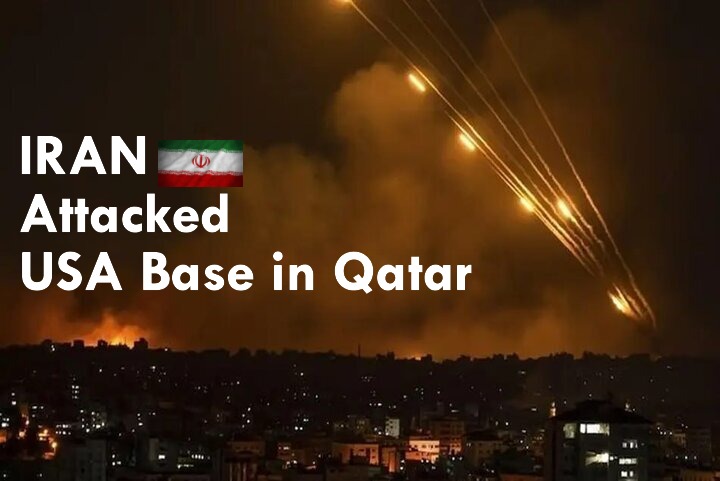
In a significant escalation of tensions in the Gulf, Iran fired multiple ballistic missiles at the Al Udeid Air Base in Qatar—a major hub for US military operations in the Middle East. The attack came just two days after the U.S. launched airstrikes on Iran’s nuclear facilities in Fordow and Natanz. Though no casualties have been reported, the event signals a dangerous turning point in the ongoing standoff between Iran and Western powers, especially amid a fragile geopolitical climate in the region.
🧠 TL;DR – Iran’s Missile Attack on US Base in Qatar
On June 23, 2025, Iran launched ballistic missiles at the US-led Al Udeid Air Base in Qatar in retaliation for American airstrikes on its nuclear facilities.
Qatar’s air defense systems intercepted the missiles; there were no reported casualties.
The attack was symbolic, part of Iran’s Operation Glad Tidings of Victory, aimed at showing strength without prompting all-out war.
The U.S. had already evacuated aircraft and warned personnel.
Regional tensions are now heightened, with global diplomatic efforts underway to avoid further escalation.
The Missile Strike: What Happened?
On June 23, 2025, Iran’s Islamic Revolutionary Guard Corps (IRGC) launched a series of short- and medium-range ballistic missiles targeting the Al Udeid base, which houses nearly 10,000 US and coalition troops. The strike, dubbed Operation Glad Tidings of Victory, was a direct response to recent U.S. air raids on strategic Iranian nuclear infrastructure.
Qatar, forewarned through regional backchannels, activated its air defense systems. As the missiles approached, the country temporarily shut down its airspace, allowing time for evacuation and interception. According to U.S. and Qatari sources, all missiles were neutralized mid-air, and no infrastructure damage or human casualties were reported.
Why Did Iran Target Qatar?
Though Qatar maintains a neutral diplomatic stance, the Al Udeid base plays a critical role in U.S. operations across the region. Iran’s decision to target it was both symbolic and strategic—signaling its capability and resolve without crossing a red line that might invite overwhelming retaliation.
By aiming at a highly symbolic asset but allowing enough room for pre-warning and interception, Iran appeared to be sending a message: it can strike U.S. assets across the Gulf, but it isn’t necessarily seeking a wider war—at least not yet.
The U.S. and Allies’ Response
The U.S. Central Command confirmed that key military assets had been preemptively relocated ahead of the strike. Surveillance satellites had detected unusual activity near Iranian missile sites, prompting precautionary measures including moving aircraft and personnel.
Following the attack, the U.S. and its allies, including the UK and France, issued strong condemnations but stopped short of immediate retaliation. White House officials stated that while they would “not escalate recklessly,” all options remain on the table. Meanwhile, the Department of Defense increased security levels at all military installations in the Gulf.
Regional and Global Impact
The attack reverberated far beyond Qatar. Countries like the UAE, Saudi Arabia, and Bahrain temporarily closed their airspace, causing disruption in commercial aviation and prompting international airlines to reroute flights away from the Gulf region. Crude oil prices also saw a sharp spike, reflecting fears that the conflict might spill into the energy supply chain.
The incident also prompted urgent diplomatic talks. European Union representatives called for restraint, while Gulf Cooperation Council (GCC) states convened an emergency summit to assess the security situation.
The Bigger Picture: U.S.–Iran–Israel Tensions
This missile strike cannot be viewed in isolation. It follows a U.S.-Israel joint operation that targeted Iran’s nuclear facilities just days earlier. Iran had promised retaliation, and while this response was calculated and restrained, it clearly demonstrated the fragility of the current balance in the region.
The Al Udeid strike serves as a reminder of how quickly confrontations in the Gulf can escalate—and how limited the room for miscalculation has become. As both sides test red lines, the possibility of broader conflict looms.
FAQs
Were there any casualties in the attack?
No casualties have been reported. Qatar’s air defense systems intercepted all incoming missiles, and the U.S. had evacuated its aircraft in advance.
Why did Iran launch the missiles?
Iran launched the attack in retaliation for U.S. airstrikes on its nuclear facilities. The strike was intended as a show of force rather than a high-casualty operation.
What is the significance of Al Udeid Air Base?
Al Udeid is the largest U.S. military base in the Middle East and serves as a key strategic hub for operations across the region.
Did the U.S. retaliate?
As of now, no direct U.S. retaliation has occurred. However, U.S. officials have condemned the attack and emphasized that military options remain on the table.
How are other countries reacting?
Countries like the UK, France, and Gulf Arab states have condemned the attack and are urging diplomatic solutions to avoid further escalation.