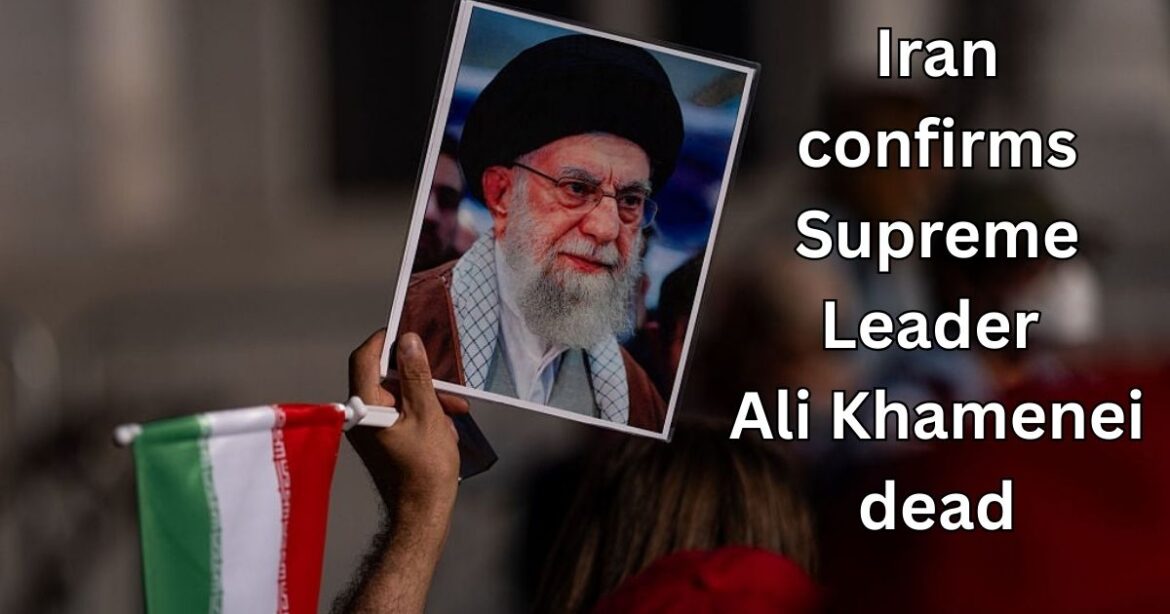
In a monumental shift for the Middle East, Iranian state media has officially confirmed the death of Ayatollah Ali Khamenei, the 86-year-old Supreme Leader who ruled the Islamic Republic with an iron grip for 36 years.
The announcement follows a massive, coordinated bombardment by United States and Israeli forces on Saturday, February 28, 2026. The strikes, codenamed “Operation Genesis” by Israel and described as “Operation Epic Fury“ by U.S. sources, targeted high-level government compounds and military infrastructure across Tehran.
The Attack: A “Pinpoint” Mission
U.S. President Donald Trump took to social media to announce the success of the mission, calling it the “single greatest chance for the Iranian people to take back their country.”
-
The Target: Satellite imagery confirms the total destruction of Khamenei’s residence and office in central Tehran.
-
The Toll: Along with the Supreme Leader, reports indicate his daughter, son-in-law, and several top-ranking IRGC commanders were killed.
-
The Technology: Trump noted that “highly sophisticated tracking systems” monitored Khamenei’s movements, leaving the leadership with “nowhere to hide.”
Iran in Mourning and Chaos
The Iranian government has declared 40 days of national mourning and a seven-day public holiday. However, the mood on the ground appears divided:
-
State Reaction: The Revolutionary Guard (IRGC) has vowed “devastating blows” in retaliation, with missile strikes already reported against U.S. bases in the Gulf.
-
Public Response: Unverified footage has surfaced showing some citizens in Tehran toppling statues of Khamenei and playing celebratory music, even as the city remains under a strict security lockdown.
“This is a war of choice by the United States, and they have to pay for that,” warned Iranian Foreign Minister Abbas Araghchi, even as reports surface of some citizens in Tehran toppling statues of the late leader.
What Happens Next?
Iran now faces its first leadership transition since 1989. Under the constitution, a council consisting of the President, the Head of the Judiciary, and a member of the Guardian Council will temporarily manage state affairs.