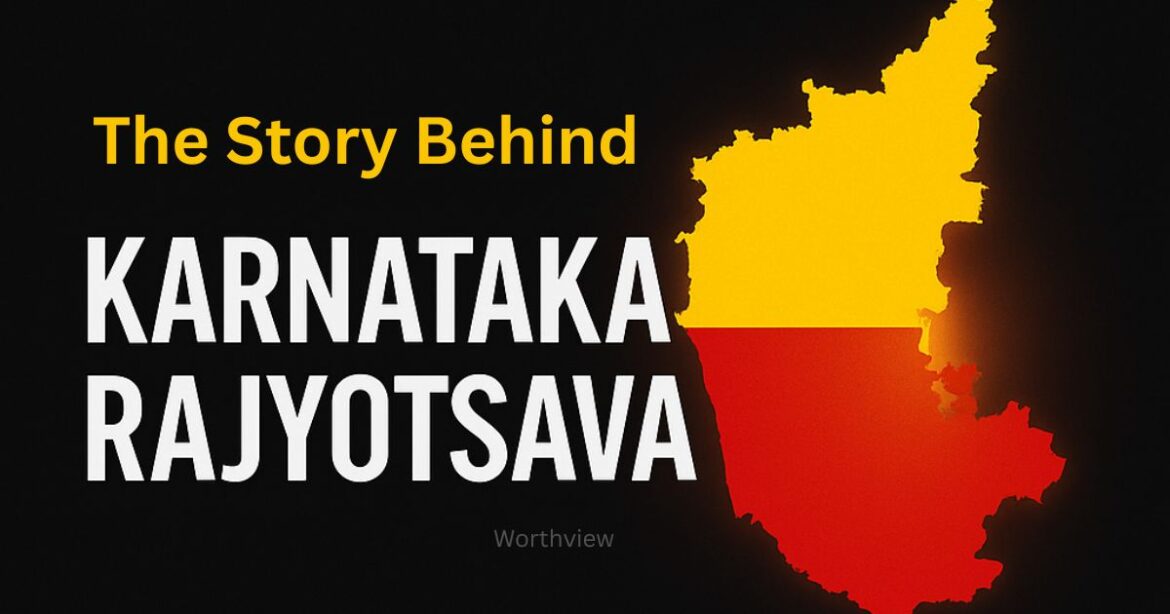
Every year on November 1st, the state of Karnataka glows in red and yellow — the proud colours of every Kannadiga’s heart. Streets fill with songs, flags flutter high, and voices unite to sing “Jaya Bharata Jananiya Tanujate.”
But have you ever wondered why this day is celebrated as Karnataka Rajyotsava?
It’s not just another public holiday. It’s the day when the Kannada-speaking people, once divided under different regions and rulers, finally came together as one state — Karnataka. This moment marked the victory of unity, language, and identity.
The story behind Karnataka Rajyotsava is more than a historical event — it’s an emotional journey of culture, pride, and perseverance. It reminds us how language and heritage can bind millions together, beyond boundaries and politics.
In this article, let’s travel back in time and uncover:
-
How Karnataka was formed,
-
The leaders and movements behind it,
-
And how Rajyotsava continues to celebrate the spirit of Namma Karnataka today.
🟡 What is Karnataka Rajyotsava?
Karnataka Rajyotsava, also known as Karnataka Formation Day, is celebrated every year on November 1st. It marks the historic moment in 1956 when all Kannada-speaking regions across South India were united to form one state — what we now proudly call Karnataka.
The word “Rajyotsava” means State Festival — a day of joy and unity that honours the creation of a state born from language, culture, and collective identity.
Before 1956, Kannada-speaking people lived across several administrative regions:
- Bombay Presidency (North Karnataka areas)
- Madras Presidency (coastal and southern parts)
- Hyderabad State (Bidar, Gulbarga, Raichur regions)
- Coorg (Kodagu) — a separate province
- Mysore Kingdom — the central region ruled by the Wodeyars
These regions spoke the same language but were divided by political boundaries. The dream of bringing them all together under one administration was long cherished by Kannada leaders and thinkers.
When that dream finally came true on November 1, 1956, it gave every Kannadiga a reason to celebrate — and since then, the day has been observed as Karnataka Rajyotsava, symbolizing the unity and pride of the Kannada-speaking world.
On this day, you’ll see:
- The red and yellow flag waving proudly across cities and villages.
- People singing the state anthem — “Jaya Bharata Jananiya Tanujate.”
- Schools, offices, and communities organizing cultural programs, folk dances, and parades celebrating the essence of Kannada culture.
Rajyotsava isn’t just about history — it’s about emotion. It’s a celebration of language, literature, and legacy that continues to inspire every Kannadiga, generation after generation.
🕰️ The Story Before Formation
To understand the importance of Karnataka Rajyotsava, we must go back to the years after India’s independence in 1947.
Back then, the country was divided into provinces and princely states that the British had left behind. These boundaries were drawn mainly for administrative convenience, not based on language or culture.
As a result, the Kannada-speaking population found itself scattered across different regions:
- Mysore State (the princely kingdom under the Wodeyars)
- Bombay Presidency (which included districts like Dharwad and Belgaum)
- Madras Presidency (including Mangalore and parts of Bellary)
- Hyderabad State (covering Bidar, Gulbarga, and Raichur)
- Coorg (Kodagu) – a small province known for its unique traditions
Though these people shared the same language — Kannada — they lived under different administrations, spoke different dialects, and faced separate local policies.
This fragmentation deeply affected Kannada identity.
Kannadigas felt that their culture, language, and literature were not receiving the recognition they deserved compared to other linguistic groups.
Also read, Jaya Bharata Jananiya Tanujate Lyrics — Karnataka State Anthem Meaning & History
🗣️ The Rise of the Unification Idea
Amidst this divide, a movement slowly began to take shape. Thinkers, writers, and freedom fighters started calling for a unified state for Kannada-speaking people.
The idea wasn’t new — it was first voiced as early as the 1920s by the visionary Aluru Venkata Rao, who passionately dreamed of “Ekikarana Karnataka” — a united Karnataka.
He believed that only by coming together could Kannadigas preserve their language and thrive as one cultural entity.
His vision sparked a wave of literary and political activity that kept growing stronger over the decades.
By the early 1950s, the people’s voice for unification became impossible to ignore. The demand wasn’t just about language — it was about self-respect, cultural unity, and belonging.
This growing movement eventually laid the foundation for one of the most defining events in South India’s history — the formation of Karnataka.
🪔 The Movement for a United Karnataka
By the early 20th century, the idea of uniting all Kannada-speaking regions had taken root in the hearts of many Kannadigas. It was no longer just a dream — it became a movement of identity and pride.
🗣️ The Visionary Behind the Movement
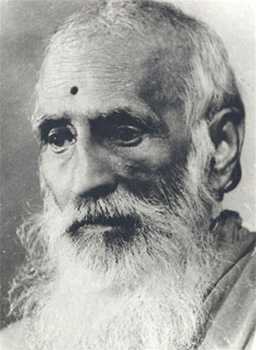
The credit for shaping this vision goes to Aluru Venkata Rao, a historian, philosopher, and passionate advocate for the Kannada language.
He often said, “A land without unity cannot nurture its culture.”
In 1907, he wrote and spoke widely about creating a single Kannada-speaking province.
His speeches inspired countless people across Mysore, Bombay-Karnataka, and Hyderabad-Karnataka regions.
Venkata Rao’s dream was called “Ekikarana Karnataka”, which means United Karnataka.
He believed that Kannadigas — though spread across different rulers and regions — shared one spirit, one culture, and one mother tongue that deserved its rightful recognition.
✊ The Struggle for Unification
As decades passed, writers, teachers, and political leaders joined the cause.
The Karnataka Ekikarana Committee was formed to mobilize support and spread awareness.
Public meetings were held, petitions were signed, and the movement slowly gathered strength.
A turning point came in 1953, when the Indian government created Andhra Pradesh, the first state based on language.
This became a spark of hope for Kannadigas — if Telugu-speaking people could have their own state, why not Kannada speakers?
People across North and South Karnataka came together in rallies, shouting slogans like
“One Language, One State, One Karnataka!”
🏛️ From Demand to Reality
As pressure grew, the Government of India appointed the States Reorganisation Commission (SRC) in 1953 to redraw India’s state boundaries along linguistic lines.
The Commission studied the cultural and linguistic maps and realized the genuine need for a united Kannada-speaking state.
Finally, after years of effort and emotional struggle, the dream was about to become real — paving the way for the formation of Karnataka in 1956.
🕊️ The Birth of Karnataka – 1956
After decades of determination and hope, the dream of a united Kannada land finally came true on November 1, 1956.
Following the recommendations of the States Reorganisation Commission (SRC), the Government of India passed the States Reorganisation Act, bringing together all Kannada-speaking regions under one administrative umbrella.
📜 The Great Merger
The new state was formed by merging:
-
The Old Mysore State (ruled by the Wodeyars)
-
Bombay-Karnataka region (Belagavi, Dharwad, Uttara Kannada)
-
Hyderabad-Karnataka region (Bidar, Kalaburagi, Raichur)
-
Madras-Karnataka region (Mangalore, Udupi, and parts of Bellary)
-
The Coorg (Kodagu) province
All these areas, once divided by political borders, were finally united through the thread of one common identity — the Kannada language.
🏛️ A New Beginning
Initially, the newly formed state was called the State of Mysore, named after the Mysore Kingdom, which was the largest part of the merger.
However, many felt the name didn’t represent the entire region.
So, after much discussion and pride in their collective identity, the name was officially changed to Karnataka on November 1, 1973 — under the leadership of Devaraj Urs, the then Chief Minister of the state.
This was more than a name change.
It was a declaration of unity — a moment when every Kannadiga could proudly say, “Naanu Kannadiga!” (I am a Kannadiga!)
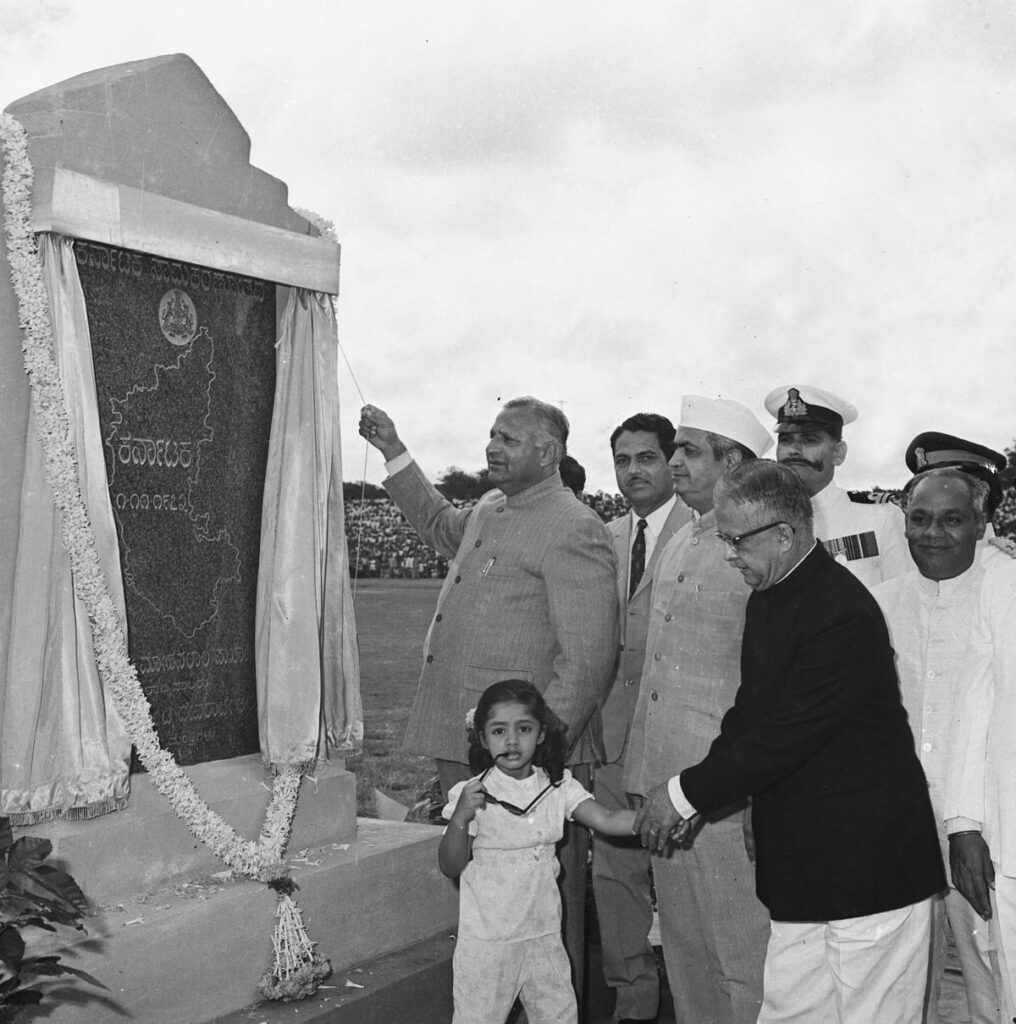
The then Governor Mohanlal Sukhadia and Chief Minister Devaraj Urs at an event for the renaming of Mysore State as Karnataka.
🎉 The Spirit of the Day
The first Karnataka Rajyotsava was celebrated with unmatched enthusiasm.
People took to the streets with red and yellow flags, cultural performances, and traditional songs celebrating their mother tongue.
That day marked not just the birth of a state, but the rebirth of Kannada pride — a celebration of belonging, unity, and love for one’s roots.
🪷 Conclusion
Karnataka Rajyotsava is much more than a date on the calendar — it’s a reminder of unity born out of diversity.
The formation of Karnataka in 1956 was not just a political event; it was an emotional victory for millions who believed in the power of language, culture, and community.
From the tireless efforts of Aluru Venkata Rao to the historical unification under the States Reorganisation Act, the journey of Karnataka stands as a shining example of what people can achieve when they stand together for their identity.
Today, as Karnataka continues to lead India in technology, education, and innovation, the red and yellow flag still waves proudly — reminding every Kannadiga of the struggles and dreams that built this great land.
So, this November 1st, when you see the streets filled with music, flags, and smiling faces, remember — it’s not just a celebration of the past.
It’s a promise for the future — to protect our language, cherish our culture, and keep the spirit of Namma Karnataka alive for generations to come.
Jai Karnataka! Jai Kannada! ❤️💛
🙋♂️ Frequently Asked Questions (FAQs)
1. When is Karnataka Rajyotsava celebrated?
Karnataka Rajyotsava is celebrated every year on November 1st to mark the day when all Kannada-speaking regions were united to form the state in 1956.
2. Why was Karnataka formed?
Karnataka was formed to unite all Kannada-speaking regions that were earlier divided among different states like Bombay, Madras, and Hyderabad. It was part of the States Reorganisation Act of 1956, which created states based on language.
3. Who is known as the father of Karnataka unification?
Aluru Venkata Rao is considered the father of the Karnataka unification movement. He played a key role in spreading the vision of a united Kannada-speaking state, known as Ekikarana Karnataka.
4. What was Karnataka originally called?
After unification in 1956, the state was initially named Mysore State. It was renamed Karnataka in 1973 to represent all the regions equally.
5. Why is the Karnataka flag red and yellow?
The red and yellow flag represents the bravery and prosperity of Kannada people. Red stands for courage, and yellow symbolizes generosity and well-being.
6. How is Karnataka Rajyotsava celebrated today?
People celebrate with flag hoisting, cultural programs, music, folk dances, parades, and award ceremonies. The government also gives out the prestigious Rajyotsava Awards to honour individuals who have contributed to the state’s growth.






One thought on “🟨🟥Karnataka Rajyotsava 2025: The Story Behind the State’s Formation”
Comments are closed.