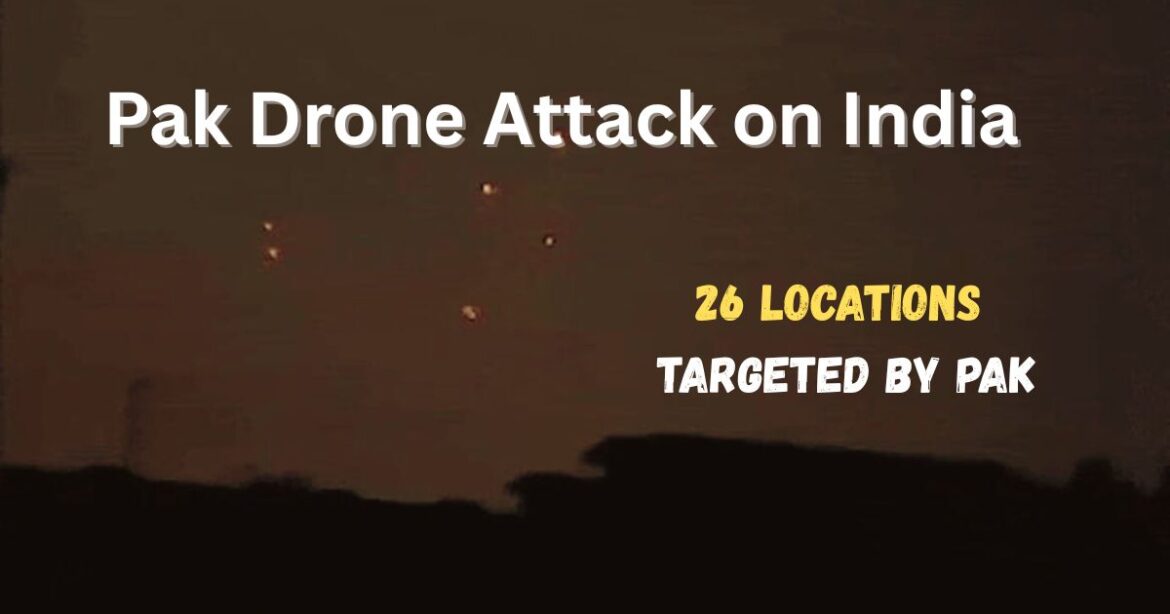
In the aftermath of Operation Sindoor, Pakistan launched an aggressive wave of drone attacks on Indian territory, marking one of the largest escalations in recent India-Pakistan tensions.
Massive Drone Swarm Targets Indian States
Between May 7 and 9, 2025, more than 400 drones were launched from across the border by Pakistan. These unmanned aerial vehicles (UAVs) targeted key border states—including Jammu & Kashmir, Punjab, Rajasthan, and Gujarat. The goal appeared to be the disruption of Indian military infrastructure and the spreading of fear in civilian populations.
Cities Hit: Blackouts and Air Raid Sirens
Major cities such as Jammu, Amritsar, Jaisalmer, and Bhuj experienced emergency blackouts. Air raid sirens blared for the first time in decades, as citizens were moved to bunkers and underground shelters.
India’s Defense Response: S-400 and Anti-Drone Systems
India deployed its S-400 air defense system and specialized anti-drone jamming units. As per initial military reports, the majority of drones were intercepted or neutralized before causing large-scale damage. Still, the psychological impact was significant—night skies were filled with drone trails and interceptor flashes, creating an atmosphere of war.
A senior defense official stated:
“This was a coordinated drone strike attempt—likely pre-planned. Our quick response avoided catastrophe.”
Casualties and Damage
Despite the scale of attacks, casualties were minimal, thanks to early detection and response. However, minor infrastructure damage and isolated fires were reported near army posts and border towns.
Drone Attack on May 9th Night
Taking military escalation with India to the next level, the Pakistani Army resorted to heavy shelling in Jammu and Kashmir, Punjab and Rajasthan, which are situated on the International Border, for a second consecutive night.
Drones were sighted at a total of 26 locations, ranging from Baramulla in J&K to Bhuj in Gujarat, along the International Border and the Line of Control. These include suspected armed drones posing potential threats to civilian and military targets.
Why Drones? A Shift in Warfare
Drones have become Pakistan’s go-to weapon due to their low cost, stealth, and impact potential. Unlike traditional air raids, these drone swarms are harder to track and neutralize in bulk, signaling a new era of asymmetric warfare in South Asia.
What’s Next?
India is now on high alert, expanding drone surveillance and reinforcing air defense grids along the western border. As tensions mount, the use of drones could become a central factor in future conflicts between the two nations.
Related Posts
 India and Pakistan announce ceasefire agreement after US-led talks
 India-Pakistan Tensions: Home Ministry Orders Nationwide Civil Defence Mock Drills on May 7
 PM Modi on Operation Sindoor: A New Normal in India’s Fight Against Terrorism
 Understanding the International Monetary Fund (IMF): What It Does and Who Runs It