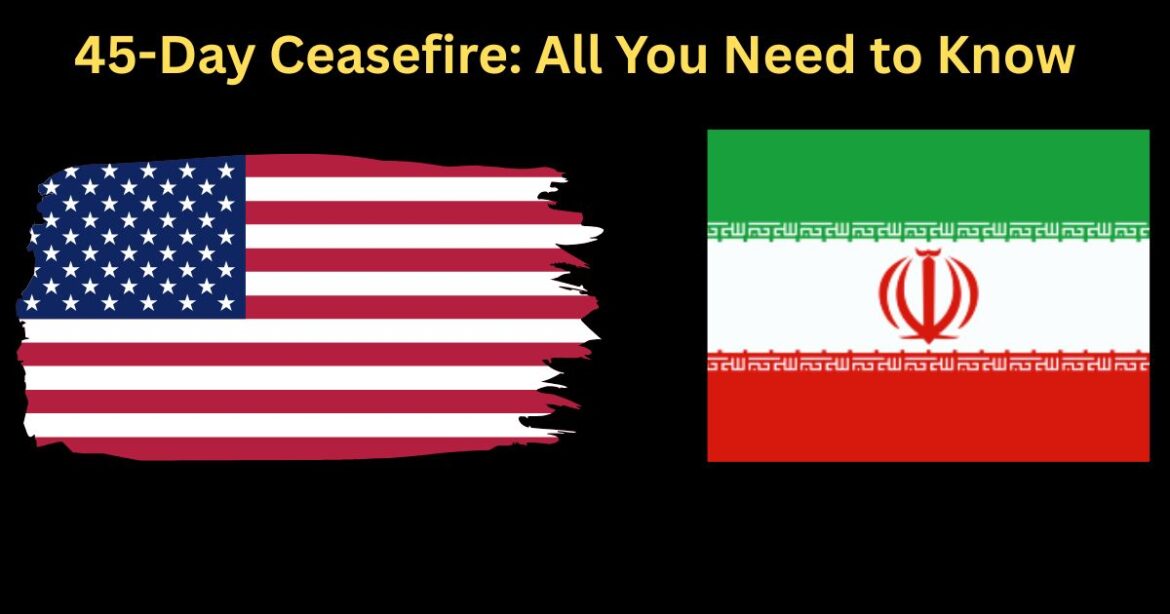
The US and Iran are currently in urgent diplomatic talks — mediated by Pakistan, Egypt, and Turkey — over a proposed 45-day ceasefire to pause their active military conflict, which began on February 28, 2026. The deal would pause fighting temporarily while both sides negotiate a permanent end to the war. As of Monday, April 6, no agreement has been reached, and Trump’s deadline expires Tuesday evening.
A War That Shocked the World — Here’s How We Got Here
Five weeks ago, the Middle East changed forever.
On February 28, 2026, the United States and Israel launched coordinated airstrikes on Iran under Operation Epic Fury, targeting military facilities, nuclear sites, and key leadership — including the killing of Supreme Leader Ali Khamenei.
That single event triggered a chain reaction nobody could ignore.
Iran responded with retaliatory missile and drone strikes targeting US embassies, military installations, and oil infrastructure throughout the Middle East. And then came the move that rattled the entire global economy.
Starting March 4, 2026, Iranian forces declared the Strait of Hormuz “closed,” threatening and carrying out attacks on ships attempting to transit the strait.
The Strait of Hormuz is not just a waterway. Roughly 27% of the world’s maritime trade in crude oil and petroleum products passes through it. Shutting it down is essentially holding the global energy market hostage.
The war’s economic impact has been described as the world’s largest supply disruption since the 1970s energy crisis — with surges in oil and gas prices, widespread disruptions in aviation and tourism, and heightened volatility in financial markets.
TLDR — The Short Version:
- The US and Iran are at war since February 28, 2026, after American and Israeli strikes killed Iran’s Supreme Leader
- Iran retaliated by shutting down the Strait of Hormuz — a waterway that carries 27% of the world’s oil
- After 5 weeks of fighting, diplomats are now pushing a two-phase, 45-day ceasefire deal
- Phase 1: Pause the fighting for 45 days and negotiate. Phase 2: Reach a permanent peace deal
- Pakistan, Egypt, and Turkey are the middlemen — Iran and the US aren’t talking directly
- Trump’s deadline: Tuesday, April 7 at 8pm ET — miss it, and strikes on Iranian power plants could follow
- Iran hasn’t said yes — and is demanding war reparations + control over the Strait of Hormuz
- Oil prices have surged past $114 a barrel — and the global economy is feeling it
- The next 24 hours could determine whether this ends in diplomacy — or massive escalation
So What Is This 45-Day Ceasefire Deal?
Now, five weeks into a hot war, diplomats are scrambling.
The US, Iran, and a group of regional mediators are discussing the terms for a potential 45-day ceasefire that could lead to a permanent end to the war, according to four US, Israeli, and regional sources with knowledge of the talks.
The proposed deal has two phases.
The first phase would establish a 45-day ceasefire during which a permanent end to the war would be negotiated, with the truce extended if needed.
The second phase would aim for a broader settlement that could include reopening the Strait of Hormuz and resolving Iran’s stockpile of highly enriched uranium, either through removal from the country or dilution.
Think of it as a cooling-off period — a pause button — while the harder questions get worked out at the negotiating table.
Who’s at the Table — and Who’s Talking to Whom?
This isn’t a direct US-Iran sit-down. Far from it.
Negotiations are reportedly being carried out through Pakistani, Egyptian, and Turkish mediators, as well as text messages between Trump special envoy Steve Witkoff and Iranian Foreign Minister Abbas Araghchi.
Pakistan has taken a particularly active role. Pakistan’s army chief, Field Marshal Asim Munir, has reportedly been in contact “all night long” with US Vice President JD Vance, special envoy Steve Witkoff, and Iranian Foreign Minister Abbas Araghchi.
A framework to end hostilities was put together by Pakistan and exchanged with Iran and the US overnight, structured as a memorandum of understanding — tentatively finalized electronically through Pakistan, which serves as the sole communication channel in the talks.
This proposed framework has even been given a name: the “Islamabad Accord.”
Trump’s Ultimatum — and the Ticking Clock
President Trump has been turning up the heat with a hard deadline.
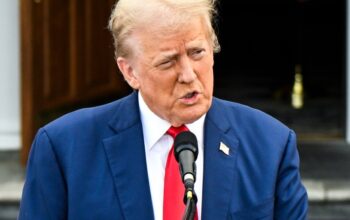
Trump extended his original 10-day deadline by 20 hours and posted a new deadline on Truth Social — Tuesday at 8pm ET — telling the world the US is “in deep negotiations” with Iran and that a deal can be reached in time.
But he’s also made clear what happens if it doesn’t.
A senior White House official confirmed that “the operational plans for a coordinated US-Israeli strike on Iranian energy infrastructure are ready, but the president extended the deadline to provide one last opportunity for diplomacy.”
Trump has threatened to hit Iranian power plants, bridges, and civilian infrastructure — threats that international law expert Gabor Rona told NPR could constitute war crimes under both international and US law.
Oil markets are already reacting. Brent crude futures rose 2.1% to $114.37 a barrel on Monday, with paper diesel prices having already jumped 108% since before the war began on February 26.
Iran’s Position: “We Won’t Be Another Gaza”
Iran isn’t rushing to sign anything.
A US official said the Trump administration gave Iran several proposals in recent days, but Iranian officials hadn’t accepted them.
Tehran’s core fear? Being left exposed.
The Iranians made clear they do not want a “Gaza or Lebanon situation” — where a ceasefire exists only on paper, but the US and Israel can attack again whenever they want to.
Iran also publicly countered the US proposals with five conditions of their own. An Iranian Embassy statement summed them up as: end to aggression, concrete guarantees preventing recurrence of war, guaranteed payment of war damages, a comprehensive end to the war across all fronts, and recognition of Iran’s sovereignty over the Strait of Hormuz.
That last demand — sovereignty over the Strait — is a massive ask, and one the US is extremely unlikely to accept.
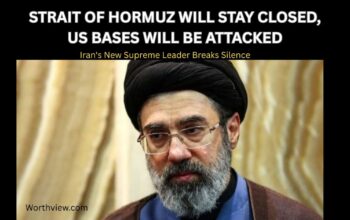
The IRGC Navy doubled down on Sunday, stating “the Strait of Hormuz will never return to its former state, especially for America and Israel.”
The Two Big Sticking Points
Even if both sides wanted a deal today, two issues remain stubbornly unresolved.
1. The Strait of Hormuz: Iran views control over this waterway as its biggest bargaining chip. Mediators believe reopening the strait and resolving Iran’s highly enriched uranium can only be a result of a final deal — not a 45-day truce.
2. Uranium enrichment: Iran has been enriching uranium to near-weapons grade levels. A deal would need to resolve what happens to that stockpile — whether it gets removed from the country or diluted down to civilian levels.
Mediators are exploring “confidence-building steps” on both issues, though Iranian officials are said to be unwilling to fully abandon their leverage in exchange for only a temporary ceasefire.
What the World Stands to Lose Without a Deal
The consequences of a breakdown go far beyond the battlefield.
British Foreign Secretary Yvette Cooper, speaking at a virtual summit of 40 countries, said Iran was “hijacking a global shipping route” and “holding the global economy hostage.”
The war has disrupted global travel and trade, halted flights in and out of the Middle East, and led to shipping reroutes to avoid the Strait of Hormuz and the Red Sea,
Energy prices in Asia and Europe have surged. The conflict also saw the resumption of hostilities between Israel and Hezbollah in Lebanon, which had been observing a fragile ceasefire since 2024.The ripple effects just keep spreading.
What Happens Next
As of Monday, April 6, the clock is ticking toward Trump’s Tuesday evening deadline — and the gap between both sides remains wide.
A senior Iranian official told Reuters that Tehran has received Pakistan’s proposal and is reviewing it, but stressed that Iran “will not accept deadlines or pressure” to make a decision.
Mediators told Iranian officials there is no time for further negotiation tactics, stressing the next 48 hours are the last opportunity to reach a deal and prevent massive destruction.
If a ceasefire is struck, it would offer the world a critical breathing room — lower oil prices, reopened shipping lanes, and a path back from the brink. If it collapses, US and Israeli strikes on Iranian civilian infrastructure could follow, potentially dragging the region into the most catastrophic phase of this conflict yet.
The next 24 hours may well decide which world we wake up to.
Related Posts
 Strait of Hormuz Crisis: Which Countries Trump Called On — And Why They All Said No
 Trump Drops Most Explosive Post of the War — “Tuesday Will Be Power Plant Day”
 America’s 15-Point Peace Plan for Iran: What It Demands, What Tehran Said, and What It Means for India
 Trump’s 5-Day War Pause vs Iran’s Flat Denial: What’s Really Happening?