Blue LEDs have become indispensable in modern lighting and display technology, powering everything from architectural accent lighting to high-definition screens and automotive interiors. As demand grows, lighting installers and contractors face mounting pressure to ensure every blue LED component performs reliably from day one.
Unlike their red or green counterparts, blue LEDs carry distinct electrical and thermal characteristics that demand a more careful approach during installation and quality control.
Testing blue SMD LEDs accurately is not simply a matter of checking whether they light up. Precise voltage measurements, current verification, and thermal assessments all play a role in determining whether a component will deliver consistent output over its intended lifespan.
Skipping or rushing these steps often leads to premature failures, costly callbacks, and dissatisfied clients. Heat management compounds the challenge further, as blue LEDs are particularly sensitive to temperature fluctuations that can skew test results and accelerate degradation.
This guide is written specifically for lighting installers and contractors who need practical, field-ready solutions. By understanding the best methods for testing blue SMD LEDs and managing the heat they generate, professionals can build installations that are both reliable and long-lasting.
Quick Summary:
- Blue SMD LEDs require careful testing due to their higher forward voltage (3.0V–3.5V) and extreme sensitivity to temperature.
- Begin every inspection with a visual check under magnification to identify physical defects like cracked encapsulant or lifted wire bonds.
- Use a Digital Multimeter (DMM) to confirm the forward voltage is between 3.0V and 3.5V and verify the in-circuit current draw against manufacturer specifications.
- Conduct a functional burn-in test for at least 30 minutes to check performance at operating temperature, which exposes marginal components.
- Always use an infrared thermometer during the burn-in to confirm the junction temperature remains below the maximum rating, typically 125°C.
- Heat management is critical; ensure proper thermal vias and use aluminum heat sinks with thermal interface pads to prevent premature lumen depreciation.
The Fundamentals of Blue SMD LEDs and Testing
Blue SMD LEDs are compact semiconductor light sources mounted directly onto printed circuit boards, making them a cornerstone of modern lighting design. Their applications span a remarkable range — from RGB display backlighting and status indicators to architectural mood lighting and automotive interiors.
The surface-mount format allows for dense component placement and automated assembly, which is why they dominate commercial and consumer lighting products alike. However, this same compactness introduces testing challenges that installers cannot afford to overlook.
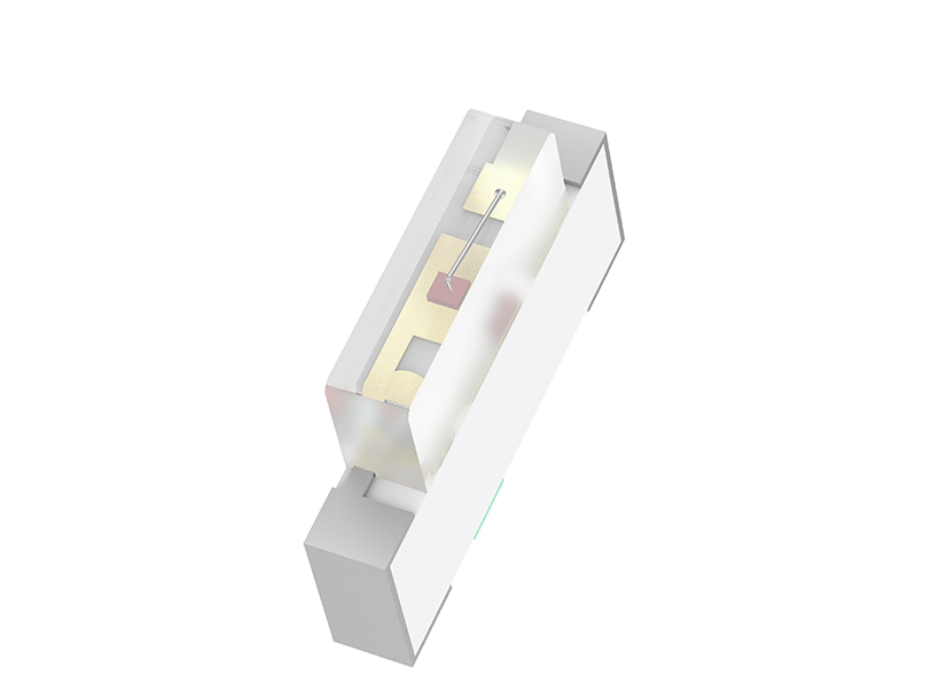
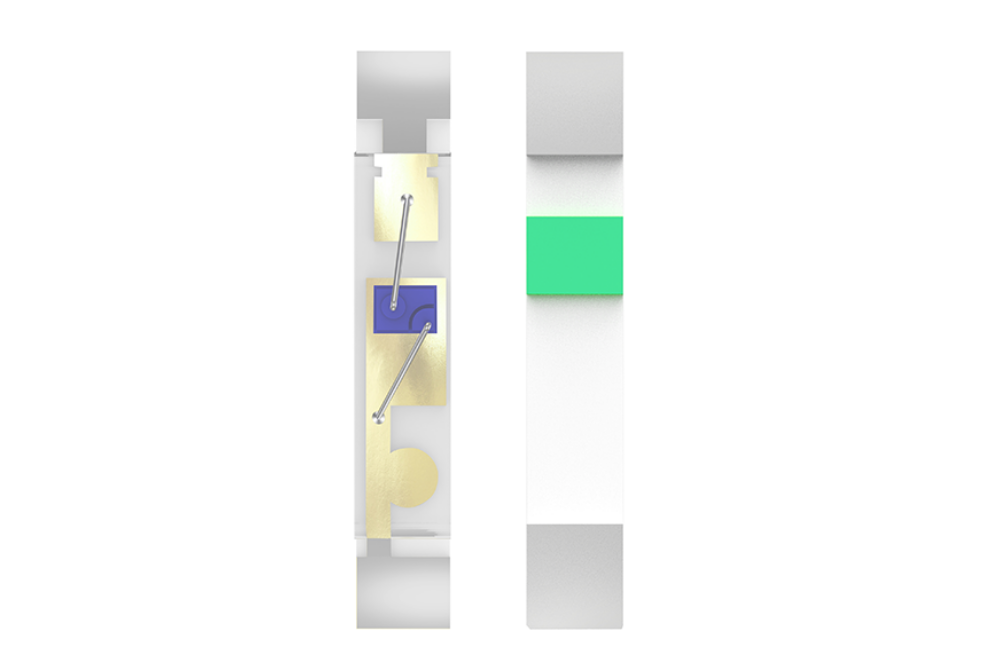
At the heart of every SMD LED are the LED beads — the actual light-emitting semiconductor chips encapsulated within the package. In blue LEDs, these beads are typically built on gallium nitride (GaN) substrates, a material choice that directly influences their electrical behavior.
Understanding how these beads are constructed and how they respond to current and temperature is foundational to any effective testing strategy. A bead that appears functional under casual inspection may still fail prematurely if its forward voltage or thermal response falls outside acceptable parameters.
What Makes Blue LEDs Unique?
Blue LEDs operate at a notably higher forward voltage than red or green variants — typically between 3.0V and 3.5V — which means standard testing assumptions built around lower-voltage LEDs simply do not apply. This elevated voltage threshold makes them more susceptible to damage from even brief overvoltage events during testing.
Compounding this, blue LEDs are particularly sensitive to junction temperature increases, which can shift their dominant wavelength, reduce luminous output, and accelerate lumen depreciation. For installers, this means that test conditions must closely mirror actual operating conditions to yield meaningful results.
A reading taken on a cold component may look perfectly acceptable, only for performance to degrade noticeably once the LED reaches its working temperature.
Key Components: LED Beads and Their Role
Within an SMD package, the LED bead sits on a thermally conductive substrate and is connected to the circuit via wire bonds or flip-chip connections. The quality and integrity of these connections directly affect both electrical performance and heat dissipation.
During testing, a compromised wire bond may still allow the LED to illuminate, masking an underlying failure point that will surface under sustained load. Recognizing the bead’s role in the overall package helps installers understand why testing must go beyond a simple pass/fail light-up check and instead evaluate voltage drop, current draw, and thermal behavior as a complete picture.
Suppliers such as HQG OPTO publish detailed bead-level specifications — including wire bond construction and thermal resistance values — that give installers a reliable reference when establishing test baselines for their components.
Also read,
Best Practices for SMD LED Testing
Reliable SMD LED testing begins before any power is applied. A structured approach — starting with visual inspection, moving through electrical verification, and finishing with functional load testing — catches defects that any single method alone would miss.
For blue LEDs specifically, this discipline matters more than with other wavelengths because their narrow tolerance for overvoltage and thermal stress means marginal components can pass a cursory check yet fail within hours of real-world operation. Building a repeatable testing workflow protects both the installation and your professional reputation.
Essential Tools for Accurate Testing
A quality digital multimeter (DMM) with diode-test mode is the minimum required tool. In diode mode, a DMM applies a small test current and displays the forward voltage drop — for a healthy blue LED, expect a reading between 3.0V and 3.5V. Any reading significantly outside this range signals a suspect component.
For higher-volume work, a dedicated LED tester with adjustable current output gives you more control, allowing you to drive the LED at a known current and observe brightness consistency across a batch. An oscilloscope becomes valuable when troubleshooting driver circuits, as it reveals current ripple that a DMM’s averaging function will completely hide.
Ripple above roughly 30% of mean current accelerates lumen depreciation in blue LEDs far faster than steady-state operation. A non-contact infrared thermometer or a thermal camera rounds out the toolkit, enabling you to spot hot spots on the PCB that indicate inadequate heat sinking or a failing solder joint before the LED itself shows visible symptoms.
Step-by-Step Testing Procedures
Begin with a thorough visual inspection under magnification. Look for cracked encapsulant, discolored phosphor, lifted wire bonds, and cold solder joints — all of which are invisible at arm’s length but obvious under a 10x loupe.
Next, perform out-of-circuit testing by isolating the LED from the board and using the DMM’s diode mode to confirm the forward voltage reading. Record the value; it becomes your baseline for comparison if the component is retested later.
Once the LED is installed, move to in-circuit electrical testing: power the circuit at its rated voltage and measure actual current draw with a clamp meter or series shunt resistor.
Compare this against the manufacturer’s specified forward current. A reading more than 10% above spec suggests a driver fault or incorrect resistor value that will shorten LED life.
Finally, conduct a functional burn-in test at operating temperature for at least 30 minutes.
Use the infrared thermometer to confirm junction temperatures remain within the datasheet’s maximum rating — typically below 125°C for most GaN-based blue LEDs. Components that dim, shift color, or show rising current during this period should be flagged for replacement.
Common Testing Pitfalls and How to Avoid Them
One of the most frequent errors installers make is testing cold components and accepting those results as definitive. Blue LEDs can show a healthy forward voltage at room temperature, then exhibit thermal runaway once the junction heats up under load.
Always recheck voltage and current after the burn-in period described above. Another common pitfall is relying solely on visual brightness as a pass/fail criterion.
Human eyes are relatively insensitive to the blue spectrum, making it easy to misjudge output differences that a calibrated photodiode or even a simple lux meter would catch immediately. Improper probe contact during multimeter testing introduces resistance into the measurement, producing artificially high voltage readings; always clean test pads with isopropyl alcohol and press probes firmly before logging any value.
Finally, avoid testing multiple LEDs in a string by measuring only the total string voltage and dividing — individual bead failures can be masked by the remaining components compensating with slightly higher voltage drops.
Addressing Heat Generation in Blue LED Installations
Heat is the silent adversary of every blue LED installation. While all LEDs generate heat as a byproduct of converting electrical energy to light, blue LEDs face a compounding problem: their GaN-based semiconductor structure is inherently more sensitive to temperature elevation than red or green alternatives.
Even modest thermal increases at the junction can cause measurable shifts in dominant wavelength, pushing the output toward violet or reducing perceived brightness. For installers, understanding heat generation is not an optional technical detail — it is directly tied to whether a finished installation holds up under continuous operation or begins failing within months.
Critically, thermal problems identified during testing often predict exactly where field failures will occur, making heat assessment an integral part of any serious testing protocol.
Understanding Heat Sources in Blue LEDs
The primary source of heat in a blue LED installation is power dissipation within the LED bead itself. Because blue LEDs operate at higher forward voltages, any excess current translates into disproportionately high thermal output at the junction.
High power density within the compact SMD package leaves little margin for inefficient heat dissipation — the thermal path from junction to board to ambient environment must be as short and unobstructed as possible. Poor solder joint quality is a frequently overlooked contributor; a cold or cracked joint increases thermal resistance at the pad, causing heat to accumulate in the package rather than conduct away through the PCB.
Driver-related issues compound the problem further, as excessive current ripple from a poorly designed or failing driver creates cyclical thermal stress that fatigues the LED bead’s internal connections over time, accelerating lumen depreciation and color shift well ahead of the component’s rated lifespan.
Effective Cooling Solutions
Addressing heat starts at the PCB design stage. Copper pour areas and thermal vias beneath LED pads dramatically reduce junction-to-board thermal resistance, and installers should verify their presence before committing to a board design for high-density blue LED arrays.
For retrofit or field installations, attaching an appropriately sized aluminum heat sink to the PCB rear surface is one of the most cost-effective interventions available. Use thermal interface pads rather than air gaps between the board and heat sink — even a thin layer of trapped air acts as an insulating barrier that negates much of the heat sink’s benefit.
In enclosed fixtures, consider whether passive convection is sufficient or whether a small forced-air solution is warranted; a non-contact infrared thermometer during burn-in testing will answer this question definitively.
Maintaining ambient temperatures within the fixture below 50°C gives most GaN-based blue LEDs adequate headroom to operate well within their thermal limits, preserving both output stability and rated lifespan.
Implementing Comprehensive LED Solutions
Testing and heat management are most powerful when treated as a unified system rather than separate checklists. Installers who integrate both disciplines into a single workflow catch problems earlier, reduce callbacks, and deliver installations that perform consistently over years of operation.
The methods covered in previous sections — voltage verification, burn-in testing, thermal imaging, and proper heat sinking — are not standalone tasks but interconnected steps in a complete quality assurance process. Approaching blue LED installations this way transforms testing from a reactive troubleshooting exercise into a proactive reliability strategy.
Integrating Testing and Heat Management
A practical integrated workflow begins at component receipt. Batch-test incoming blue SMD LEDs for forward voltage consistency before any installation work begins, flagging outliers that fall outside the 3.0V–3.5V window.
During PCB assembly, confirm thermal via placement and solder joint quality visually before powering up. On first power-up, run the burn-in sequence while simultaneously monitoring junction temperatures with an infrared thermometer — this single step validates both electrical performance and thermal dissipation in one pass.
Document temperature readings alongside current measurements so any future performance drift can be traced back to a baseline. Schedule a follow-up thermal check at 500 operating hours; components that were marginal during initial testing often reveal themselves at this stage through elevated temperatures or measurable lumen drop.
Practical Examples for Installers
Consider a contractor installing a high-density blue LED cove lighting system in a hotel lobby. By applying pre-installation batch testing, the team identifies a subset of LEDs with forward voltages reading 3.6V — just outside spec. Replacing those components before installation avoids a color inconsistency complaint weeks later.
In a second scenario, an installer fitting blue LED strips inside an enclosed display cabinet uses burn-in thermal data to determine that passive cooling is insufficient, prompting the addition of a small aluminum extrusion heat sink along the strip length.
Both outcomes share a common thread: structured testing combined with thermal awareness prevented field failures that would have been far costlier to remedy after handover.
Adopting this combined approach on every project, regardless of scale, is the clearest path to reliable, long-lasting blue LED installations.
Building Reliable Blue LED Installations Through Testing and Thermal Control
Testing blue SMD LEDs effectively demands more than a quick power-up check.
As this guide has outlined, reliable results come from combining structured electrical testing — forward voltage verification, current measurement, and burn-in evaluation — with disciplined thermal management throughout every stage of an installation.
The tools are accessible, the procedures are repeatable, and the payoff is measurable: fewer callbacks, longer-lasting installations, and clients who trust your work.
Heat management and testing are not separate concerns. They inform each other at every step, from incoming component inspection through to the 500-hour follow-up thermal check.
Blue LEDs’ sensitivity to overvoltage and junction temperature means that cutting corners in either discipline creates compounding risks that surface long after a project is handed over.
For lighting installers and contractors, adopting these best practices is a straightforward investment with a clear return. Start by building a consistent pre-installation batch-testing habit, integrate thermal checks into your burn-in routine, and document your baseline readings for every project.
When sourcing components, working with established LED lamp bead manufacturers like HQG OPTO ensures you have access to accurate datasheet specifications — a foundation that makes every step of this testing process more reliable.
Apply these strategies on your next blue LED installation and establish a quality standard that sets your work apart from the competition.