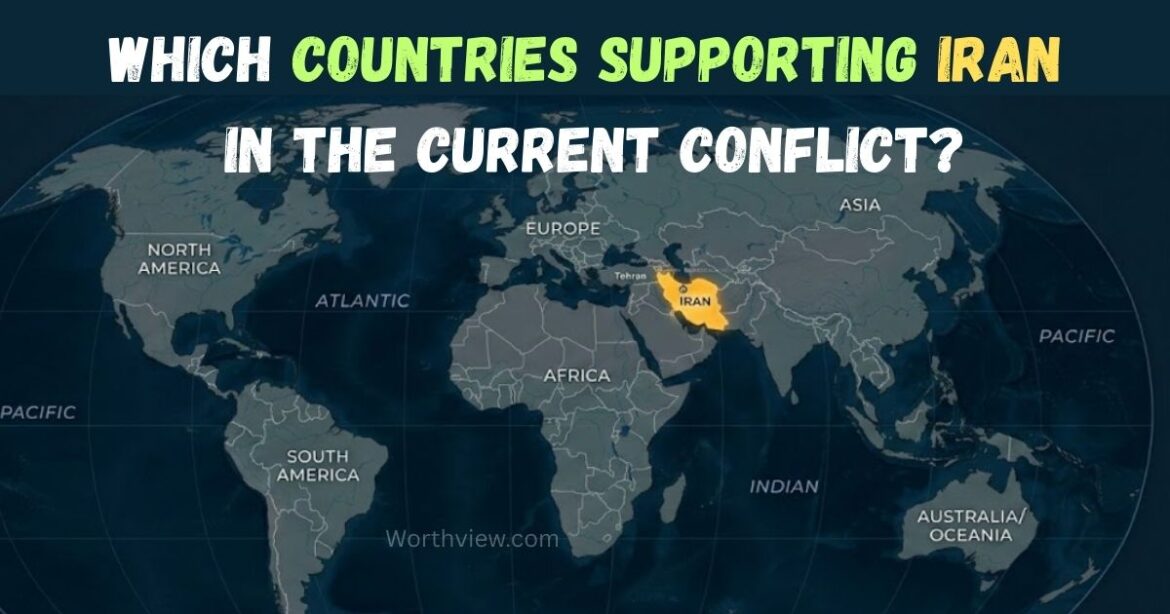
In the current conflict, Russia and China have publicly supported Iran’s position diplomatically, condemning U.S.–Israeli strikes and calling for restraint. Iran also receives backing from regional proxy groups like Hezbollah and the Houthis. However, no major power has officially entered the war on Iran’s side militarily. Most countries are either opposing Tehran’s actions or urging neutrality and ceasefire.
As tensions escalate in the Middle East, many people are asking: Who is actually supporting Iran right now?
With U.S.–Israeli strikes, leadership changes in Tehran, and rising regional instability, global reactions have been divided. Some countries have openly condemned the attacks on Iran. Others are urging diplomacy. A few regional groups are closely aligned with Tehran.
Here’s a clear breakdown of which countries support Iran in the current conflict — and what that support really means.
Which Countries Are Backing Iran in the Current Conflict?
In the ongoing Iran conflict, several countries have taken public positions that align with or support Tehran’s stance, mostly in political and diplomatic terms, while others urge ceasefire or neutrality.
🇨🇳 China
China has reaffirmed its support for Iran’s sovereignty and territorial integrity amid the conflict. Chinese Foreign Minister Wang Yi spoke with his Iranian counterpart, stressing that Beijing stands by Tehran in safeguarding its security and national dignity. China has urged the United States and Israel to immediately cease military operations and prevent escalation.
China’s position is primarily diplomatic and economic, rather than military. Beijing also reiterated calls for diplomacy and negotiation involving all parties.
🇷🇺 Russia
Russia has strongly condemned the joint U.S.–Israeli strikes on Iran, calling them an “unprovoked act of armed aggression.” Moscow emphasized that such military action risks a humanitarian, economic and potentially even radiological disaster in the region, and demanded an end to hostilities.
Russia’s backing of Iran remains mainly diplomatic and rhetorical, though the two nations have strategic cooperation in areas like defense and regional politics.
Other Voices Calling for Supportive Action
Beyond these two governments, several pro-Iranian protests have been reported around the world. Demonstrators have rallied in cities across the U.S., Europe, and the Middle East, expressing support for Iran’s government and condemning foreign intervention in Tehran’s affairs.
These demonstrations — though not official state support — show grassroots backing in some communities and reflect global anti-war sentiment tied to the conflict.
What “Support” Actually Means
It’s important to distinguish:
-
Diplomatic backing — public statements, political support at forums like the UN
-
Economic alignment — trade and energy cooperation
-
Military support — direct involvement in conflict
As of now, no major country has formally entered the war on Iran’s side militarily. The support from China and Russia is mostly diplomatic and rooted in calls for restraint and negotiation.
Meanwhile, Iran’s close links with non-state groups such as Hezbollah and the Houthis — which have initiated attacks against U.S. and Israeli forces — remain a critical part of its regional network, though these are not official state actors.
Which Groups Support Iran in the Region?
Beyond country-level diplomacy, Iran has strong ties with several non-state armed groups across the Middle East. These groups are often described by analysts as part of the “Axis of Resistance.”
They are not countries — but they significantly expand Iran’s regional influence.
🇱🇧 Hezbollah (Lebanon)
Hezbollah is Iran’s most powerful regional ally.
- Formed in the 1980s with Iranian backing
- Receives financial, military, and strategic support
- Has thousands of fighters and a large missile arsenal
Hezbollah has historically coordinated closely with Iran’s Islamic Revolutionary Guard Corps (IRGC). In times of crisis, Hezbollah’s actions can increase pressure on Israel’s northern border.
🇾🇪 Houthi Movement (Yemen)
Houthi movement has received political and military backing from Iran over the years.
The Houthis have:
- Targeted regional shipping routes
- Launched missile and drone attacks in past conflicts
While Iran denies direct operational control, international observers widely recognize Tehran’s influence in supporting the group.
🇮🇶 Iraqi Militias
Several Shia militias in Iraq — some aligned under the Popular Mobilization Forces — have strong ideological and operational ties to Iran.
These groups often:
- Oppose U.S. military presence in Iraq
- Align with Tehran’s regional strategy
Why This Matters
Unlike Russia or China, these groups can influence the battlefield directly.
They allow Iran to:
- Apply pressure beyond its borders
- Expand deterrence without direct state-to-state war
- Complicate regional security calculations
However, it’s important to note:
These are non-state actors, not internationally recognized governments. Their support strengthens Iran regionally but does not equal formal military alliances between countries.
Which Countries Oppose Iran in This Conflict?
While some nations have diplomatically backed Iran, several countries have openly opposed Tehran’s actions or aligned against it in the current conflict.
🇺🇸 United States
The United States is directly involved in military operations against Iran. Washington argues that its actions are aimed at preventing nuclear escalation and protecting regional security.
The U.S. has also increased naval presence in the Gulf and reinforced its regional bases.
🇮🇱 Israel
Israel considers Iran its primary security threat, especially over nuclear and missile development. Israel has conducted direct strikes on Iranian-linked targets and continues to maintain a high alert status.
🇸🇦 Gulf States
Several Gulf countries have criticized Iran’s missile and drone actions in the past and expressed concern about regional destabilization.
These include:
- Saudi Arabia
- United Arab Emirates
- Bahrain
- Kuwait
- Jordan
While some of these states avoid direct confrontation, they generally align more closely with U.S. security positions than with Iran.
🇪🇺 European Powers
Countries like:
- France
- Germany
- United Kingdom
have not backed Iran’s military posture. Instead, they call for de-escalation, ceasefire, and diplomatic negotiation.
They criticize escalation from all sides but do not politically support Tehran’s retaliatory actions.
What This Division Shows
The global response to the Iran conflict is not black and white.
- A few major powers offer diplomatic backing to Iran.
- Regional proxy groups provide battlefield alignment.
- Many Western and Gulf countries oppose Tehran’s actions.
- Several nations remain neutral and call for dialogue.
This divided global landscape increases uncertainty — both politically and economically.
Conclusion
So, which countries support Iran in the current conflict?
The short answer: very few at the state level — and none militarily so far.
Russia and China have offered diplomatic and political backing, condemning U.S.–Israeli strikes and calling for restraint. Regionally, groups like Hezbollah and the Houthi movement provide non-state support aligned with Tehran’s strategy.
However, no major global power has officially entered the war on Iran’s side.
At the same time, the United States, Israel, and several Gulf states openly oppose Iran’s actions, while European countries push for diplomacy rather than alignment.
This creates a divided international landscape — where Iran has diplomatic backing and regional influence, but not a formal military alliance of powerful nations.
The real question now is whether this division leads to escalation — or negotiation.
FAQ
1️. Which major countries currently support Iran?
The main countries offering diplomatic backing to Iran are Russia and China. Both have condemned U.S.–Israeli strikes and called for restraint. However, neither has entered the conflict militarily.
2️. Is any country fighting alongside Iran?
No major country has officially deployed troops or joined the war on Iran’s side. Support so far has been political and diplomatic, not direct military intervention.
3️. Which regional groups support Iran?
Iran has long-standing ties with groups such as Hezbollah and the Houthi movement. These are non-state actors that align with Iran’s regional strategy.
4️. Which countries oppose Iran in this conflict?
The United States and Israel are directly opposing Iran. Several Gulf states, including Saudi Arabia and the United Arab Emirates, also criticize Tehran’s actions.
5️. Are European countries supporting Iran?
No. Countries like France, Germany, and the United Kingdom are calling for de-escalation and diplomacy, but they are not backing Iran’s military position.
Related Posts
 Strait of Hormuz Explained: What It Is, Why It’s Important & the Current Crisis
 Ayatollah Alireza Arafi – Iran’s New Interim Leader After Khamenei’s Death
 Why Iran Is Under Attack: Operation Epic Fury and Israel’s Response Explained
 Israel’s Airstrike on Iran’s Evin Prison: A Symbolic Blow in an Escalating Conflict