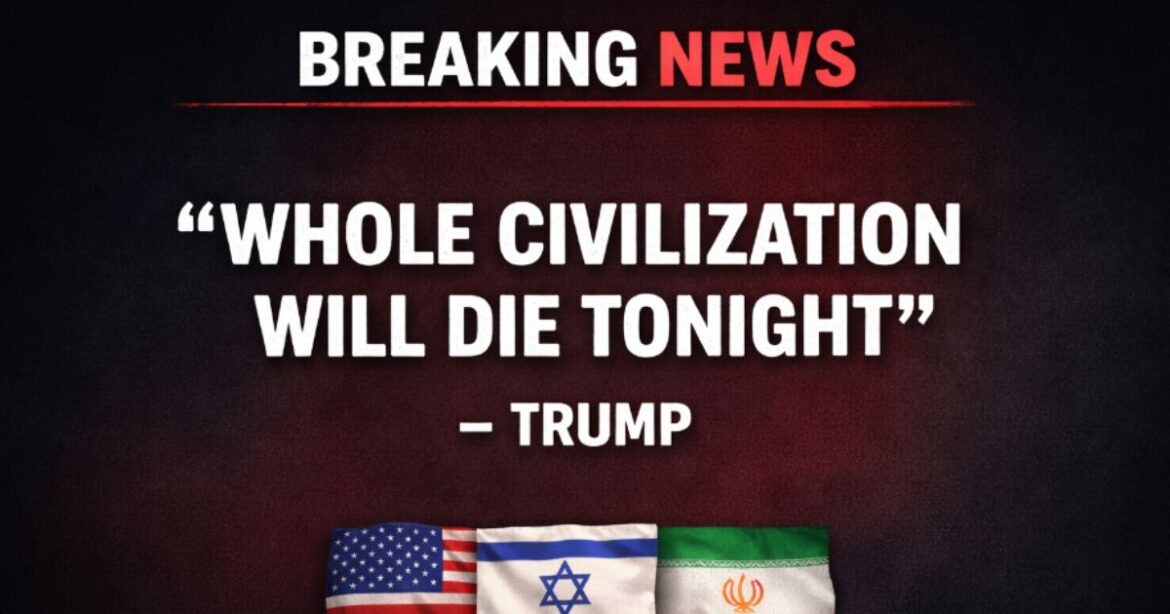
In a dramatic and deeply concerning development, former US President Donald Trump has issued a chilling warning amid escalating military tensions in the Middle East. Posting on his social media platform, Trump declared that “a whole civilization will die tonight,” linking the statement to ongoing coordinated strikes by the United States and Israel on Iranian targets.
The message quickly spread across global media, sparking concern and debate over whether the region is on the brink of a larger conflict. Trump also described the current actions as an effort to end “47 years of extortion,” pointing to long-standing tensions between Iran and Western powers.
US–Israel military action intensifies pressure
The warning comes at a time when joint military operations by the US and Israel have reportedly targeted key infrastructure within Iran. These include oil facilities, transport networks, and other strategic locations believed to be critical to Iran’s economy and military capabilities.
The strikes appear to be part of a broader strategy aimed at forcing Tehran into compliance with specific demands, including reopening crucial maritime routes and reducing regional aggression. Analysts believe this could be one of the most aggressive coordinated military moves in recent years.
What Trump’s warning really means
While Trump’s statement has alarmed many, experts suggest that such language is often used as part of high-intensity political messaging. The phrase “whole civilization will die” is not being interpreted literally but rather as a reflection of the potential scale of destruction if the conflict escalates further.
It signals the seriousness of the situation and serves as a warning of what could happen if diplomatic efforts fail.
Global impact and rising concerns
The situation carries significant global implications. One of the biggest concerns is the stability of the Strait of Hormuz, a critical oil transit route through which a large portion of the world’s energy supply flows. Any disruption here could lead to sharp increases in global oil prices, affecting economies worldwide, including India.
There are also fears that continued escalation could draw in neighboring countries, turning the conflict into a wider regional war with far-reaching consequences.
Iran’s stance and risk of retaliation
Authorities in Iran have not shown signs of backing down. In previous statements, Iranian officials have warned that continued attacks would be met with strong retaliation.
Such a response could rapidly escalate the situation, leading to a cycle of attacks and counterattacks. With both sides holding firm positions, the risk of further military confrontation remains high.
Diplomatic efforts and what lies ahead
Despite the aggressive developments, diplomatic channels are still believed to be active behind the scenes. Global leaders and international organizations are closely monitoring the situation and pushing for de-escalation.
The coming hours and days will be critical in determining whether tensions ease through negotiations or escalate into a prolonged and potentially wider conflict.
Bottom line
Trump’s statement highlights the gravity of the current situation. While the language used is extreme, it reflects the high stakes involved in this geopolitical crisis. The world now watches closely as events unfold, with the hope that diplomacy will prevail over conflict.
Related Posts
 Iran Rejects 45-Day Ceasefire Deal — Demands Permanent End to War as Trump’s Deadline Looms
 Trump Drops Most Explosive Post of the War — “Tuesday Will Be Power Plant Day”
 America’s 15-Point Peace Plan for Iran: What It Demands, What Tehran Said, and What It Means for India
 Trump’s 5-Day War Pause vs Iran’s Flat Denial: What’s Really Happening?