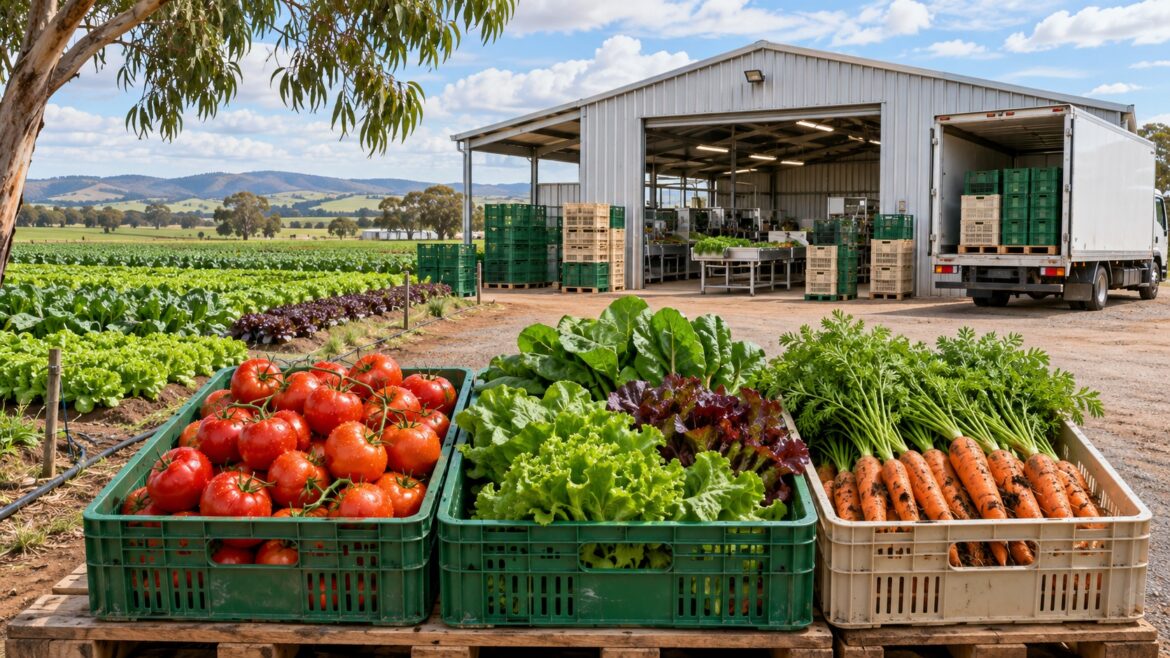
It’s easy to assume that all it takes to supply a supermarket with ripe-looking tomatoes is a farmer who grows them, plus someone who drives them to the store.
In fact, many operations may take place between the farm and the final consumer, including picking, grading, packing, refrigeration, marketing, transport and further handling. Each has some effect on the end result, because virtually all fresh produce continues to deteriorate to some extent once picked. Excessive damage or delay at any stage would harm the produce available for sale.
Ideally, then, fresh produce should reach its various end users efficiently, with as little deterioration and waste as possible. The sections below outline the stages involved in supplying fresh fruit and vegetables in Australia.
Factors prior to picking
Many factors influence how well the crop turns out by the time it reaches the purchaser.
The type and volume of crop to be grown will depend partly on the time of year, water availability, access to suitable labour, demand and other factors. Crops vary considerably in how long after picking they are at their best for eating. Many types of lettuce are best very soon after harvest, whereas many fruits benefit from further ripening after picking.
Consequently, the crop should ideally be picked at the best time for the degree of ripeness required, since under-mature produce will be of lower quality, while over-mature produce may be more easily damaged or otherwise unsaleable.
The likely purchasers will also shape the characteristics required of the crop, such as its size, general appearance, the quantity per delivery and the type of packing. These requirements may vary considerably between a small retailer, a chain store and a processor.
Ideally, delivery times and volumes will suit the needs of buyers further down the supply chain. However, weather or other conditions affecting the crop’s growth may bring deliveries forward, delay them or reduce them, so it is worth keeping others in the supply chain informed.
Picking, packing and wholesale supply
The required quantity is picked by hand, by machine or both, as quickly as practicable and with appropriate care. Much of the produce is then taken to one or more packing sheds to be graded and packed for particular markets. Depending on the product, this may include washing, cutting or other operations, although some products may be more easily damaged by washing.
Suitable packing helps to minimise breakage, keep orders separate and make the contents easy to identify.
The produce may then be sold directly to one or more chain stores, delivered to a wholesale market or supplied to distributors for onward sale, among other routes.
A restaurant or similar business may need a wide variety of fruit and vegetables, but probably not large volumes of each. It may therefore be more convenient to buy most of the products it needs from one or more suppliers of wholesale fruit and vegetables, rather than arrange separate deliveries from many sources.
Being able to offer produce from a range of growers across a wider area helps a wholesale supplier meet customers’ requirements and advise them on likely future availability.
Storage and transport of fresh produce
The length of time since picking does not, by itself, determine the freshness and condition of produce. Most produce continues to respire (‘breathe’) to some degree after picking, losing water and undergoing other changes as a result. These effects can be faster under unsuitable conditions, leading to loss of firmness (turgidity), increased bruising, decay and other deterioration. Cooling often helps after harvest, but storage temperatures must suit the crop.
Many types of produce benefit substantially from rapid removal of ‘field heat’ (the warmth they still hold from the field when picked), and then pass through various combinations of cool rooms and refrigerated vehicles on their way to purchasers. Ideally, this temperature control continues without a break, forming what is known as the ‘cold chain’. Different produce needs very different temperatures: those suitable for washed salad crops, for example, would be likely to damage some other products that are sensitive to low temperatures.
Other points to consider during transport include:
- stacking to a suitable depth in vehicles, allowing adequate air circulation while avoiding excessive movement and crushing;
- appropriate cleanliness to minimise the risk of contamination;
- minimal delays, for example at loading bays;
- clear identification, so that origin and destinations can be traced.
Handled well, produce can be transported over considerable distances with little deterioration; handled poorly, it may deteriorate significantly over far shorter distances.
Distribution to various end users
Delivery routes vary by buyer. For example, varying amounts may be delivered under contract to one or more stores; an individual shop may buy quantities at a wholesale market as required; restaurants may receive one or more deliveries a week; and growers may sell directly at the farm, at markets and elsewhere.
Wholesale markets (the Melbourne Market, for example) bring together a share of the produce grown and some of the many types of purchaser, including retail shops, hospitality businesses and processors.
Distributors receive deliveries, fill customer orders from stock on hand or by sourcing elsewhere, store produce as necessary and deliver it to their customers, so that a variety of products from different sources can arrive in a single delivery. Ideally, they would hold enough stock to meet orders that fluctuate from day to day, without storing perishable produce unnecessarily.
Further handling
When a consignment arrives, it is sensible to check that the order is generally correct and to look for any obvious damage or other defects. The produce should then be moved to suitable storage areas rather than being left in, for example, a warm delivery area.
Retailers will want to display produce attractively and inspect it regularly, putting more mature items forward for sale and removing any that show decay so they do not taint nearby stock.
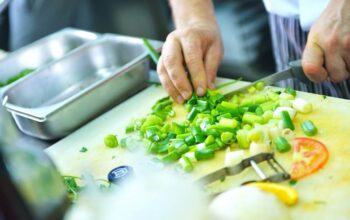
Further preparation may be needed in most food service businesses, using some combination of washing, peeling, cutting and cooking. Appropriate hygiene is particularly important for produce eaten raw, such as salad, because produce that looks clean on the outside can still carry a high bacterial load.
Consumers can also play their part by, for example, washing produce before eating it, storing it appropriately and eating it within a reasonable time once it is suitably mature.
Wasted produce
Unfortunately, a proportion of all produce grown is never eaten. In March 2026, it was estimated that as much as one million tonnes of Australian fruit and vegetables never make it to market each year. This figure excludes losses at later stages, such as in transit, in retail and in the home.
Causes at different stages include adverse weather, overly strict size and appearance standards, rough handling, unsuitable temperatures and ordering inappropriate volumes. Better planning of which crops to grow, more appropriate product standards and closer communication between everyone involved may help reduce avoidable food losses. Suitable surplus produce may also have other uses, such as processing, sale through other outlets or donation so that it can still be eaten.
This is not to suggest that all produce of marginal quality should be offered for sale fresh, only that other uses should be sought where this can be done safely.
Summary
Providing good-quality fresh produce involves many stages and decisions. It is clearly to everyone’s advantage if each party plays its part well, so that as much produce as possible reaches consumers in good condition and as little as possible is wasted.
Enjoy Worthview?
Add Worthview as a Preferred Source on Google to see more of our stories in Search.

Worthview Editorial Team is the shared byline for content created collaboratively by Worthview’s editors and contributors. Since 2008, we’ve published thousands of articles across technology, AI, finance, health, home, travel, and lifestyle. Our editorial process emphasizes original research, reputable sources, regular content updates, and clear attribution. Articles covering higher-trust topics, including health and finance, may also undergo review by qualified subject-matter experts.