Good vision is often treated as something that belongs in a clinic rather than something that shapes how kids move through their social world. When a child sees the world with blurred edges or mixed-up details, it can subtly change how they join in with others.
At Eyecare Plus Edgecliff, optometrists often see children who appear withdrawn or hesitant in group settings, not because they’re shy, but because they’re trying to make sense of what their eyes are showing them. A child avoiding group play or steering clear of eye contact may simply be compensating for unclear vision. Once you start thinking about how much kids rely on clear sight to read the room, it becomes easier to see why vision and social growth go hand in hand.
How Clear Vision Helps Kids Pick Up Social Cues
Any optometrist for kids would agree that clear vision does more than help them read the board at school. It helps them read people. The tiny shifts in a friend’s grin, the wave from across the yard, or the quick eyebrow lift that signals a joke all rely on visual clues. When those clues get fuzzy, social moments can feel like a puzzle with half the pieces missing.
Kids might squint or lean forward, trying to work out what someone is feeling or saying without wanting to make a fuss. More often than not, children don’t realise that anything is off, so the grown ups around them see the behaviour but not the cause.
Imagine a child in class trying to catch a classmate’s cheeky smile from across the room but missing it completely. That small moment can change whether they feel included or out of step, even though the root of it all is something as simple as clarity.
When Vision Problems Get Mistaken for Behaviour Issues
It’s surprisingly easy for vision challenges to look like something else entirely. A child who seems distracted during group time may be doing their best to follow along when they can’t quite see what is happening. Another might hang back during play, not because they dislike the activity, but because they can’t track the moving pieces around them.
Some kids step too close during conversations, while others stay too far back, simply because they cannot judge distance properly. Even a moment of zoning out can be misread as daydreaming when it is really just a child trying to keep up with visual cues they cannot quite catch.
The Social Ripple Effects of Poor Vision
When vision problems continue unnoticed, the effects can reach far beyond the playground. These may include:
- Struggling to join group games because they can’t see the action properly.
- Misreading expressions, which leads to misunderstandings with friends.
- Avoiding team activities or sports where vision guides timing and coordination.
- Feeling different without understanding why, which can impact confidence.
How Vision Supports Confidence and Social Bravery
Kids who see clearly tend to walk through their world with a steadier stride. Recognising a friendly face from a distance gives them a head start when joining conversations. Feeling sure of their surroundings helps them take little social risks, like waving first or trying a new sport.
Even something as small as spotting their mates at the park without guesswork can build confidence. When children feel certain about what they are looking at, they often find it easier to step forward rather than wait on the sidelines. As the old saying goes, they feel as proud as punch.
Simple Ways Parents Can Support Healthy Social Development Through Vision
Parents can help their kids socially by creating habits that support comfortable vision, and these don’t have to be complicated at all. You may need to:
- Pay attention to subtle shifts in behaviour, like sudden reluctance in social settings.
- Create well lit play and study spaces so kids aren’t working overtime with their eyes.
- Encourage outdoor breaks to give their eyes time away from close up tasks.
When It’s Time to Book a Children’s Eye Test
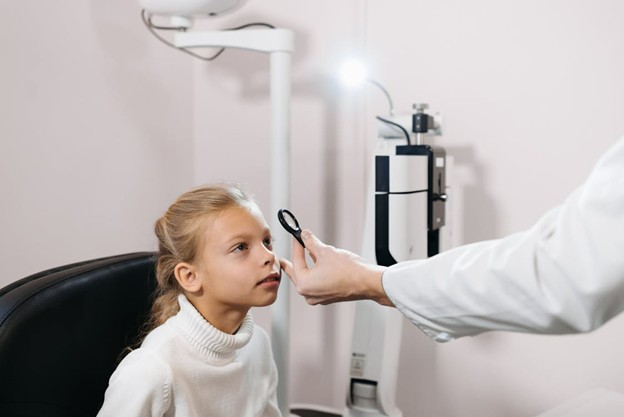
Some everyday signs point toward the need for a proper eye check. A child leaning right into a screen, losing interest in group sports, or waving back at someone who wasn’t actually greeting them can be gentle hints. Kids may also mix up who is calling them from across a room, or they might step closer than usual when looking at books or drawings.
An eye test brings clarity for both parents and children. It’s quick, child friendly, and offers helpful answers about what might be going on. Once everything is checked, it becomes easier to support a child’s social world with confidence.
Conclusion: Helping Kids See the World Clearly and Confidently
Good vision does far more than help kids read letters during an eye exam. It shapes how they talk, play, and connect with the people around them. When children can see clearly, they often feel more at ease joining games, making friends, and exploring their little communities. By staying aware and taking small steps early, parents can help their kids grow socially with confidence and joy.