
Last updated: Aug 31, 2026
Stress is a normal response to challenging or demanding situations. Work, relationships, finances, health concerns, family responsibilities and major life changes can all contribute to stress. Some stress can help us respond to challenges, but ongoing or overwhelming stress can affect how we feel, sleep, think and function.
The good news is that stress can often be managed with practical changes to daily habits and coping strategies. Building a regular routine, getting enough sleep, staying physically active, practicing relaxation techniques, maintaining social connections and breaking overwhelming tasks into smaller steps can all help.
This guide explains how to manage stress in everyday life, what you can do when you feel overwhelmed, and when it may be time to seek professional support.
Key Takeaways
- Stress is a normal response to challenging situations, but ongoing or overwhelming stress can affect sleep, mood, concentration and daily life.
- Identifying your stress triggers can help you choose practical ways to manage them.
- Regular physical activity, adequate sleep, relaxation techniques and mindfulness can support healthy stress management.
- Staying connected with friends, family or other supportive people can make stressful periods easier to manage.
- When stress feels overwhelming, breaking problems into smaller, manageable steps can help restore a sense of control.
- A balanced diet can support overall well-being, but there is no single food or “stress-fighting” ingredient that eliminates stress.
- If stress is persistent, significantly affecting daily life, or becoming difficult to cope with, consider speaking with a qualified healthcare or mental health professional.
What Is Stress and Why Does It Happen?
Stress is the body’s natural response to a perceived challenge, demand or threat. It can affect both the body and mind, preparing you to respond to a situation.
Short-term stress can sometimes be useful—for example, before an important presentation or when dealing with an urgent problem. However, ongoing or excessive stress can become difficult to manage and may affect sleep, mood, concentration, relationships and overall well-being.
Common Causes of Stress
Stress can come from many areas of life, including:
- Work pressure, deadlines or job uncertainty
- Financial concerns
- Relationship or family problems
- Major life changes
- Health concerns
- Lack of sleep or an irregular routine
- Caring for children or other family members
- Information overload, constant notifications or social media
- Feeling that you have too many responsibilities and too little time
Stress is also highly individual. The same situation may feel manageable to one person and overwhelming to another.
Can Stress Affect Your Health?
Yes. Persistent stress can affect how you sleep, think, feel and behave. It may contribute to headaches, muscle tension, digestive problems, difficulty concentrating, irritability, changes in sleep and other physical or emotional symptoms.
Learning to recognize your personal stress triggers and early warning signs can make it easier to take action before stress becomes overwhelming.
How to Manage Stress in Everyday Life
There is no single way to eliminate stress, and some stressful situations cannot be avoided. The goal is to develop healthy ways to respond to stress and prevent it from becoming overwhelming.
The following strategies can help you manage everyday stress and build better coping habits.
1. Identify Your Stress Triggers
Start by noticing what tends to trigger your stress. It could be work deadlines, financial concerns, family responsibilities, lack of sleep or constantly checking messages and social media.
Writing down stressful situations and how you respond to them can help you recognize patterns. Once you know your common triggers, you can look for practical ways to change what is within your control.
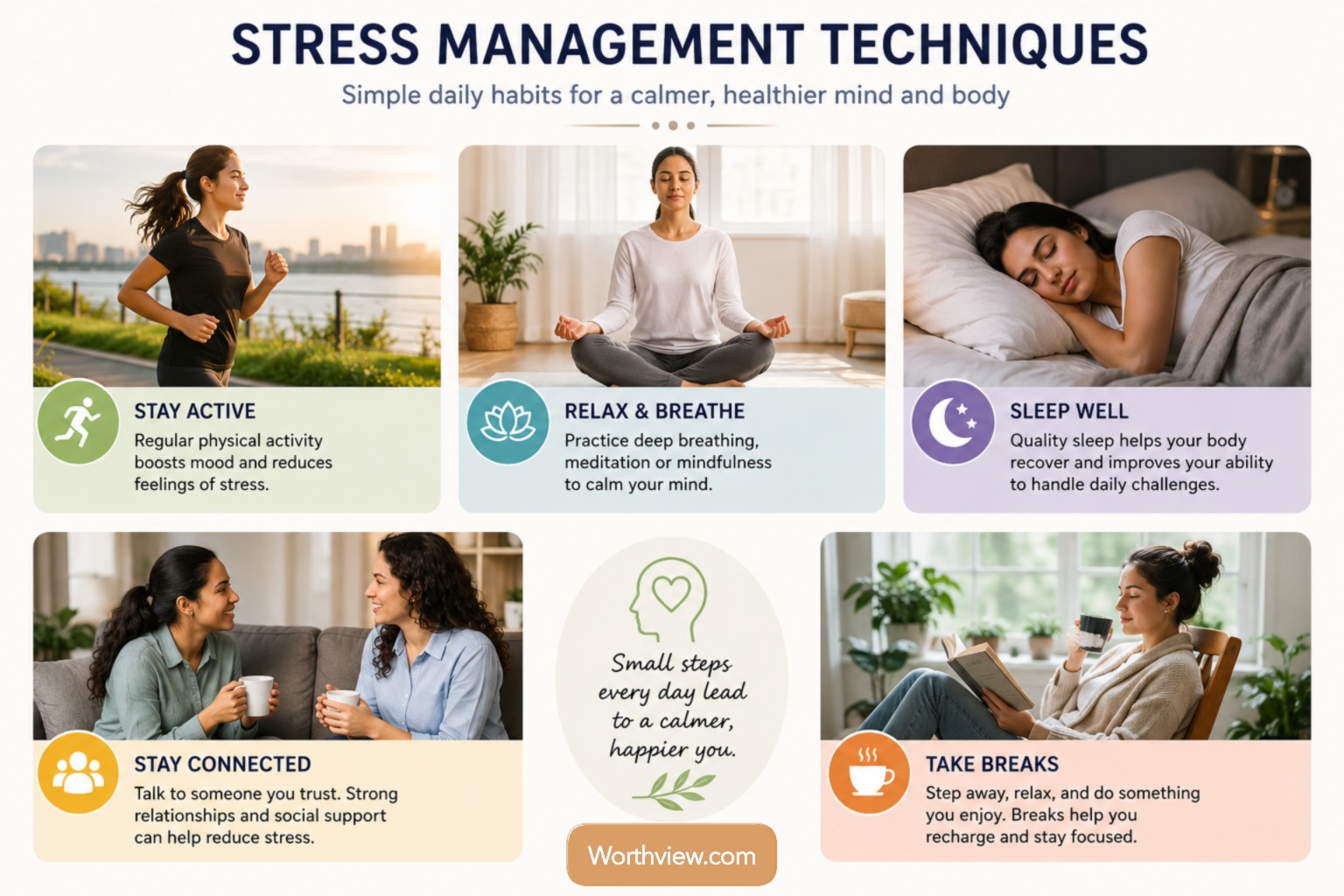
2. Stay Physically Active
Regular physical activity can support mental well-being and help reduce feelings of stress. You don’t need an intense workout to get started. Walking, cycling, stretching, dancing or another activity you enjoy can be a practical addition to your routine.
Aim for activities you can maintain consistently rather than trying to follow an unrealistic exercise plan.
3. Prioritize Sleep
Poor sleep can make it harder to cope with everyday challenges, while ongoing stress can also interfere with sleep. Maintaining a regular sleep schedule, creating a relaxing bedtime routine and reducing stimulating activities before bed can support better sleep.
If sleep problems persist, consider discussing them with a healthcare professional.
4. Try Slow Breathing and Relaxation Techniques
When you feel stressed or overwhelmed, deliberately slowing your breathing can provide a simple way to pause and focus your attention.
You can also try progressive muscle relaxation, meditation or other relaxation exercises. Practicing these techniques regularly may make them easier to use during stressful situations.
5. Practice Mindfulness
Mindfulness involves paying attention to what is happening in the present moment rather than becoming completely absorbed in worries about the past or future.
Simple practices such as focusing on your breathing, noticing your surroundings or taking a few minutes to observe your thoughts without immediately reacting to them can help you create a mental pause.
6. Break Large Problems Into Smaller Steps
Stress can become worse when everything feels urgent at the same time. Instead of trying to solve everything at once, identify what needs attention first.
Break a large task into smaller actions and focus on one step at a time. Creating a short, realistic list can make responsibilities feel more manageable.
7. Stay Connected With Supportive People
Talking with someone you trust can make stressful situations feel less isolating. Friends, family members, colleagues or other supportive people can provide encouragement, perspective or simply a chance to talk.
You don’t necessarily have to solve the problem during the conversation. Sometimes having someone listen can be helpful.
8. Set Healthy Boundaries
Constantly taking on additional responsibilities can contribute to stress. Where possible, learn to say no to requests that you cannot reasonably accommodate.
Setting boundaries around work, personal time, notifications and social commitments can help create space for rest and recovery.
9. Take Breaks From Constant Information
Continuous exposure to news, social media, emails and notifications can make it difficult to mentally switch off.
Consider creating periods during the day when you step away from your phone or other screens. Turning off unnecessary notifications can also reduce interruptions and give you more control over your attention.
10. Make Time for Activities You Enjoy
Hobbies and enjoyable activities are not a waste of time. Reading, listening to music, spending time outdoors, cooking, gardening, creating something or simply relaxing can provide opportunities to step away from daily pressures.
The most useful activities are those that genuinely help you relax rather than becoming another task you feel pressured to complete.
How to Manage Stress Quickly When You Feel Overwhelmed
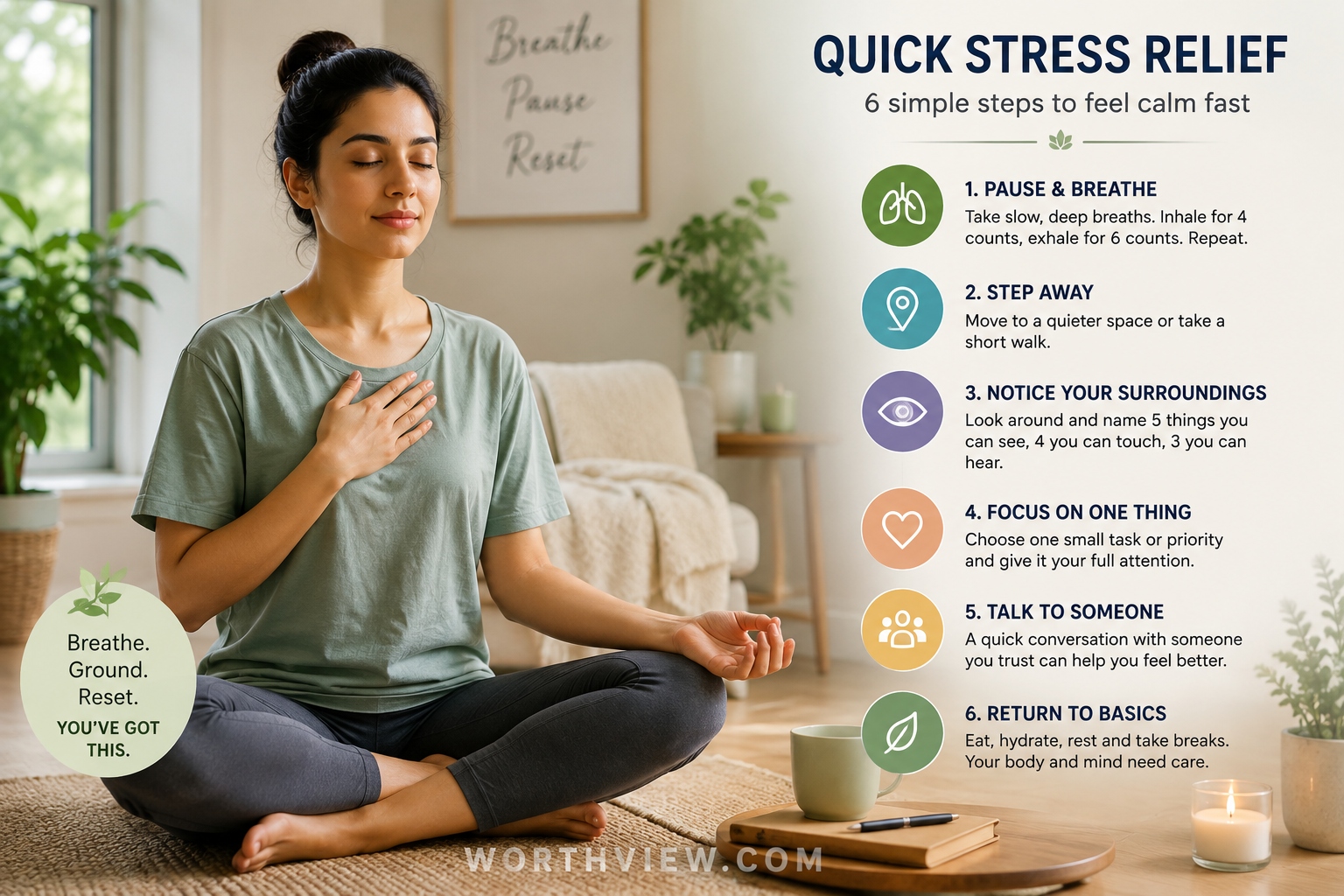
When stress suddenly feels intense, the first goal is not to solve everything at once. Instead, take a short pause and focus on bringing your attention back to the present moment.
Try these simple steps:
- Pause and slow your breathing. Take a few slow, comfortable breaths and focus your attention on the sensation of breathing.
- Step away briefly if possible. Move to a quieter space, take a short walk or give yourself a few minutes away from the immediate source of stress.
- Focus on one thing at a time. Identify the most important problem or task in front of you rather than trying to handle everything simultaneously.
- Use your senses to ground yourself. Notice what you can see, hear and feel around you. This can help shift your attention away from racing thoughts.
- Talk to someone you trust. A brief conversation with a supportive person can help you feel less alone and may give you a different perspective.
- Return to the basics. If you have not eaten, slept well, moved around or taken a break for a long time, addressing these basic needs can be a useful first step.
These techniques may help you cope with a stressful moment, but they are not a substitute for professional support when stress becomes persistent or difficult to manage.
What to Eat When You’re Stressed
There is no single food that can eliminate stress or instantly lower stress hormones. However, maintaining a balanced diet can support overall physical and mental well-being, particularly during stressful periods.
When you’re busy or overwhelmed, try to build meals around a combination of:
- Fruits and vegetables for vitamins, minerals and fiber
- Whole grains such as oats, brown rice and whole-grain bread
- Protein-rich foods such as eggs, beans, lentils, fish, poultry, nuts and seeds
- Healthy fats from foods such as nuts, seeds, avocados and fish
- Adequate fluids, especially water
It can also help to avoid relying heavily on excessive caffeine, alcohol or highly processed foods when you’re stressed, as they may affect sleep, energy levels or how you feel.
Rather than searching for a specific “stress-fighting food,” focus on regular, balanced meals and sustainable eating habits. Nutrition is one part of overall well-being and works best alongside sleep, physical activity, relaxation and other healthy coping strategies.
How to Manage Stress at Work
Work can be an important source of stress, particularly when you are dealing with heavy workloads, tight deadlines, workplace conflict or difficulty separating work from personal time.
These strategies may help:
- Prioritize your workload: Identify what needs immediate attention and what can wait. Trying to treat every task as equally urgent can increase pressure.
- Break large projects into smaller tasks: Smaller, clearly defined steps can make a demanding project feel more manageable.
- Take regular breaks: Brief breaks during the workday can give you an opportunity to reset your attention and reduce mental fatigue.
- Set boundaries around work: Where possible, establish clear limits around working hours, emails and work-related notifications.
- Communicate when your workload becomes unmanageable: If demands consistently exceed what you can reasonably complete, discuss priorities or available support with your manager or workplace team.
- Avoid trying to multitask constantly: Focusing on one important task at a time can make it easier to stay organized and maintain concentration.
- Make time to recover after work: Activities that help you disconnect from work, such as exercise, hobbies, spending time with others or simply resting, can support overall well-being.
If workplace stress is persistent or is significantly affecting your sleep, mood, relationships or ability to function, consider discussing it with a qualified healthcare or mental health professional.
When Should You Seek Professional Help for Stress?
Some stress is a normal part of life, but it may be time to seek professional support when stress becomes persistent, difficult to cope with or starts interfering with everyday life.
Consider speaking with a healthcare or mental health professional if you:
- Feel stressed or overwhelmed most of the time
- Find that stress is affecting your sleep, work, relationships or daily activities
- Are having persistent difficulty concentrating or managing emotions
- Are using alcohol, drugs or other unhealthy behaviors to cope with stress
- Feel that your usual coping strategies are no longer helping
- Are experiencing symptoms that concern you or are getting worse
A healthcare professional can help determine whether stress is contributing to your symptoms and discuss appropriate support or treatment options.
If you are in immediate danger, feel unable to keep yourself safe, or are experiencing a mental health emergency, seek urgent local emergency or crisis support rather than relying on an online article.
Remember that asking for help is not a sign of failure. Professional support can be an important part of learning healthier ways to manage persistent stress.
Frequently Asked Questions About Stress Management
What is the best way to manage stress?
There is no single best method for everyone. A combination of healthy habits—such as regular physical activity, adequate sleep, relaxation techniques, social connection and managing daily priorities—can help make stress more manageable.
How can I reduce stress quickly?
When you feel overwhelmed, pause, take a few slow breaths, step away from the immediate source of stress if possible, and focus on one manageable task at a time. Talking with someone you trust can also help.
How can I manage stress at work?
Prioritize your workload, break large projects into smaller tasks, take regular breaks and set reasonable boundaries around work. If your workload consistently feels unmanageable, discuss priorities and available support with your manager.
Does exercise help with stress?
Regular physical activity can support mental well-being and may help reduce feelings of stress. Walking, stretching, cycling and other activities you enjoy can all be practical ways to stay active.
Can food reduce stress?
No single food eliminates stress. However, eating regular, balanced meals and staying hydrated can support overall health and well-being. It is better to focus on overall eating habits than on individual “stress-fighting” foods.
When should I seek help for stress?
Consider professional support if stress persists, becomes difficult to cope with, or significantly affects your sleep, work, relationships or daily activities. A qualified healthcare or mental health professional can help you identify appropriate ways to manage it.
Conclusion
Stress is a normal part of life, but it does not have to control your daily routine. Recognizing your stress triggers and building practical coping habits can help you respond more effectively when challenges arise.
Start with small, sustainable changes rather than trying to change everything at once. Regular movement, sufficient sleep, relaxation, healthy eating, social connection and reasonable boundaries can all contribute to better stress management.
If stress becomes persistent or starts interfering significantly with your everyday life, reaching out to a qualified professional can be an important next step.
Disclaimer
This article is intended for general informational and educational purposes only and should not be considered medical or mental health advice, diagnosis or treatment. Everyone responds to stress differently, and the information provided here may not be appropriate for every situation. If you are concerned about persistent or severe stress, speak with a qualified healthcare or mental health professional. If you are in immediate danger or unable to keep yourself safe, seek urgent local emergency or crisis support.
Enjoy Worthview?
Add Worthview as a Preferred Source on Google to see more of our stories in Search.