Vascular dementia is one of the most common types of dementia after Alzheimer’s disease, yet many people don’t recognize its early warning signs.
It happens when blood flow to the brain is reduced or blocked. This means brain cells don’t get enough oxygen and nutrients, leading to damage over time. In many cases, this condition develops after a stroke, but it can also happen slowly due to ongoing damage to blood vessels.
What makes vascular dementia different is how it shows up. Symptoms can appear suddenly after a major stroke or build up gradually through multiple small strokes that often go unnoticed.
Recently, my friend Kiran has been experiencing some changes in memory, thinking, and daily behavior. Watching this up close made me realize how confusing and worrying these symptoms can be—not just for the person going through it, but also for family and friends.
That’s what pushed me to dig deeper. I spent time researching vascular dementia, its risk factors, and early symptoms to better understand what might be happening and how to respond the right way.
If you’re reading this, there’s a good chance you’re also concerned about someone—or even yourself. You’re not alone. The more we understand these early signs, the better we can take action at the right time.
Many of the risk factors are linked to lifestyle and heart health. That means early awareness and simple changes can make a big difference.
TL;DR (Quick Summary)
- Vascular dementia is caused by reduced blood flow to the brain
- It is the second most common type of dementia
- Often linked to stroke and heart-related conditions
- Symptoms affect thinking, memory, and behavior
- Early detection can help slow down its progression
What is Vascular Dementia?
Vascular dementia is a condition that affects how the brain works due to reduced blood flow. When the brain doesn’t get enough oxygen and nutrients, brain cells become damaged or die. Over time, this leads to problems with thinking, memory, and decision-making.
Unlike Alzheimer’s disease, which mainly starts with memory loss, vascular dementia often begins with issues like slow thinking, poor focus, and trouble planning. The symptoms depend on which part of the brain is affected.
Types of Vascular Dementia
Understanding the types helps in identifying how the condition develops:
1. Post-Stroke Dementia
- Happens after a major stroke
- Symptoms appear suddenly
- Can affect speech, movement, and memory
2. Multi-Infarct Dementia
- Caused by multiple small strokes (often unnoticed)
- Symptoms worsen step by step over time
- Common in older adults
3. Subcortical Vascular Dementia
- Caused by damage to small blood vessels deep in the brain
- Leads to slow thinking and difficulty with movement
- Often linked with long-term high blood pressure
Key Takeaway
Vascular dementia is not just about memory loss. It’s more about how well your brain can think, plan, and function daily. The earlier it is recognized, the better the chances of managing it effectively.
What Causes Vascular Dementia?
Vascular dementia is caused by conditions that reduce or block blood flow to the brain. When this happens, brain cells don’t get enough oxygen and nutrients, leading to damage over time.
Think of it like this: your brain needs a constant blood supply to function properly. Even a small disruption can affect how it works.
Main Causes of Vascular Dementia
1. Stroke (Most Common Cause)
A stroke happens when blood flow to part of the brain is suddenly blocked. This can quickly damage brain cells and lead to noticeable symptoms.
- Symptoms often appear suddenly
- Can affect speech, memory, and movement
- Risk increases after one or more strokes
2. Mini-Strokes (Transient Ischemic Attacks – TIAs)
Mini-strokes are temporary blockages in blood flow. They may not cause lasting damage individually, but repeated episodes can add up over time.
- Often go unnoticed
- Cause gradual brain damage
- Increase risk of full stroke later
3. Narrowed or Damaged Blood Vessels
Over time, blood vessels can become narrow or stiff due to conditions like high blood pressure or cholesterol buildup.
- Reduces steady blood flow to the brain
- Leads to slow and ongoing damage
- Common in older adults
4. Small Vessel Disease
This condition affects tiny blood vessels deep in the brain.
- Causes subtle but continuous damage
- Leads to slow thinking and difficulty with movement
- Often linked to long-term high blood pressure
How Brain Damage Happens
When blood flow is reduced:
- Brain cells start to weaken
- Communication between brain areas slows down
- Important functions like memory and decision-making are affected
Key Takeaway
Vascular dementia is not caused by a single event in many cases. It often develops due to repeated or ongoing damage to blood vessels in the brain. That’s why managing heart and blood vessel health is so important.
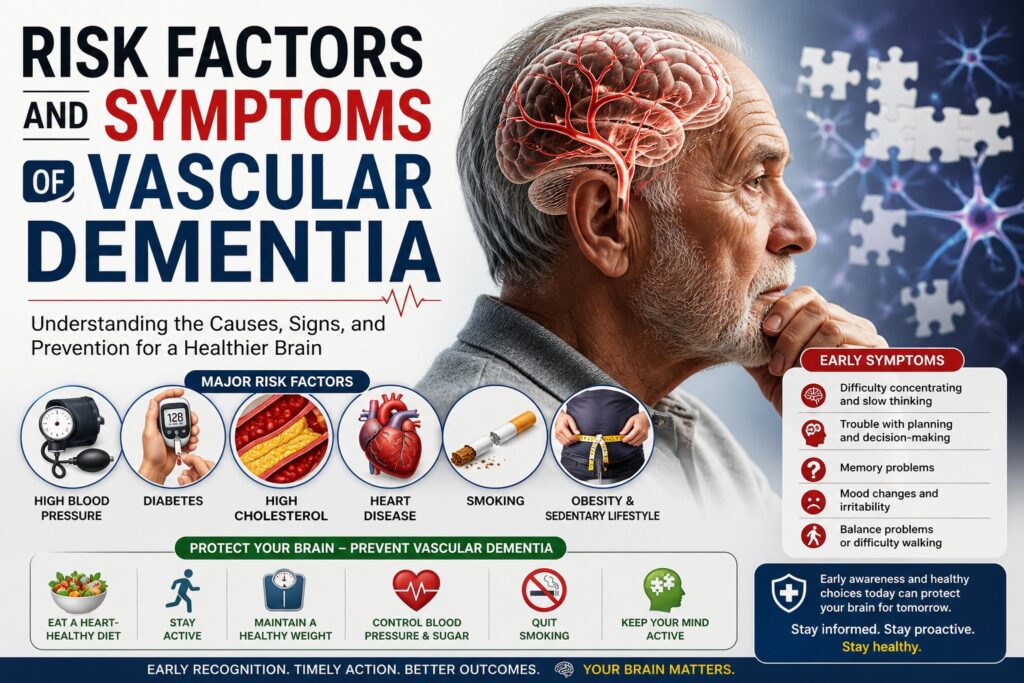
Major Risk Factors of Vascular Dementia
Vascular dementia doesn’t usually happen overnight. It develops over time due to a mix of medical conditions, lifestyle habits, and age-related changes that affect blood flow to the brain.
The good news? Many of these risk factors are preventable or manageable.
A. Medical Risk Factors
These are the most important and directly linked to brain and heart health:
- High blood pressure (Hypertension) – The biggest risk factor; damages blood vessels over time
- Diabetes – High blood sugar harms blood vessels and increases stroke risk
- High cholesterol – Leads to plaque buildup, narrowing blood vessels
- Heart disease – Affects blood circulation to the brain
- Previous stroke or mini-stroke – Strong predictor of future brain damage
B. Lifestyle Risk Factors
Daily habits play a major role in increasing or reducing risk:
- Smoking – Damages blood vessels and reduces oxygen supply
- Obesity – Increases strain on heart and blood vessels
- Lack of physical activity – Slows blood circulation and overall health
- Unhealthy diet – High in fats, salt, and sugar
C. Age & Genetic Factors
Some risk factors cannot be changed but should still be understood:
- Age (60+) – Risk increases significantly with age
- Family history – Genetic predisposition to stroke or dementia
- Gender – Slightly higher risk in men due to cardiovascular factors
Quick Summary
- High blood pressure is the #1 risk factor
- Stroke history greatly increases risk
- Lifestyle habits like smoking and inactivity matter
- Risk increases with age and genetics
Key Takeaway
Most risk factors for vascular dementia are linked to heart and blood vessel health. By managing these early, you can significantly reduce your chances of developing the condition.
Early Symptoms of Vascular Dementia
The early symptoms of vascular dementia can be easy to miss. They often appear gradually or sometimes suddenly after a stroke. Unlike Alzheimer’s disease, memory loss may not be the first sign.
Instead, the earliest changes are usually related to thinking speed, focus, and decision-making.
Cognitive Symptoms (Thinking & Memory)
These affect how a person processes information:
- Slower thinking than usual
- Difficulty concentrating or staying focused
- Trouble planning or organizing tasks
- Memory problems (usually mild in early stages)
- Difficulty understanding complex information
Behavioral & Emotional Symptoms
Changes in mood and personality are common:
- Increased irritability
- Sudden mood swings
- Depression or low motivation
- Lack of interest in daily activities
Physical Symptoms
Because vascular dementia is linked to blood flow issues, physical signs may also appear:
- Trouble walking or maintaining balance
- Slower movements
- Weakness in arms or legs (especially after a stroke)
- Frequent falls
How Early Symptoms Differ
One key feature of vascular dementia is its step-like progression:
- Symptoms may suddenly worsen after a stroke
- Then remain stable for a period
- Followed by another decline
This pattern is different from the steady decline seen in Alzheimer’s disease.
Quick Warning Signs to Watch
- Struggling with simple decisions
- Getting confused in familiar places
- Sudden difficulty in managing daily tasks
- Noticeable slowdown in thinking
Key Takeaway
Early symptoms of vascular dementia are more about thinking and focus than memory. Spotting these signs early can help in getting timely medical support and slowing the progression.
When Should You See a Doctor?
Recognizing the right time to seek medical help can make a big difference in managing vascular dementia. Early diagnosis helps slow down progression and improve quality of life.
You should consult a doctor if you notice any of the following symptoms:
- Sudden confusion or memory problems
- Difficulty thinking clearly or making decisions
- Trouble walking, balance issues, or frequent falls
- Changes in mood, such as depression or irritability
- Symptoms appearing after a stroke or mini-stroke
Emergency Warning Signs
Seek immediate medical attention if symptoms appear suddenly, as this could indicate a stroke:
- Weakness on one side of the body
- Slurred speech or trouble speaking
- Sudden vision problems
- Severe headache with no known cause
Why Early Diagnosis Matters
- Helps identify underlying causes like high blood pressure or diabetes
- Allows early treatment to prevent further brain damage
- Improves long-term outcomes and quality of life
Key Takeaway
Don’t ignore early warning signs. If something feels off with thinking, memory, or movement, it’s always better to get it checked early.
Can Vascular Dementia Be Prevented?
In many cases, yes—vascular dementia can be partly prevented or delayed. Since it is closely linked to heart and blood vessel health, improving your daily habits can significantly reduce your risk.
The focus is simple: protect your brain by protecting your heart.
Top Ways to Reduce Your Risk
1. Control Blood Pressure
High blood pressure is the biggest risk factor.
- Check your BP regularly
- Reduce salt intake
- Follow your doctor’s advice on medication
2. Manage Diabetes
Uncontrolled blood sugar damages blood vessels.
- Keep blood sugar levels stable
- Follow a balanced diet
- Stay consistent with medication
3. Stay Physically Active
Exercise improves blood flow to the brain.
- Aim for at least 30 minutes of activity daily
- Walking, cycling, or yoga are great options
4. Eat a Heart-Healthy Diet
What you eat directly impacts your brain health.
- Include fruits, vegetables, whole grains
- Choose healthy fats (like nuts and seeds)
- Avoid processed and high-fat foods
5. Quit Smoking
Smoking narrows blood vessels and reduces oxygen supply to the brain.
- Even quitting later in life can lower risk
- Seek support programs if needed
6. Maintain Healthy Cholesterol Levels
High cholesterol can block blood flow.
- Limit fried and oily foods
- Include fiber-rich foods in your diet
Quick Prevention Checklist
- Control blood pressure
- Manage diabetes
- Exercise regularly
- Eat healthy foods
- Avoid smoking
- Monitor cholesterol
Frequently Asked Questions (FAQs)
1. What is the first symptom of vascular dementia?
The first symptom is usually slow thinking or difficulty concentrating, rather than memory loss. People may struggle with planning, decision-making, or staying focused.
2. How is vascular dementia different from Alzheimer’s disease?
Vascular dementia is caused by reduced blood flow to the brain, often due to stroke or damaged blood vessels. In contrast, Alzheimer’s disease is a progressive brain disorder that mainly starts with memory loss.
3. Can vascular dementia be reversed?
No, vascular dementia cannot be reversed once brain damage has occurred. However, early treatment and lifestyle changes can slow down its progression and improve quality of life.
4. How fast does vascular dementia progress?
It often progresses in a step-like pattern, where symptoms worsen suddenly after events like strokes and then stabilize for a while. The speed of progression varies from person to person.
5. Is vascular dementia hereditary?
It is not directly inherited, but family history of stroke, heart disease, or high blood pressure can increase the risk. Lifestyle factors play a major role.
6. What is the life expectancy of someone with vascular dementia?
Life expectancy varies depending on overall health, severity, and underlying conditions. On average, it ranges from 5 to 10 years after diagnosis, but proper care can improve quality of life.
Conclusion: Take Early Action for Better Brain Health
Vascular dementia may sound complex, but the core idea is simple—it’s closely linked to your heart and blood vessel health. When blood flow to the brain is affected, it impacts how you think, plan, and function daily.
The key takeaway is this: many risk factors are within your control.
By managing conditions like high blood pressure, diabetes, and cholesterol—and by making small lifestyle changes—you can significantly reduce your risk. Even if symptoms have already started, early diagnosis and proper care can help slow progression and improve quality of life.
Don’t ignore early warning signs. If you or a loved one notice changes in thinking, behavior, or movement, it’s always better to act early.
👉 Start today: Focus on heart health, stay active, and encourage regular health check-ups. Your brain will thank you for it.
Medical Disclaimer
This article is for informational purposes only and should not be considered medical advice. Always consult a qualified healthcare professional for diagnosis, treatment, or concerns related to vascular dementia or any other medical condition. Never ignore professional medical advice or delay seeking it based on information from this article.
Enjoy Worthview?
Add Worthview as a Preferred Source on Google to see more of our stories in Search.

Sethuram Kishore is the founder and editor of Worthview, an online publication established in 2008. With over 18 years of experience in SEO, digital marketing, and online publishing, he writes about AI, technology, business, and digital trends. He is also the founder of MoneyHulk, a personal finance and business publication.