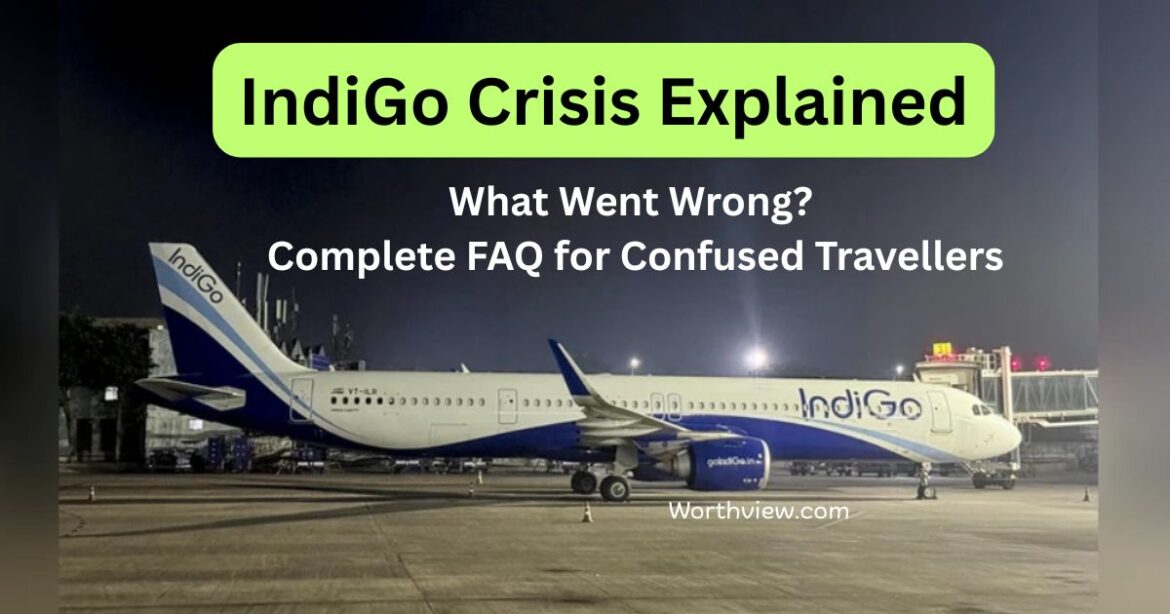
India’s aviation sector was thrown into chaos in early December 2025 when IndiGo — the country’s largest airline — experienced an unprecedented operational breakdown that disrupted travel plans for thousands across the nation. What began as routine scheduling pressure quickly escalated into widespread cancellations, airport crowding, government intervention, and a spotlight on deeper structural issues within the airline and the industry.
With so many questions emerging from frustrated passengers and confused travellers, this FAQ-style guide breaks down everything you need to know — from the causes behind the crisis to its impact, the regulatory response, and what this means for future travel in India.
🔍 Quick Facts (At a Glance)
Over 2,000 IndiGo flights were cancelled nationwide in early December 2025, causing massive travel disruption.
The crisis was triggered by new DGCA pilot duty-rest rules that the airline failed to prepare for, leading to acute crew shortages.
December 5 became the worst day, with 1,000+ cancellations in a single 24-hour period.
The government intervened with fare caps, refund mandates, and a show-cause notice to IndiGo’s CEO.
IndiGo claims operations are moving back to normal, but experts warn the crisis exposes deeper staffing and planning issues.
❓ IndiGo Crisis — Frequently Asked Questions (and Answers)
Q: What happened with IndiGo? Why were so many flights cancelled?
A: In early December 2025, IndiGo cancelled a large number of flights — reportedly over 2,000 flights across India — leaving thousands of passengers stranded.
The immediate cause was the airline’s inability to adapt to new pilot and crew duty/time-rest norms introduced by the regulator DGCA (Directorate General of Civil Aviation).
Q: What are these new rules that triggered the disruption?
A: The rules — known as Flight Duty Time Limitation (FDTL) norms — mandate:
- Increased weekly rest period for pilots (from 36 hours to 48 hours).
- Stricter caps on night operations: fewer “night landings” allowed per pilot per week; “night hours” defined more stringently.
- Other fatigue-mitigation measures such as mandatory rest days and reporting norms.
These are safety- and fatigue-prevention regulations — but implementing them effectively requires adequate crew staffing and scheduling buffers.
Q: Why did IndiGo struggle more than other airlines?
A: Several reasons:
- IndiGo has a very large domestic market share (over 60%), so its scheduling demands were massive.
- The airline reportedly had lean staffing — limited buffer pilots/crew — and had not ramped up recruitment or adjusted rosters to meet the stricter duty-rest obligations.
- With tight duty-rest windows, many pilots scheduled earlier became ineligible under new norms, resulting in acute crew shortage.
- Additional complicating factors: seasonal schedule shifts, winter-season weather, increased travel demand (holiday/wedding season), and reportedly some technical or congestion issues — all contributing to disruptions.
Because of this mix — strict regulations + poor preparation + high volume — the impact was disproportionately large for IndiGo.
Q: How bad was the disruption — how many flights were cancelled, and over what period?
A: According to records:
- On 5 December 2025 alone, over 1,000 flights were cancelled — likely the worst single-day collapse for the airline.
- Across the span of the crisis (starting early December), the cumulative cancellations reportedly exceeded 2,000 flights.
- The disruption affected nearly all major hubs: Delhi, Mumbai, Bengaluru, Hyderabad, and many others across IndiGo’s network.
This made it among the worst operational blows in the airline’s 20-plus years of operation.
A:
- The regulator DGCA issued a show-cause notice to IndiGo’s management (including its CEO), citing “significant lapses in planning, oversight and resource management.”
- To ease pressure and restore flights, DGCA granted the airline a one-time temporary exemption from some FDTL restrictions — relaxing some of the night-duty and rest rules until February 2026.
- IndiGo publicly apologized for the disruption and committed to ramp up operations, roster realignment, recruitment, and restoration of schedule over the coming days.
- The airline projected stabilisation by December 10–15, but also said full recovery — i.e. consistent reliability — might take longer.
Q: What’s the impact on passengers? What should travelers know now?
A:
Many travellers faced last-minute cancellations, long delays, uncertainty at airports, and had to scramble for alternate travel (trains, other airlines, last-minute bookings).
Some experienced major financial and emotional stress (missed events, weddings, holiday plans, unexpected expenses for alternate travel).
Given the instability, travellers should check flight status frequently, prefer flexible or refundable tickets, and — if possible — maintain backup travel plans (train, bus, alternative flights).
Until IndiGo’s operations fully stabilise, there is a risk of further disruptions (especially in winter weather + peak demand period), so plan accordingly.
Q: Is the crisis over now? Is it safe to fly with IndiGo again?
A: It’s partially stabilised — flights have resumed, and authorities claim connectivity is being restored.
But the crisis has exposed structural issues in staffing, rostering and planning. Unless systemic reforms (recruitment, better crew scheduling, contingency buffers) are implemented — and maintained — the underlying fragility remains. Many experts warn there is a risk of renewed disruption, especially in high-demand or adverse-weather periods.
So flying now is possible — but remain alert: check status often, stay flexible.
Q: What does this mean for India’s aviation industry and regulation overall?
A:
-
The crisis has underscored the risks of “lean staffing” and over-efficiency models: when safety regulations change (as they rightly should), airlines must be prepared with buffer capacity — else passengers bear the brunt.
-
It has also raised questions about whether airlines with dominant market share (like IndiGo) are “too big to fail,” and how disruptions there impact the entire aviation ecosystem.
-
Regulators may need to enforce stricter compliance checks and ensure airlines maintain contingency staffing and transparent rostering — especially before implementing major safety-related regulatory changes.
-
For passengers and consumer rights, the crisis has ignited demands for better compensation, transparent communication, and regulatory accountability — potentially reshaping airline-passenger relationships in the long term.
✅ Summary: What’s the Big Picture?
The 2025 IndiGo disruption shows that even large, established airlines are vulnerable when safety regulations change — and that regulatory compliance requires robust planning and resources. For travellers, it’s a stark reminder to stay flexible and informed. For the aviation sector, it’s a wake-up call: efficiency should never come at the cost of resilience or passenger trust.