Choosing an engagement ring is one of the most meaningful purchases you’ll ever make. Beyond its sparkle and beauty, the ring symbolizes your love, commitment, and the beginning of a new chapter together. With countless diamond shapes, ring settings, precious metals, and gemstone options available, it’s easy to feel overwhelmed by the choices.
The perfect engagement ring isn’t necessarily the most expensive one—it’s the one that reflects your partner’s personality, lifestyle, and personal style. Whether you’re planning a surprise proposal or shopping together, understanding the key factors that influence your decision can help you invest with confidence.
There are different styles and cuts of engagement rings, each with its unique charm and personality. The pear cut ring is ideal for individuals who favor a distinct class. The luminous allure of the brilliant and cutting style of the round cut, together with the pointed grace of a marquise, represents a hybrid formed by a unique shape.
In this guide, we’ll walk you through everything you need to know about choosing the perfect engagement ring, from setting a realistic budget and understanding the 4Cs of diamonds to selecting the right metal, ring setting, and design. By the end, you’ll be well-equipped to find a ring that your partner will cherish for a lifetime.
Key Takeaways
- Know your partner’s style by observing their current jewelry preferences, favorite metals, and lifestyle to choose a ring they’ll love wearing every day.
- Set a realistic budget before shopping, and remember that a meaningful engagement ring doesn’t have to be the most expensive one.
- Understand the 4Cs of diamonds—Cut, Color, Clarity, and Carat—to make an informed decision and get the best value for your money.
- Choose the right metal and setting based on durability, comfort, maintenance needs, and your partner’s daily activities.
- Compare natural, lab-grown, and alternative gemstones to find the option that best fits your values, budget, and aesthetic preferences.
- Buy from a reputable jeweler who provides certified diamonds, transparent pricing, warranties, and flexible return or resizing policies.
- Think long-term by selecting a timeless design and protecting your investment with regular maintenance, professional cleaning, and insurance.
Understanding Your Partner’s Style
When choosing an engagement ring, the initial consideration is to study your partner’s style. What kind of clothes do they wear? Is it more traditional or fashionable? Is it plain or a bit of decoration that they want? You will learn the essential things by simply viewing the jewelry they are currently wearing.
Another approach may be to narrate an encounter or conversation. If your partner is more into less trendy things that all shine for a long time, a classic diamond ring setting as a solitaire or princess could be the best choice for her.
Consider these factors before making your choice:
- Preferred metal: Do they usually wear yellow gold, white gold, rose gold, or platinum?
- Jewelry style: Are their accessories simple and elegant, or intricate and eye-catching?
- Lifestyle: If they have an active lifestyle or work with their hands, a low-profile, durable ring setting may be more practical.
- Fashion preferences: Matching the ring to their everyday wardrobe can help ensure they’ll enjoy wearing it for years to come.
If you’re planning a surprise proposal, ask close friends or family members for their opinions, or discreetly check your partner’s jewelry box for inspiration. You can also browse jewelry collections together casually to understand what catches their eye without revealing your plans.
Choosing a ring that complements your partner’s personal style will always be more meaningful than simply selecting the largest diamond or the latest trend.
Set a Realistic Budget
One of the first decisions you’ll make when buying an engagement ring is determining your budget. While you’ve probably heard the traditional “three months’ salary” guideline, there’s no universal rule for how much you should spend. The right budget is simply one that fits comfortably within your financial situation.
Think about your overall financial goals, including your wedding, future home, travel plans, or other major expenses. A beautiful engagement ring should be a meaningful investment—not a source of financial stress.
Here are a few tips for setting a smart budget:
- Decide on a spending range before you start shopping to avoid overspending.
- Prioritize what matters most. If sparkle is important, invest in a higher-quality cut rather than a larger carat weight.
- Explore lab-grown diamonds or alternative gemstones if you want a larger or higher-quality stone at a lower cost.
- Leave room for additional expenses, such as ring insurance, resizing, engraving, or future maintenance.
Remember, the value of an engagement ring comes from the commitment it represents—not its price tag. By establishing a realistic budget early, you’ll have more confidence in finding a ring that balances beauty, quality, and affordability.
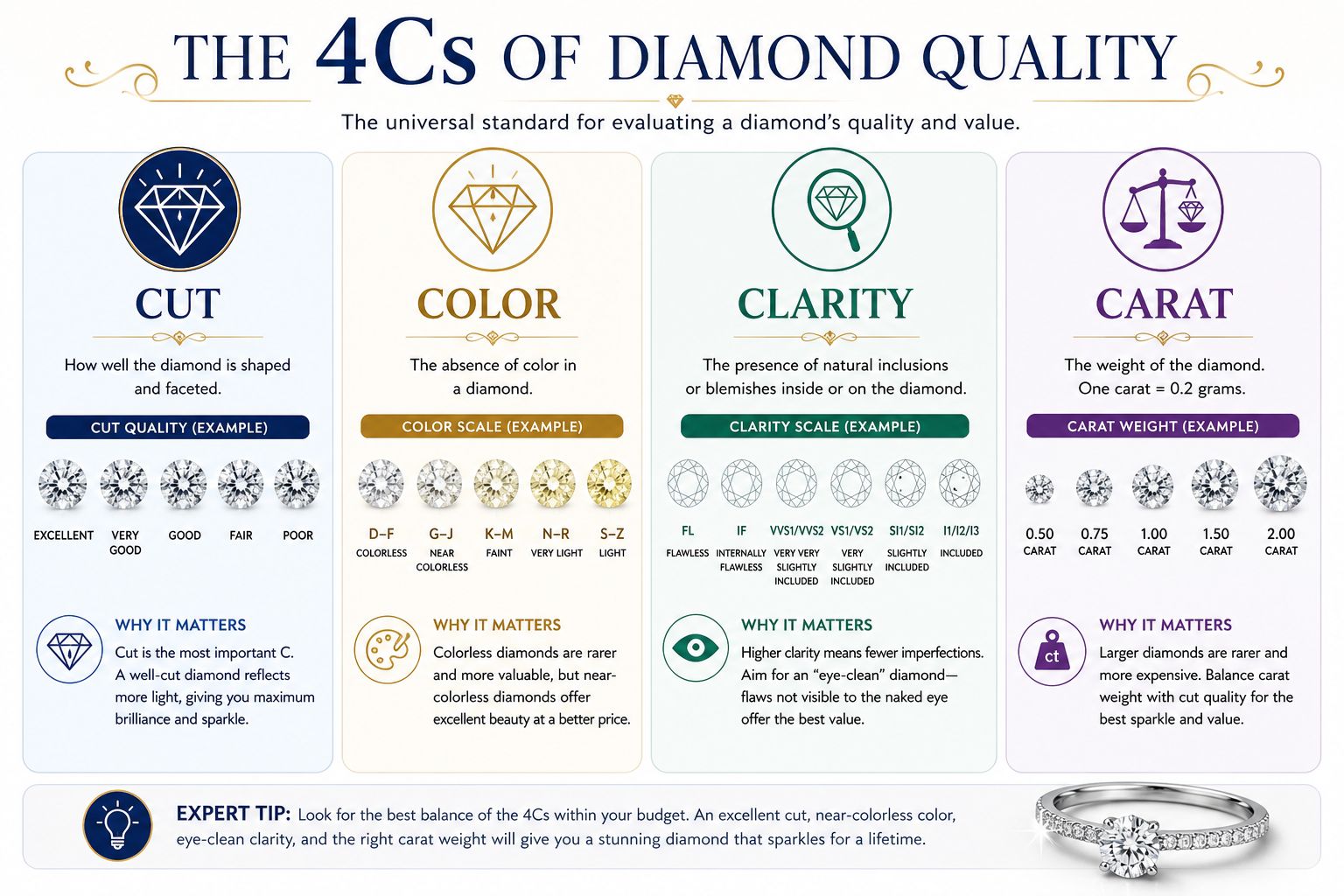
Understand the 4Cs of Diamonds
If you’re choosing a diamond engagement ring, understanding the 4Cs will help you compare options and get the best value for your budget. The 4Cs—Cut, Color, Clarity, and Carat—are the international standards used to evaluate a diamond’s quality.
| 4C | What It Means | Why It Matters |
|---|---|---|
| Cut | How well the diamond is shaped and faceted | Determines brilliance, sparkle, and light reflection. Often the most important factor. |
| Color | The absence of color in a diamond | Colorless diamonds are generally more valuable, but near-colorless grades often provide excellent value. |
| Clarity | The presence of natural inclusions or blemishes | Most tiny imperfections aren’t visible to the naked eye, so aim for an “eye-clean” diamond instead of perfection. |
| Carat | The weight of the diamond | Larger diamonds are rarer and more expensive, but size should be balanced with cut quality for maximum visual appeal. |
Which of the 4Cs Should You Prioritize?
While all four characteristics are important, cut quality has the greatest impact on a diamond’s overall beauty. A well-cut diamond reflects light more effectively, making it appear brighter and more brilliant—even if it’s smaller than a poorly cut stone.
To maximize value:
- Prioritize an Excellent or Very Good cut.
- Choose a near-colorless diamond for a balance of beauty and price.
- Select an eye-clean clarity grade instead of paying extra for imperfections that aren’t visible without magnification.
- Pick a carat weight that fits your budget without sacrificing overall quality.
By understanding the 4Cs, you can confidently compare diamonds and choose one that offers the best combination of beauty, durability, and value.
Choose the Right Diamond Shape
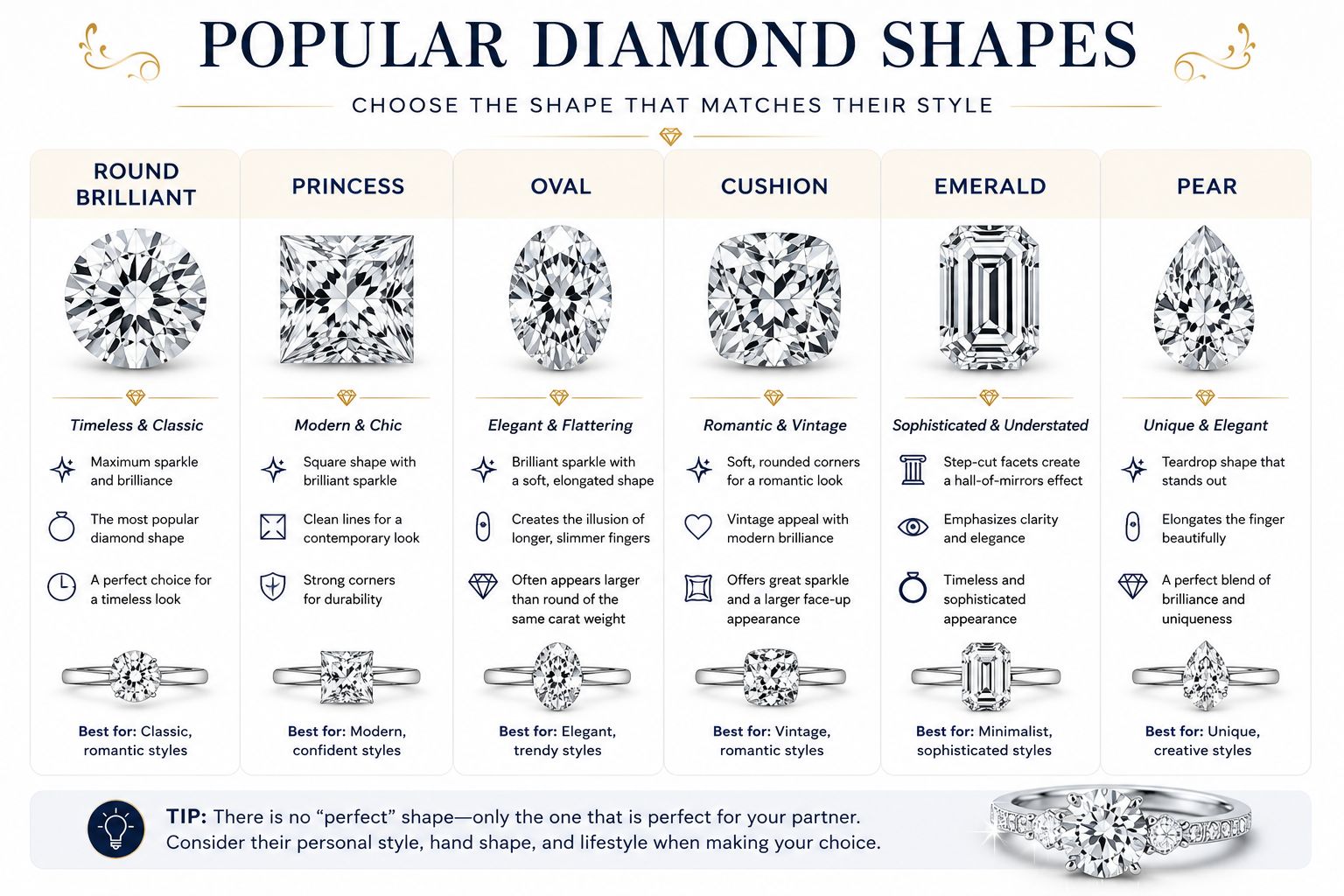
A diamond’s shape is one of the first things people notice. While it doesn’t affect the diamond’s quality, it plays a significant role in the ring’s overall appearance and personality. The right shape should reflect your partner’s style while complementing their hand and finger shape.
Here’s a comparison of the most popular diamond shapes:
| Diamond Shape | Best For | Characteristics |
|---|---|---|
| Round Brilliant | Timeless elegance | Maximum sparkle, classic design, and the most popular choice. |
| Princess | Modern style | Square shape with brilliant sparkle and clean, contemporary lines. |
| Oval | Elegant & trendy | Creates the illusion of longer, slimmer fingers while offering excellent brilliance. |
| Cushion | Vintage lovers | Soft rounded corners with a romantic, pillow-like appearance. |
| Emerald | Sophisticated look | Rectangular step-cut that emphasizes clarity and understated elegance. |
| Pear | Unique personalities | Teardrop shape that combines brilliance with a distinctive, elegant style. |
How to Choose the Right Shape
When selecting a diamond shape, consider these factors:
- Personal style: Classic tastes often lean toward round or emerald cuts, while modern preferences may favor oval, princess, or pear shapes.
- Finger shape: Oval and pear diamonds can make fingers appear longer, while round and cushion cuts offer a balanced look.
- Budget: Fancy shapes such as oval, cushion, and pear often provide a larger face-up appearance than a round diamond of the same carat weight, making them an excellent value.
- Matching wedding band: Some shapes pair more seamlessly with traditional wedding bands than others.
Ultimately, there is no universally “best” diamond shape. The perfect choice is the one that best reflects your partner’s personality and style while fitting comfortably within your budget.
Choose the Best Ring Metal
The metal you choose for an engagement ring affects its appearance, durability, maintenance, and price. While the diamond often gets the most attention, the right metal enhances its beauty and ensures the ring stands the test of time.
Here’s a comparison of the most popular engagement ring metals:
| Metal | Appearance | Durability | Maintenance | Best For |
|---|---|---|---|---|
| Platinum | Bright white with a luxurious finish | Excellent | Low | Active lifestyles, sensitive skin, premium rings |
| White Gold | Bright white with a modern look | Very Good | Requires occasional rhodium plating | Classic and contemporary styles |
| Yellow Gold | Warm, traditional gold tone | Very Good | Low | Timeless and vintage-inspired designs |
| Rose Gold | Soft pink hue | Very Good | Low | Romantic, trendy, and unique styles |
How to Choose the Right Metal
When selecting a ring metal, consider the following:
- Skin tone: White metals complement cool skin tones, while yellow and rose gold often pair beautifully with warmer complexions.
- Lifestyle: Platinum is highly durable and ideal for everyday wear, especially for people with active lifestyles.
- Jewelry preferences: Match the engagement ring with the metal your partner already wears most often.
- Maintenance: White gold requires periodic rhodium plating to maintain its bright white finish, whereas platinum naturally develops a soft patina that many people appreciate.
While each metal has its own advantages, there’s no single “best” choice. The ideal metal is one that suits your partner’s style, daily routine, and budget while providing lasting beauty for years to come.
Compare Popular Engagement Ring Settings
The ring setting holds the center stone in place and significantly influences the ring’s overall style, sparkle, and durability. Choosing the right setting ensures your engagement ring not only looks beautiful but also suits your partner’s lifestyle.
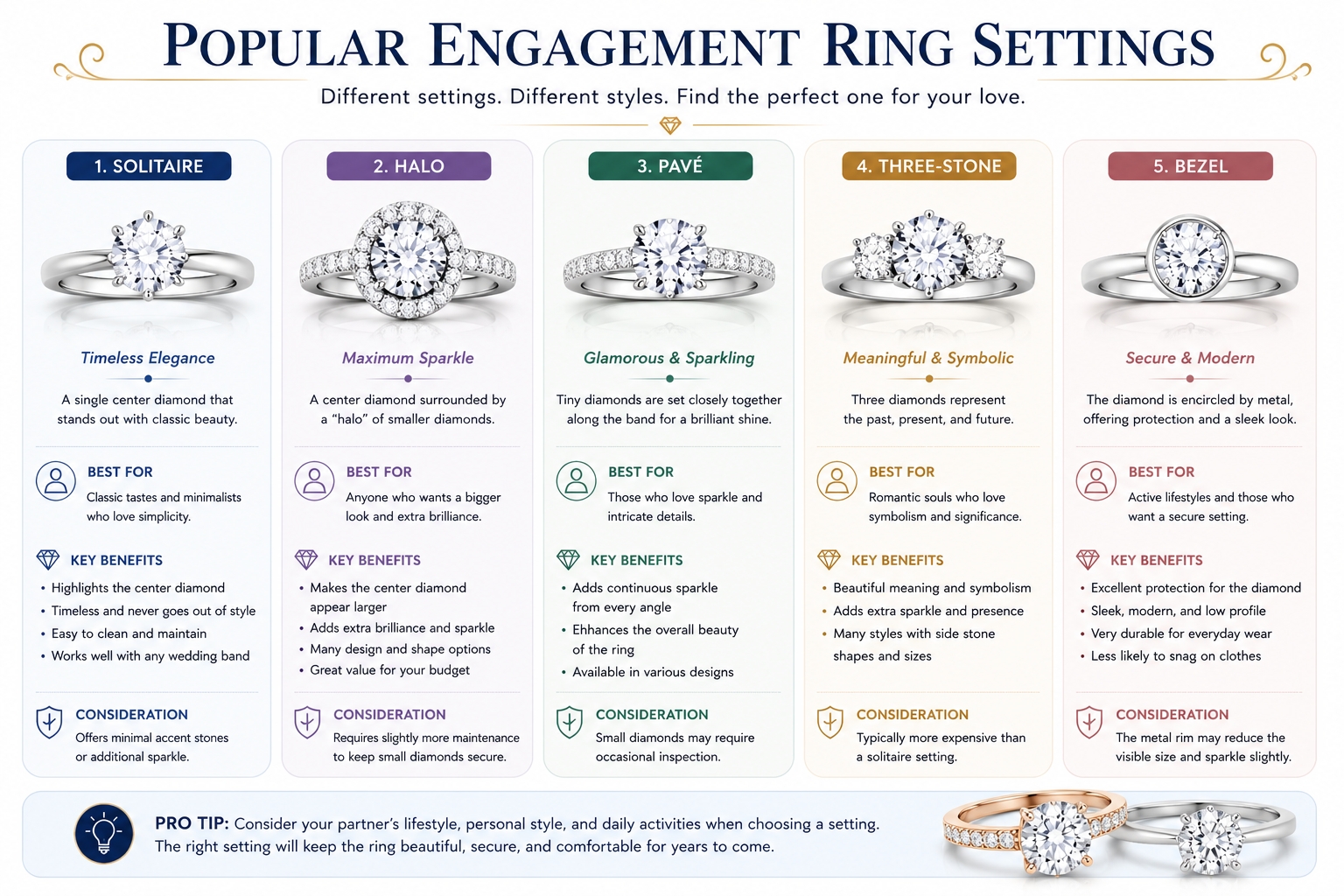
Here’s a comparison of the most popular engagement ring settings:
| Setting | Best For | Pros | Considerations |
|---|---|---|---|
| Solitaire | Timeless elegance | Highlights the center diamond, classic design, easy to clean | Offers minimal accent stones |
| Halo | Maximum sparkle | Makes the center diamond appear larger, adds brilliance | Requires slightly more maintenance |
| Pavé | Glamorous style | Small diamonds along the band create extra sparkle | Tiny stones may require occasional inspection |
| Three-Stone | Symbolic designs | Represents the past, present, and future while adding visual impact | Usually costs more than a solitaire |
| Bezel | Active lifestyles | Surrounds the diamond with metal for excellent protection | Slightly reduces visible sparkle compared to prong settings |
Choosing the Right Setting
Consider these factors before making your decision:
- Lifestyle: If your partner works with their hands or enjoys outdoor activities, a bezel setting offers added protection against knocks and scratches.
- Style preference: Solitaire settings are ideal for classic tastes, while halo and pavé settings appeal to those who love extra brilliance.
- Maintenance: Intricate settings with many small diamonds should be checked periodically to ensure the stones remain secure.
- Wedding band compatibility: Some settings sit flush with wedding bands, while others may require a contoured band for a perfect fit.
The best engagement ring setting balances beauty, comfort, durability, and practicality, ensuring the ring remains stunning and secure for everyday wear.
Natural vs. Lab-Grown Diamonds: Which Should You Choose?
One of the biggest decisions modern buyers face is whether to choose a natural diamond or a lab-grown diamond. Both have the same chemical composition, brilliance, and durability, but they differ in origin, price, and long-term value.
A natural diamond forms deep within the Earth over billions of years, while a lab-grown diamond is created in a controlled environment using advanced technology. To the naked eye—and even to most jewelers without specialized equipment—they look virtually identical.
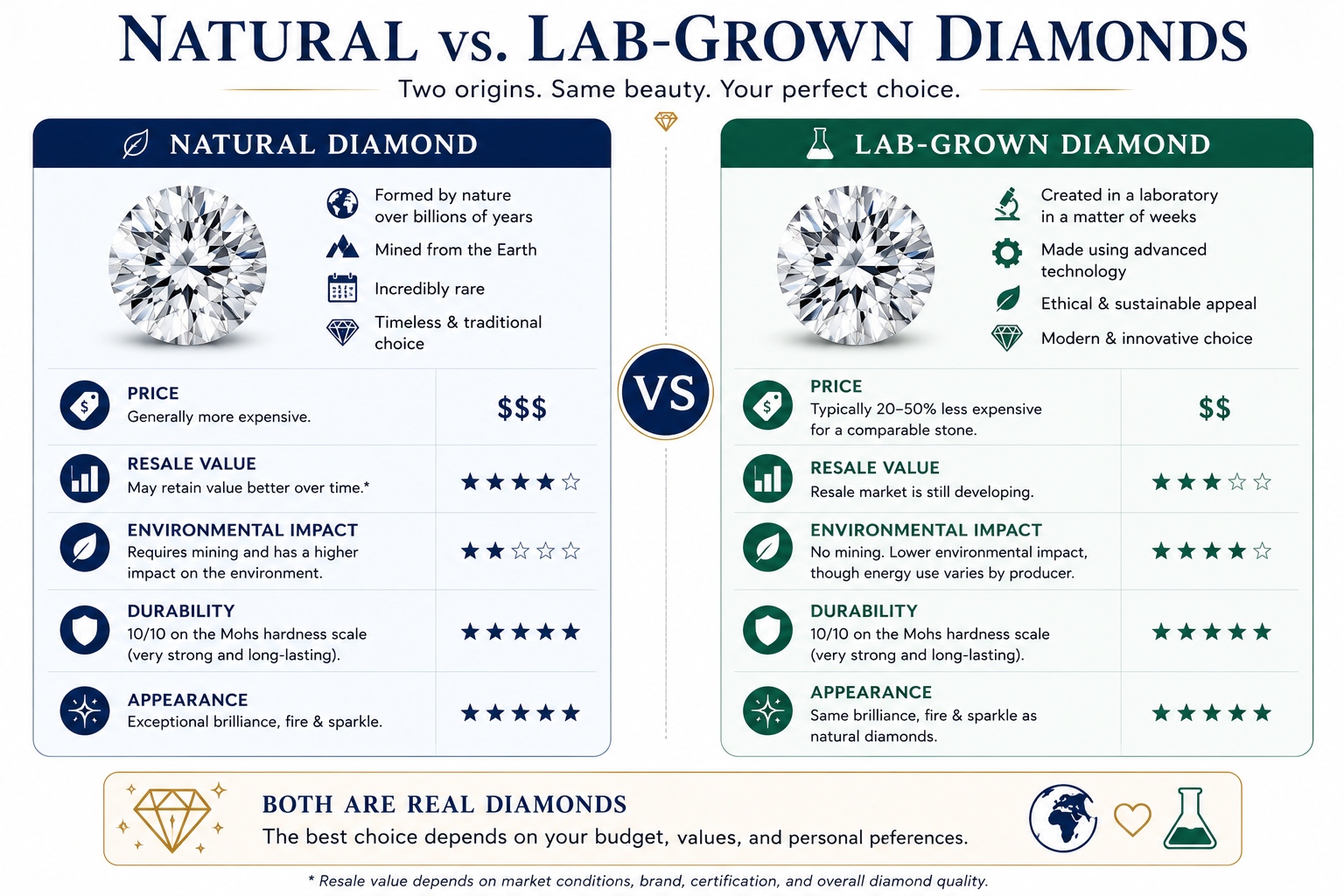
Here’s a side-by-side comparison to help you decide:
| Feature | Natural Diamond | Lab-Grown Diamond |
|---|---|---|
| Origin | Formed naturally over billions of years | Created in a laboratory using advanced technology |
| Appearance | Identical sparkle and brilliance | Identical sparkle and brilliance |
| Durability | 10/10 on the Mohs hardness scale | 10/10 on the Mohs hardness scale |
| Price | Generally more expensive | Typically 20–50% less expensive for a comparable stone |
| Resale Value | May retain value better over time* | Resale market is still developing |
| Environmental Impact | Requires mining | No mining, though energy use varies by producer |
Note: Resale value depends on market conditions, brand, certification, and overall diamond quality. Neither natural nor lab-grown diamonds should be viewed primarily as financial investments.
Which Option Is Right for You?
A natural diamond may be the better choice if you value rarity, tradition, and the unique story of a gemstone formed by nature over billions of years.
A lab-grown diamond is an excellent option if you want a larger or higher-quality diamond for your budget while maintaining the same beauty and durability as a natural stone.
Whichever you choose, make sure the diamond is accompanied by a grading report from a reputable gemological laboratory. Certification provides confidence in the stone’s quality and ensures you’re making an informed purchase.
Ultimately, the perfect engagement ring isn’t defined by where the diamond comes from—it’s defined by the love and commitment it represents.
Common Mistakes to Avoid When Buying an Engagement Ring
Buying an engagement ring is an exciting milestone, but it’s easy to make decisions you’ll later regret. Avoiding these common mistakes can help you choose a ring that perfectly suits your partner while getting the best value for your budget.
1. Focusing Only on Carat Size
A larger diamond isn’t always a better diamond. A well-cut diamond with excellent brilliance often looks more impressive than a larger stone with poor cut quality. Balance the 4Cs—Cut, Color, Clarity, and Carat instead of prioritizing size alone.
2. Ignoring Your Partner’s Lifestyle
Consider how your partner spends their day. Someone with an active lifestyle or hands-on profession may benefit from a durable metal like platinum and a secure bezel setting rather than a high-profile design that’s more prone to snagging.
3. Guessing the Ring Size
An incorrect ring size can delay your proposal plans or require resizing afterward. If you’re planning a surprise, discreetly borrow one of your partner’s rings or ask a trusted friend or family member for help.
4. Buying Without a Certified Diamond
Always choose diamonds that come with grading reports from reputable gemological laboratories. Certification verifies the diamond’s quality and helps ensure you’re getting exactly what you’re paying for.
5. Forgetting the Return and Warranty Policy
Before making your purchase, check whether the jeweler offers returns, resizing, warranties, complimentary cleaning, or maintenance services. These benefits can save you time and money in the future.
6. Shopping Without Comparing Options
Don’t buy the first ring you see. Compare different jewelers, diamond qualities, settings, and prices to ensure you’re making a confident and informed decision.
7. Choosing Trends Over Timeless Style
Fashion trends change, but an engagement ring is meant to last a lifetime. Selecting a design that matches your partner’s personal style is usually a better long-term choice than following the latest trend.
By avoiding these common mistakes, you’ll be better prepared to choose an engagement ring that combines beauty, quality, practicality, and lasting sentimental value.
Conclusion
Finding a ring your partner will love is no longer an ordinary choice. It includes a careful and careful thought about their view regarding their personality, lifestyle, and yours, but in the end, it should depict both what you feel and how you see the future. Recall, the ring is more than just costume jewelry rather it is a token of your love and belonging.
You can go with the classic diamond, dazzling pear cut, or another stone precious gem. But it will not matter much as long as you seriously take your time and heart to find the most appropriate engagement ring to convey how much your partner means to you. Enjoy yourself as you choose, do your homework well, and pick jewelry dear to you and your couple forever.
Frequently Asked Questions
1. How much should you spend on an engagement ring?
There is no fixed rule for how much you should spend on an engagement ring. Instead of following the traditional “three months’ salary” guideline, choose a budget that fits comfortably within your financial situation while allowing you to purchase a ring that reflects your partner’s style and preferences.
2. Are lab-grown diamonds real diamonds?
Yes. Lab-grown diamonds are real diamonds with the same chemical, physical, and optical properties as natural diamonds. The only difference is their origin—natural diamonds form underground over billions of years, while lab-grown diamonds are created in a controlled laboratory environment.
3. What is the most popular engagement ring style?
The solitaire engagement ring remains the most popular choice because of its timeless elegance and ability to highlight the center diamond. Halo, pavé, and three-stone settings are also popular among couples looking for additional sparkle or symbolic designs.
4. Which diamond shape looks the biggest?
Oval, pear, and marquise diamonds often appear larger than round diamonds of the same carat weight because of their elongated shapes and greater surface area. These shapes are popular choices for maximizing visual size without increasing the budget.
5. Which metal is best for an engagement ring?
Platinum is widely regarded as the most durable and hypoallergenic option, making it ideal for everyday wear. White gold offers a similar appearance at a lower price, while yellow gold and rose gold remain popular for their classic and distinctive looks.
6. Can an engagement ring be resized?
In most cases, yes. Gold and platinum rings can usually be resized by a professional jeweler. However, rings with eternity bands, intricate settings, or certain alternative metals may have resizing limitations, so it’s best to confirm this before purchasing.
7. How can I secretly find my partner’s ring size?
You can borrow a ring they already wear on the correct finger, ask a close friend or family member for help, or trace the inside of one of their rings on paper. If you’re unsure, many jewelers recommend choosing a slightly larger size since it’s often easier to resize a ring down than up.
8. Should I buy an engagement ring online or in a jewelry store?
Both options have advantages. Online retailers often provide a wider selection and competitive pricing, while local jewelry stores allow you to see the ring in person and receive personalized assistance. Whichever option you choose, buy from a reputable seller that offers certified diamonds, transparent pricing, and a clear return policy.
Enjoy Worthview?
Add Worthview as a Preferred Source on Google to see more of our stories in Search.

Worthview Editorial Team is the shared byline for content created collaboratively by Worthview’s editors and contributors. Since 2008, we’ve published thousands of articles across technology, AI, finance, health, home, travel, and lifestyle. Our editorial process emphasizes original research, reputable sources, regular content updates, and clear attribution. Articles covering higher-trust topics, including health and finance, may also undergo review by qualified subject-matter experts.