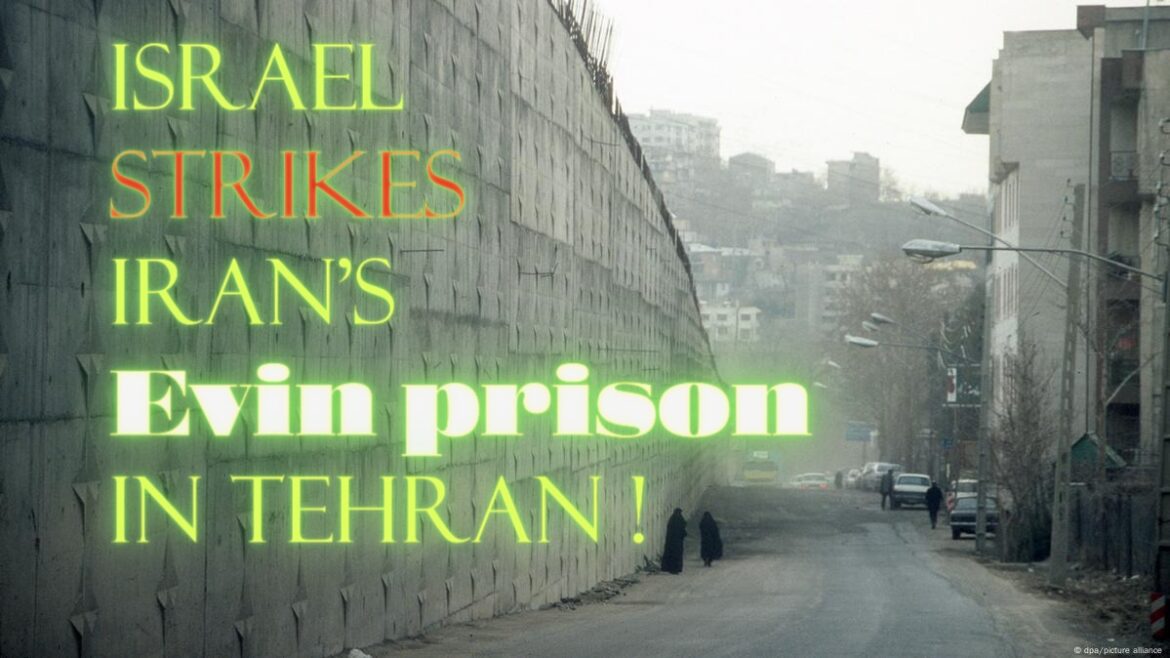
After U.S. strikes on Iran’s nuclear facilities, Israeli forces targeted Tehran’s notorious Evin Prison in a recent airstrike. This move marks a significant shift in the war, as Israel struck not only military and nuclear sites but also a symbol of Iran’s political repression and regime control.
What Happened?
On Monday, Israeli military aircraft launched an airstrike that hit the entrance gate and parts of the complex of Evin Prison, located in northern Tehran. Surveillance footage broadcast by Iranian state media showed explosions at the prison’s gate, with the entrance severely damaged and debris scattered. Iranian authorities later confirmed that parts of the prison were damaged but insisted the facility remained under control. The strike was part of a broader Israeli operation targeting multiple regime assets in Tehran, including facilities linked to the Islamic Revolutionary Guard Corps (IRGC) and routes to Iran’s Fordo uranium enrichment site.
Why Is Evin Prison Important?
Evin Prison is infamous both inside Iran and internationally. It houses thousands of inmates, including political prisoners, human rights activists, journalists, academics, and foreign nationals—many of whom are dual citizens used by Iran in what is often called “hostage diplomacy.” The prison is run by the IRGC and is widely regarded as a symbol of the Iranian regime’s brutal repression. Human rights organizations have documented torture, executions, and harsh conditions within its walls. Some well-known detainees include Iranian-Swedish disaster medicine expert Ahmadreza Djalali, French teacher Cécile Kohler, and other dual nationals.
What Does This Strike Mean?
The attack on Evin Prison is highly symbolic and tactical. It sends a clear message that Israel is striking at the heart of Iran’s internal security and repression apparatus. By targeting a facility that embodies the regime’s oppression and hostage-taking, Israel aims to humiliate the Iranian government and disrupt its narrative of control. The strike also exposes the vulnerability of even the most fortified regime institutions under the current military pressure5.
Moreover, the strike raises urgent humanitarian concerns about the safety of prisoners, especially given reports of injuries and damage to the prison’s infrastructure. It highlights the escalating nature of the conflict, which now extends beyond military and nuclear sites to include political and symbolic targets.
What Has Been the Response?
Iran has condemned the strike vehemently, with Supreme Leader Ayatollah Ali Khamenei vowing retaliation. Iranian missile attacks on U.S. bases and Israeli cities followed, intensifying the cycle of violence. Internationally, the strike has drawn attention from human rights groups and foreign governments concerned about the welfare of detainees, including dual nationals.
FAQs
Q: Why did Israel target Evin Prison?
A: Israel targeted Evin Prison as part of a broader campaign against Iranian regime symbols and repression bodies. The prison is a key site for detaining political prisoners and foreign nationals, making it a strategic and symbolic target in the conflict.
Q: Were there casualties in the prison strike?
A: Iranian reports mention injuries among inmates and damage to parts of the prison, but no detailed casualty figures have been confirmed. The situation remains under close observation.
Q: Who are some notable prisoners held at Evin?
A: Notable detainees include Ahmadreza Djalali, an Iranian-Swedish disaster medicine expert accused of espionage; Cécile Kohler, a French teacher; and other dual nationals and human rights activists5.
Q: How does this strike affect the broader Israel-Iran conflict?
A: The strike signals an escalation, with Israel targeting not only military and nuclear sites but also internal regime institutions. It has provoked Iranian missile retaliation and increased tensions, raising concerns about further escalation.
Q: What is the international reaction to the strike?
A: Human rights organizations have condemned the attack due to the risk to prisoners. Some countries, including France, have expressed concern for their nationals detained at Evin. The strike has intensified calls for diplomatic efforts amid rising violence.
The Israeli strike on Evin Prison underscores the deepening conflict’s complexity, blending military operations with symbolic and humanitarian dimensions. As the war intensifies, the fate of political prisoners and the stability of the region hang in the balance.
Enjoy Worthview?
Add Worthview as a Preferred Source on Google to see more of our stories in Search.

Worthview Editorial Team is the shared byline for content created collaboratively by Worthview’s editors and contributors. Since 2008, we’ve published thousands of articles across technology, AI, finance, health, home, travel, and lifestyle. Our editorial process emphasizes original research, reputable sources, regular content updates, and clear attribution. Articles covering higher-trust topics, including health and finance, may also undergo review by qualified subject-matter experts.