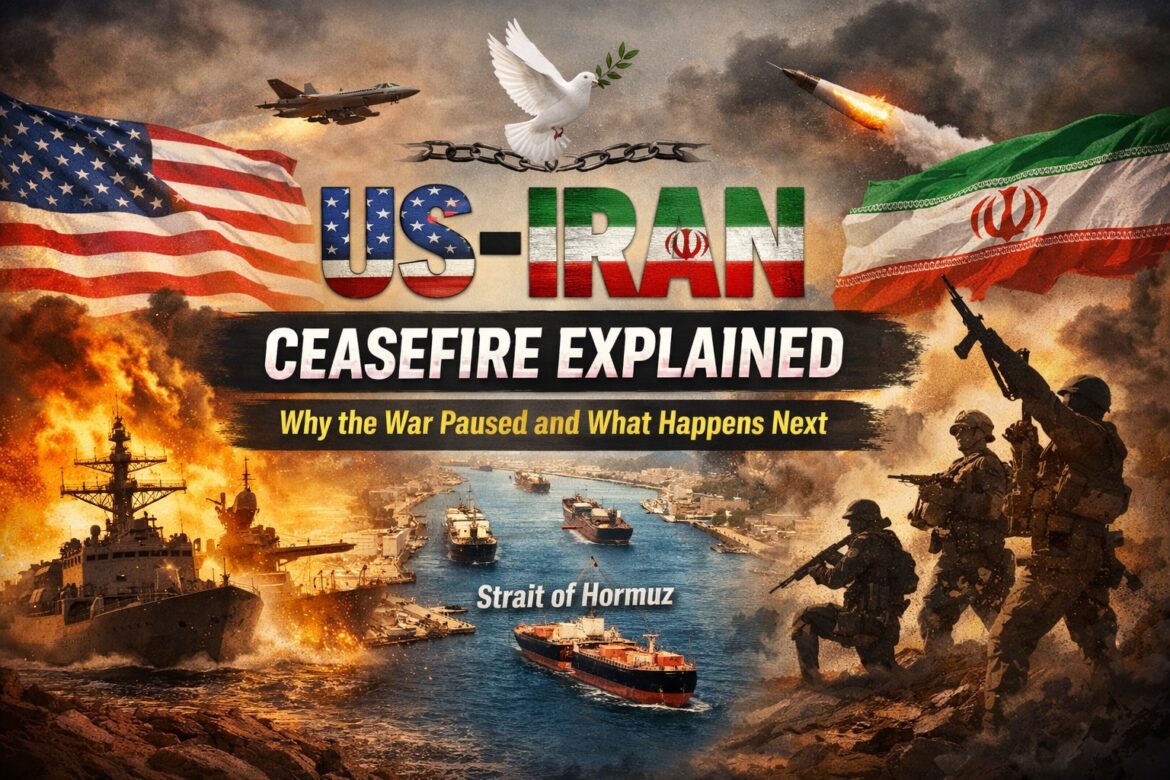
The United States and Iran agreed to a two-week ceasefire on April 7, 2026, hours before Trump’s 8 PM deadline to launch massive strikes. Pakistan brokered the deal. Iran will allow ships to pass through the Strait of Hormuz. Both sides will halt attacks. Full peace talks are set for April 10 in Islamabad, Pakistan.
On the evening of April 7, the world held its breath. President Donald Trump had set a hard deadline — Iran had until 8 PM Eastern Time to reopen the Strait of Hormuz or face what he called “massive” military strikes. Earlier that day, he posted on Truth Social that “a whole civilization will die tonight” if no deal was reached.
Then, less than two hours before that deadline, a deal was struck.
Trump announced on Truth Social that he had agreed to suspend US strikes on Iran for two weeks — on the condition that Iran reopens the Strait of Hormuz immediately. Iran confirmed. The ceasefire was in effect.
TL;DR: Quick Summary
- 🕊️ The United States and Iran have agreed to a temporary ceasefire for 2 weeks
- 🛢️ The key trigger was the situation around the Strait of Hormuz — which carries ~20% of global oil supply
- 🤝 The deal was helped by diplomatic efforts, including support from Pakistan
- ⚠️ This is not a peace agreement — just a short pause in fighting
- 📉 Oil prices cooled down, and global markets reacted positively after the news
- 🔥 Big issues like nuclear tensions and regional conflicts are still unresolved
What exactly did both sides agree to?
The US and Iran each got something out of this pause.
The ceasefire is built around Iran’s 10-point peace proposal, which the US has accepted as a “general framework” for negotiations. The full proposal includes lifting all sanctions on Iran, withdrawing US forces from regional military bases, releasing frozen Iranian assets abroad, and — controversially — Iran’s right to continue nuclear enrichment.
Pakistan: the unlikely broker that stopped a war
Behind this deal is an unlikely peacemaker — Pakistan. Prime Minister Shehbaz Sharif and Army Chief Field Marshal Asim Munir worked as intermediaries between Washington and Tehran in the final days before the deadline. They’re widely credited by both sides with making this pause possible.
Sharif invited both delegations to Islamabad for peace talks on Friday, April 10 to “settle all disputes.” VP JD Vance is expected to lead the US delegation. Pakistan’s foreign minister called the moment a breakthrough — but also warned that recent Israeli strikes on Iran and Saudi Arabia had nearly derailed everything.
For Pakistan, this is a significant diplomatic moment — positioning itself as a key regional stabilizer at a time when the Middle East is in crisis.
Markets exhaled — oil dropped, stocks rose
The moment the ceasefire was announced, financial markets responded instantly. S&P 500 futures climbed more than 1%, while oil prices dropped around 6% — reflecting relief that the Strait of Hormuz, which had been choked off since the war began, would reopen.
The war had already triggered what economists described as the largest global energy supply disruption since the 1970s oil crisis — spiking fuel prices, disrupting aviation routes, and rattling global markets for over a month.
Is this really peace? Not yet.
Both sides were quick to stress this is a pause, not a peace deal. Iran’s Supreme National Security Council accepted the ceasefire but made its position very clear: “Our hands are on the trigger, and the moment the enemy makes the slightest mistake, it will be met with full force.”
There are also complications. Israel supports the ceasefire in Iran, but Prime Minister Netanyahu’s office said it does not apply to Lebanon — directly contradicting Pakistan’s PM, who said the pause covers Lebanon too. That gap in understanding could become a flashpoint.
Reports also emerged that after the ceasefire took effect, missiles were still being launched from Iran toward Israel and Gulf states — a sign of how fragile this moment truly is.
What happens next?
All eyes now turn to Islamabad on April 10. That’s when US and Iranian delegations are expected to sit across the table — potentially for the first time — and begin hammering out a longer-term agreement. The 10-point Iranian proposal is the starting point, but major sticking points remain: nuclear enrichment, sanctions relief, US military presence in the region, and reparations.
The two-week window is short. The issues are enormous. And the region is still on edge. Whether this ceasefire becomes the foundation of lasting peace — or collapses under the weight of mistrust — will become clear very soon.
Enjoy Worthview?
Add Worthview as a Preferred Source on Google to see more of our stories in Search.

Worthview Editorial Team is the shared byline for content created collaboratively by Worthview’s editors and contributors. Since 2008, we’ve published thousands of articles across technology, AI, finance, health, home, travel, and lifestyle. Our editorial process emphasizes original research, reputable sources, regular content updates, and clear attribution. Articles covering higher-trust topics, including health and finance, may also undergo review by qualified subject-matter experts.