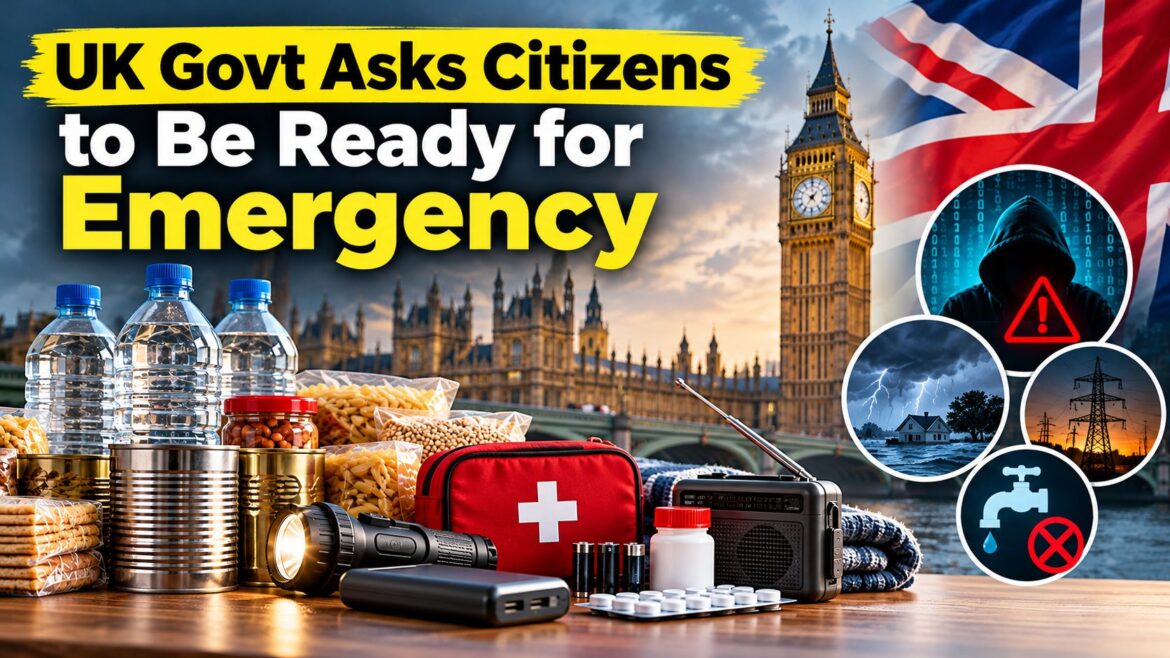
The UK government has urged households to prepare for three days of potential disruption, keeping essential food, water and emergency supplies at home. While cyberattacks are among the risks the country faces, the advice is part of a broader emergency-preparedness campaign—not an announcement that an attack is imminent.
What Has the UK Government Announced?
On October 22, 2026, the UK government published updated household emergency-preparedness guidance as part of its Be Ready campaign.
The initiative encourages people to take practical steps to manage temporary disruptions affecting essential services, including electricity, water, telephone networks and internet connectivity.
According to the official government announcement, the campaign is designed to improve household resilience and reduce pressure on emergency services during a crisis.
The three-day preparedness recommendation is not unique to the UK. The government says similar guidance is already used in countries including France, Ireland and the Netherlands.
Why Is the Government Asking People to Prepare?
There are three main reasons behind the guidance.
1. Growing Cybersecurity Risks
Cyberattacks can disrupt more than computers and websites. Attacks against critical infrastructure, service providers or digital systems can potentially affect access to essential services.
In July 2026, the UK government updated its National Risk Register, adding risks involving cyberattacks on data infrastructure, water infrastructure and police systems, as well as digital resilience failures.
This confirms that cyber-related disruption is part of the government’s risk planning. However, the register assesses potential risks; it does not predict that a particular attack is about to happen.
Read – Black October 2026: Major Cybersecurity Vulnerabilities and Incidents Reported So Far
2. Severe Weather and Infrastructure Disruption
Cyberattacks are only one possible cause of disruption. Severe storms, flooding, power cuts and other emergencies can also interrupt essential services.
The government specifically points to recent severe weather events as a reason to improve preparedness. Even a temporary loss of electricity, mobile connectivity or water supply can make everyday activities difficult.
3. Reducing Pressure on Emergency Services
When households can manage basic needs independently for a short period, emergency responders can prioritise people who need urgent assistance.
The government’s approach is to encourage individuals, families and communities to take reasonable precautions before an emergency occurs.
What Supplies Does the Government Recommend?
The official Be Ready emergency checklist recommends preparing enough essentials to manage for three days.
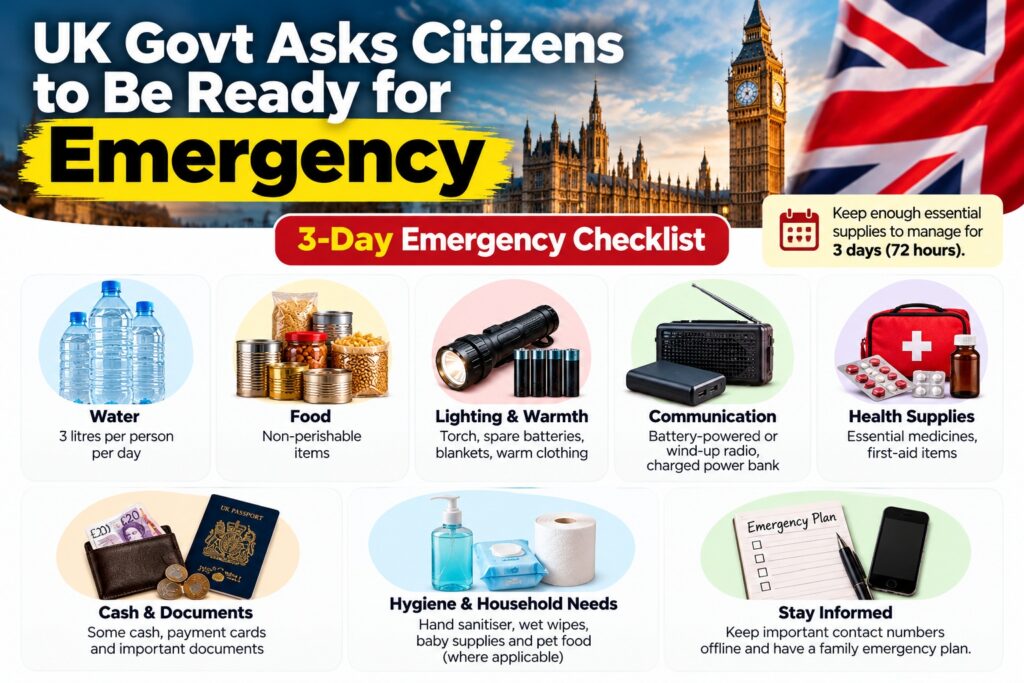
Key items include:
- Water: Bottled drinking water, with a guideline of three litres per person per day. Additional water may be needed for cooking and washing.
- Food: Non-perishable items that can be stored safely and do not require refrigeration or cooking.
- Lighting and warmth: A torch, spare batteries, blankets and warm clothing.
- Communication: A battery-powered or wind-up FM radio and a charged power bank.
- Health supplies: Essential medicines, first-aid items and relevant medical supplies.
- Cash and documents: Some cash, payment cards, copies of important documents and written emergency contact numbers.
- Hygiene and household needs: Hand sanitiser, wet wipes, baby supplies and pet food, where applicable.
The government recommends checking what you already have, identifying any gaps and building your supplies gradually. There is no need to purchase everything at once.
Should People Be Worried About an Imminent Cyberattack?
The government’s three-day preparedness advice is not, by itself, evidence of an imminent cyberattack.
The distinction matters because emergency guidance is intended to help households prepare for several possible disruptions, rather than signal that a specific event is expected.
The government’s wider cybersecurity and resilience planning reflects the risks posed by cyber incidents, infrastructure failures, severe weather and other emergencies. Its advice encourages practical preparation without asking people to panic-buy supplies.
What Should Households Do Now?
The most useful response is to follow the official checklist, keep essential supplies available and make a simple family emergency plan.
Identify how you would receive information during an internet outage, keep important phone numbers on paper, maintain essential medication supplies and check whether family members or neighbours might need additional support.
These steps are useful even if no major emergency occurs.
The Bottom Line
The UK government’s three-day emergency-preparedness recommendation is real. Cyberattacks are among the risks considered in its national resilience planning, but the household campaign also addresses severe weather and other service disruptions.
The message is straightforward: prepare for temporary disruption, understand the risks and avoid unnecessary panic.
Official sources:
- UK Government: Be Ready campaign announcement, October 22, 2026
- Be Ready: Official emergency-preparedness checklist
- UK Government: National Risk Register update, July 2026
Enjoy Worthview?
Add Worthview as a Preferred Source on Google to see more of our stories in Search.

Worthview Editorial Team is the shared byline for content created collaboratively by Worthview’s editors and contributors. Since 2008, we’ve published thousands of articles across technology, AI, finance, health, home, travel, and lifestyle. Our editorial process emphasizes original research, reputable sources, regular content updates, and clear attribution. Articles covering higher-trust topics, including health and finance, may also undergo review by qualified subject-matter experts.