The Evolution of the Ceramic Showroom
Gone are the days when ceramic showrooms functioned as passive galleries lined with sample boards. In today’s competitive UK market, especially in design-savvy cities like London, Manchester, and Bristol, showrooms have evolved into technical specification hubs, where architects, developers, and interior designers collaborate on high-value projects. Success now hinges not just on product quality, but on how effectively a space integrates aesthetics, ergonomics, and operational engineering to support professional decision-making.
This shift has elevated commercial architecture to a strategic differentiator in the building materials sector. Leading brands are investing in purpose-built environments that do more than display; they facilitate specification, build trust, and justify premium pricing. A prime example of this new paradigm is the adoption of INSCA tile display systems, which combine industrial-grade engineering with minimalist design to create immersive, high-performance retail environments tailored to the needs of professionals.
- UK ceramic showrooms are transforming from passive galleries into high-value technical specification hubs for architects and designers.
- Structural Minimalism is dominating, using hidden engineering and clean lines to present materials with visual clarity and elevate perceived value.
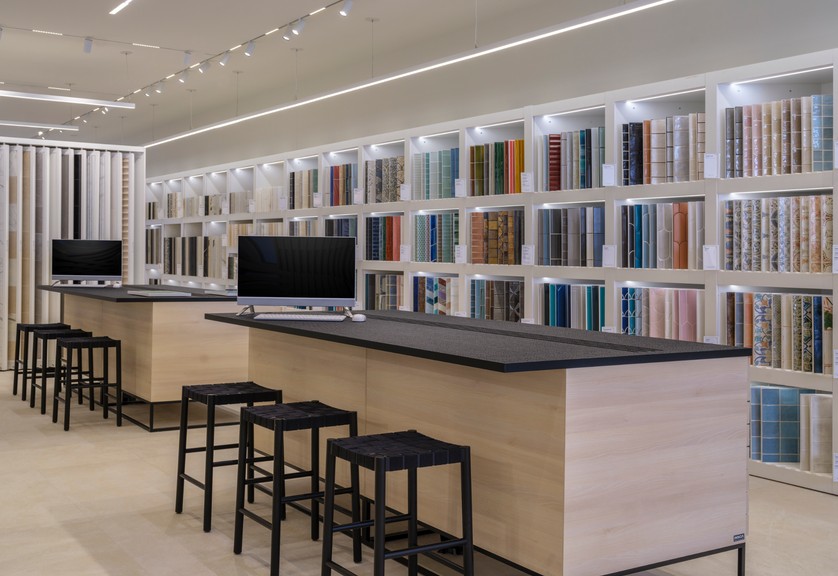
- New showrooms feature Co-Creation Stations with ergonomic workstations and logical sample management to facilitate real-time, efficient collaboration.
- Invisible Engineering (advanced handling systems) is crucial for safely and effortlessly presenting massive XXL ceramic surfaces, building technical trust with specifiers.
- This strategic design shift views the showroom as a revenue-generating asset that boosts conversion, strengthens B2B relationships, and defends premium margins.
The Showroom as a Strategic Technical Specification Tool
Modern ceramic showrooms are no longer about browsing, they’re about co-creating. As clients demand seamless integration of materials into complex architectural visions, retailers must provide spaces that function as interactive design studios. This requires more than beautiful tiles; it demands functional infrastructure: ergonomic workstations, intuitive sample libraries, and lighting that reveals true colour and texture under natural conditions.
When executed well, this approach transforms the showroom into a brand authority platform. It signals technical competence, fosters deeper client relationships, and directly influences project specifications, especially for premium large-format porcelain. In an era where digital channels commodify products, the physical showroom becomes the ultimate differentiator.
Trend No. 1 – The Dominance of Structural Minimalism
Visual Clarity as a Competitive Advantage
Architects and designers increasingly reject visual clutter. They seek environments where materials speak for themselves, free from distracting signage, bulky shelving, or mismatched finishes. Structural minimalism delivers this by prioritising clean lines, neutral palettes, and open sightlines. The result? A calm, gallery-like atmosphere that reduces cognitive load and accelerates decision-making.
Invisible Support Systems and Sculptural Displays
Behind this simplicity lies sophisticated engineering. Advanced display solutions—like those from INSCA- use recessed mounts, hidden brackets, and flush-mounted panels to make support structures “disappear.” Large-format slabs are presented as if floating, emphasising their scale and surface quality. This refined presentation elevates perceived value, reinforcing the brand’s premium positioning and justifying higher price points in competitive tenders.
Trend No. 2 – Co-Creation Stations and Tactile Design
From Passive Galleries to Collaborative Studios
The most successful showrooms now feature dedicated co-creation zones, spaces where clients can lay out full palettes, compare grout samples, and visualise material combinations under adjustable lighting. These areas foster real-time collaboration between specifiers, contractors, and end-users, turning selection into a shared creative process.
Ergonomics and Functional Interactivity
Ergonomic workstations with ample surface area, integrated storage, and task lighting enable professionals to handle heavy samples comfortably. Thoughtful sample management, such as labelled trays, vertical racks, and digital catalogues, reduces friction and keeps workflows efficient. By minimising decision fatigue, these features enhance the overall experience and build long-term loyalty.
Enhancing Sales and Specification Efficiency
Logical material organisation, grouped by finish, application, or collection, streamlines consultations. Sales teams spend less time searching and more time advising, leading to higher conversion rates and more accurate, confident specifications. In B2B contexts, this professionalism often tips the scales in favour of one supplier over another.
Trend No. 3 – Invisible Engineering for Large-Scale Formats
The Rise of XXL Ceramic Surfaces
Three-metre porcelain slabs are now standard in luxury residential and commercial projects, prized for their seamless aesthetics and durability. But their size introduces significant challenges: weight (up to 150 kg), fragility, and complex handling requirements.
Advanced Handling Systems
Innovative display mechanisms, sliding panels, counterbalanced pivots, and motorised rotation systems allow staff to present these massive slabs safely and effortlessly. These engineered solutions eliminate manual strain, reduce breakage risk, and ensure consistent, polished demonstrations.
Building Trust Through Technical Excellence
When a client sees a 3-metre slab rotated smoothly with one hand, it communicates mastery and reliability. This technical confidence reassures architects that the supplier can manage logistics, installation, and after-sales support, critical factors in winning large-scale contracts. In high-stakes specifications, engineering credibility often matters as much as product quality.
Maximizing Return on Investment Through Showroom Innovation
Forward-thinking companies no longer view showrooms as cost centres but as revenue-generating assets. Every design choice, from lighting to layout, is calibrated to boost conversion, shorten sales cycles, and defend margins against online competitors.
Investing in engineered infrastructure delivers measurable ROI: higher average order values, stronger B2B relationships, and reduced staff turnover due to safer, more efficient workflows. In a market where differentiation is hard-won, a strategically designed showroom becomes a long-term competitive moat.
The Future of Tile and Ceramic Showrooms in the UK
Looking ahead, demand will grow for immersive, multi-sensory environments that blend physical and digital tools, think AR previews, sustainability dashboards, and carbon footprint labels. Sustainability itself will become a core design principle, with recyclable fixtures, low-energy lighting, and locally sourced materials gaining prominence.
Yet amid technological advances, the human element remains central. The most successful showrooms will be those that balance innovation with tactile authenticity, ensuring that even in a digital age, the act of touching, comparing, and co-creating remains at the heart of the specification journey.
Designing the Future of Commercial Success
The transformation of UK ceramic showrooms is being driven by three integrated trends:
- Structural Minimalism – where clarity equals credibility
- Co-Creation Stations and Tactile Design – turning selection into collaboration
- Invisible Engineering for Large-Scale Formats – proving technical mastery through seamless operation
Together, they redefine the showroom as a strategic commercial asset, not just a display space. Companies that invest in engineered, human-centred environments, like those enabled by INSCA tile display systems, will not only survive the competition but set the standard for the UK building materials sector in 2026 and beyond.
Conclusion
Ultimately, the modern UK tile and ceramic showroom is no longer a passive gallery but a strategic commercial asset. Driven by the three integrated trends—Structural Minimalism, Co-Creation Stations, and Invisible Engineering for Large-Scale Formats—leading brands are transforming their spaces into technical specification hubs that build client trust and defend premium margins.
By balancing cutting-edge innovation with tactile authenticity, these human-centered environments are not merely adapting to market demands; they are actively shaping the future of specification and setting the benchmark for success in the building materials sector well into 2026 and beyond.
Frequently Asked Questions (FAQ)
Q1: What are the three main design trends transforming UK tile showrooms?
A: The three integrated trends are Structural Minimalism, the integration of Co-Creation Stations for tactile design, and the use of Invisible Engineering for handling large-scale ceramic formats.
Q2: Why is structural minimalism important for tile showrooms?
A: Structural minimalism provides visual clarity, allowing the materials to stand out without clutter. This gallery-like atmosphere reduces cognitive load and accelerates professional decision-making.
Q3: How do showrooms maximize their return on investment (ROI)?
A: Showrooms are viewed as revenue-generating assets, not cost centers. ROI is maximized by implementing engineered infrastructure that boosts conversion rates, shortens sales cycles, and defends margins against digital competition.
Q4: What is “Invisible Engineering” in the context of tile displays?
A: Invisible Engineering refers to advanced handling systems—such as sliding panels, pivots, and motorised rotation systems—that safely and effortlessly present massive XXL ceramic slabs (up to 3 meters). This communicates technical mastery and builds trust with architects.
Q5: What is a Co-Creation Station and why is it necessary?
A: A Co-Creation Station is a dedicated zone in the showroom where professionals (architects, designers) can collaboratively lay out full material palettes, compare samples, and visualize combinations under adjustable lighting. It turns selection into a shared creative process, reducing friction and decision fatigue.
Q6: How have ceramic showrooms evolved from passive galleries?
A: They have evolved into technical specification hubs and interactive design studios. They facilitate professional collaboration, signaling technical competence and directly influencing high-value project specifications.
Enjoy Worthview?
Add Worthview as a Preferred Source on Google to see more of our stories in Search.

Worthview Editorial Team is the shared byline for content created collaboratively by Worthview’s editors and contributors. Since 2008, we’ve published thousands of articles across technology, AI, finance, health, home, travel, and lifestyle. Our editorial process emphasizes original research, reputable sources, regular content updates, and clear attribution. Articles covering higher-trust topics, including health and finance, may also undergo review by qualified subject-matter experts.