
Last updated: August 31, 2026
Ovarian cancer is a type of cancer that begins in the ovaries or nearby tissues of the female reproductive system. Because its symptoms can be subtle or similar to common digestive or menstrual problems, ovarian cancer may be difficult to recognize in its early stages.
An ovarian cancer diagnosis usually involves a combination of a medical history, pelvic examination, imaging tests, blood tests and, when needed, examination of tissue to confirm whether cancer is present. Once diagnosed, treatment depends on factors such as the type and stage of cancer, tumor characteristics, overall health and individual treatment goals.
“Life is 10% what happens to us and 90% how we react to it.”— Leslie Medley-Russell, ovarian cancer survivor
As per studies, 1 in every 78 women is diagnosed with ovarian cancer in her lifetime.
If undetected over a period of time, the tumor rapidly spreads to other body parts, and this medical condition is diagnosed as metastatic ovarian cancer.
This guide explains the common symptoms of ovarian cancer, how it is diagnosed, the different stages, and the main treatment options available today.
Key Takeaways
- Ovarian cancer can be difficult to detect early because its symptoms may resemble common digestive or menstrual problems.
- Common symptoms include persistent bloating, pelvic or abdominal pain, feeling full quickly, and changes in urination or bowel habits.
- Diagnosis may involve a pelvic examination, imaging tests such as ultrasound or CT, blood tests such as CA-125, and tissue testing when cancer is suspected.
- Ovarian cancer staging helps guide treatment, with treatment plans depending on the cancer type, stage, tumor characteristics and overall health.
- Treatment options may include surgery, chemotherapy, targeted therapy, hormone therapy and immunotherapy, depending on the individual case.
- There is currently no routine ovarian cancer screening test proven to reduce deaths in people at average risk, so persistent or unusual symptoms should be evaluated by a healthcare professional.
What Is Ovarian Cancer?
Ovarian cancer develops when abnormal cells in or around the ovaries begin to grow uncontrollably. The ovaries are reproductive organs that produce eggs and hormones such as estrogen and progesterone.
There are several types of ovarian cancer. The most common are epithelial ovarian cancers, which begin in cells on the outer surface of the ovary. Other ovarian cancers can develop from germ cells, which produce eggs, or stromal cells, which produce hormones.
Ovarian cancer can spread to nearby tissues and, in more advanced disease, to other parts of the body. The specific type and stage of ovarian cancer are important because they help doctors determine the most appropriate treatment approach.
What Are the Symptoms of Ovarian Cancer?
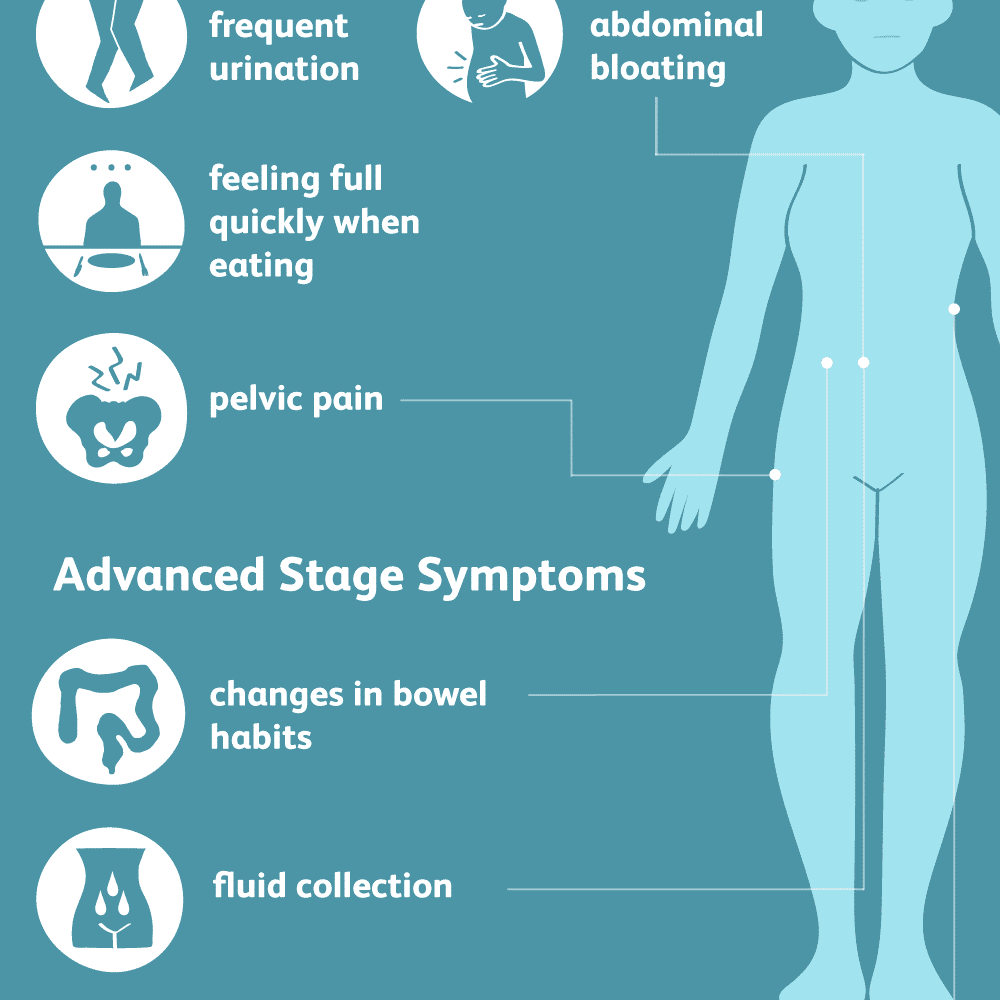
Ovarian cancer symptoms can be difficult to recognize because they may resemble common digestive, urinary or menstrual problems. Symptoms can also vary depending on the type and stage of the cancer.
Possible symptoms include:
- Persistent bloating or abdominal swelling
- Pelvic or abdominal pain
- Feeling full quickly or having difficulty eating
- Changes in bowel habits, such as constipation or diarrhea
- Frequent or urgent urination
- Unexplained fatigue
- Back pain
- Changes in menstrual periods or unusual vaginal bleeding
- Unexplained weight loss
Having one or more of these symptoms does not necessarily mean you have ovarian cancer. Many of them can be caused by other, more common conditions.
When Should You See a Doctor?
See a healthcare professional if symptoms are new, persistent, worsening, or unusual for you, particularly if several symptoms occur together. A doctor can evaluate your symptoms and determine whether further testing is appropriate.
Ovarian cancer is more difficult to detect based on symptoms alone, so persistent concerns should not be ignored or self-diagnosed.
The symptoms are as follows:-
- Intense Abdominal Bloating, Pressure, & Pain
- Abnormal Fullness After Eating
- An Increase in Urination
- Ever-Long Urge to Urinate
What Causes Ovarian Cancer? Risk Factors and Genetics
The exact cause of most ovarian cancers is not known. However, certain factors can increase a person’s risk of developing the disease. Having a risk factor does not mean that someone will develop ovarian cancer, and some people diagnosed with ovarian cancer have no known risk factors.
Important Risk Factors for Ovarian Cancer
Factors associated with a higher risk can include:
- Increasing age, particularly after menopause
- Family history of ovarian, breast or certain other cancers
- Inherited gene changes, including mutations in the BRCA1 and BRCA2 genes
- Certain hereditary cancer syndromes, such as Lynch syndrome
- Having had breast cancer
- Endometriosis
- Certain reproductive and hormonal factors
The overall risk varies from person to person, depending on their combination of genetic, medical and reproductive factors.
Can Ovarian Cancer Run in Families?
Yes. Some ovarian cancers are associated with inherited genetic changes. BRCA1 and BRCA2 mutations are among the best-known inherited risk factors, although other genes can also increase ovarian cancer risk.
People with a strong family history of ovarian, breast, fallopian tube or related cancers may benefit from discussing genetic counseling and testing with a healthcare professional. Identifying an inherited mutation can sometimes help with risk assessment, preventive decisions and treatment planning.
It is important to distinguish between risk factors and causes. A risk factor may increase the likelihood of developing ovarian cancer, but it does not necessarily cause cancer on its own.
While the underlying cause of ovarian cancer is still not determined but multiple factors contribute to the development of tumors in the ovary.
These include a family history of ovarian cancer, genetic mutations of genes, a personal history of breast, colon, uterine cancer, obesity, long-term use of fertility drugs.

There are media reports claiming that talcum powder from a top brand has resulted in thousands of talcum powder lawsuits in the US. A strong medical connection has been found between talcum powder and cancer that has caused general panic and concern over the use of general baby care products.
As per the National Center for Health Research, a female body develops cancer because of the inflammation that is caused by the use of talcum powder on the genitals.
How Is Ovarian Cancer Diagnosed?
There is no single test that can diagnose ovarian cancer on its own. Doctors generally use a combination of the patient’s symptoms, medical history, physical examination, imaging tests and laboratory tests to determine whether further evaluation is needed.
If ovarian cancer is suspected, the diagnostic process may include the following:
Medical History and Pelvic Examination
A doctor may ask about symptoms, menstrual and reproductive history, previous medical conditions and family history of cancer. A pelvic examination may also be performed to check for unusual swelling, masses or other changes.
Imaging Tests
Imaging can help doctors look for abnormal growths or determine whether a mass is present.
Common imaging tests may include:
- Transvaginal ultrasound: Uses sound waves to create images of the ovaries and nearby reproductive organs.
- Abdominal ultrasound: May be used to examine the abdomen and pelvis.
- CT scan: Can provide more detailed images and help determine whether cancer may have spread.
- MRI: May be used in certain situations to provide more detailed images of pelvic or abdominal tissues.
Blood Tests
The blood test will tell the doctor about the patient’s overall body health, and a Cancer Marker Test can help identify increased amounts of protein produced by the ovaries as a possible sign of tumorous growth.
Doctors may order blood tests as part of the evaluation. One commonly used marker is CA-125, a protein that can be elevated in some people with ovarian cancer.
However, a high CA-125 level does not necessarily mean that a person has ovarian cancer. Other conditions can also increase CA-125 levels, and some people with ovarian cancer may have normal levels. For this reason, CA-125 is generally considered alongside other test results rather than used by itself to make a diagnosis.
Biopsy and Pathology
Imaging and blood tests can suggest that ovarian cancer may be present, but examining tissue under a microscope is generally needed to confirm a cancer diagnosis and determine its type.
A biopsy or tissue sample can be examined by a pathologist to identify cancer cells and provide information that helps guide treatment.
Genetic and Molecular Testing
When ovarian cancer is diagnosed, doctors may recommend genetic testing and tumor testing. Testing can identify inherited gene changes, such as BRCA1 or BRCA2 mutations, as well as molecular characteristics of the tumor.
This information can help doctors understand inherited cancer risk and, in some cases, determine whether certain targeted treatments may be appropriate.
Important: A doctor should interpret ovarian cancer test results in context. Symptoms, imaging findings, blood tests and pathology results all contribute to the diagnosis and treatment plan.
Also read, How Can a Hereditary Cancer Test Make a Difference?
Is There a Screening Test for Ovarian Cancer?
There is currently no routine screening test proven to reduce deaths from ovarian cancer in people at average risk. Unlike cervical cancer, there is no standard screening program that can reliably detect ovarian cancer early enough to improve survival.
Tests such as transvaginal ultrasound and the CA-125 blood test may be used when ovarian cancer is suspected or when a doctor is evaluating symptoms, but they are not recommended as routine screening tests for people without symptoms who are at average risk.
People with a strong family history of ovarian or related cancers, or certain inherited gene mutations such as BRCA1 or BRCA2, may have a higher risk and should discuss their individual situation with a healthcare professional. Depending on their risk, a doctor or genetic counselor may recommend genetic counseling, testing or other risk-reduction strategies.
Screening and diagnosis are different: screening looks for disease in people who have no symptoms, while diagnostic testing investigates symptoms or other findings that may indicate cancer.
What Are the Treatment Options for Ovarian Cancer?
Treatment for ovarian cancer depends on several factors, including the type and stage of cancer, tumor characteristics, overall health and previous treatments. A gynecologic oncologist may recommend one treatment or a combination of treatments.
Surgery
Surgery is an important part of treatment for many people with ovarian cancer. The goal may be to remove as much of the cancer as possible and, depending on the disease, may involve removing one or both ovaries and other affected reproductive or abdominal tissues.
The extent of surgery depends on where the cancer has spread and whether preserving fertility is an appropriate option.
Chemotherapy
Chemotherapy uses medicines that destroy cancer cells or slow their growth. It is commonly used for ovarian cancer and may be given before or after surgery, depending on the individual situation.
Chemotherapy may be administered intravenously or, in selected cases, directly into the abdominal cavity.
Targeted Therapy
Targeted therapies are designed to interfere with specific features of cancer cells. Some targeted medicines may be appropriate for ovarian cancers with particular molecular or genetic characteristics.
For example, PARP inhibitors may be considered for some patients whose tumors have certain DNA-repair deficiencies, including some cancers associated with BRCA mutations.
Hormone Therapy
Hormone therapy may be considered for certain types of ovarian cancer, particularly some stromal tumors. It is not appropriate for every type of ovarian cancer.
Immunotherapy
Immunotherapy uses medicines that help the immune system recognize and attack cancer cells. It may be an option for certain ovarian cancers based on factors such as the tumor’s characteristics and previous treatments.
Radiation Therapy
Radiation therapy is not usually the main treatment for ovarian cancer, but it may be used in specific circumstances, such as treating particular areas of cancer or relieving symptoms.
Treatment May Combine Several Approaches
Ovarian cancer treatment often involves more than one approach. For example, a treatment plan may combine surgery with chemotherapy and, when appropriate, targeted therapy.
Because ovarian cancer varies considerably from one person to another, treatment should be planned with an oncology team rather than based on a single “best” treatment. A second opinion from a gynecologic oncologist or cancer center may also be helpful when making major treatment decisions.
Frequently Asked Questions About Ovarian Cancer
What are the first signs of ovarian cancer?
Early ovarian cancer may cause few noticeable symptoms. Possible symptoms include persistent bloating, pelvic or abdominal pain, feeling full quickly, and changes in bowel or urinary habits. Persistent or unusual symptoms should be evaluated by a healthcare professional.
How is ovarian cancer diagnosed?
Doctors may use a combination of a medical and pelvic examination, imaging tests such as ultrasound or CT, blood tests such as CA-125, and tissue examination to diagnose ovarian cancer. No single test can reliably diagnose the disease on its own.
Can a blood test detect ovarian cancer?
A CA-125 blood test can help doctors evaluate some people with suspected ovarian cancer, but it cannot diagnose ovarian cancer by itself. CA-125 can be elevated for reasons other than cancer, and some people with ovarian cancer have normal CA-125 levels.
Is there a screening test for ovarian cancer?
There is currently no routine screening test proven to reduce deaths from ovarian cancer in people at average risk. People with symptoms or a higher inherited risk may require individualized evaluation and testing.
What is the main treatment for ovarian cancer?
Treatment depends on the type and stage of ovarian cancer and other individual factors. Surgery and chemotherapy are commonly used, while targeted therapy, hormone therapy or immunotherapy may be appropriate in selected cases.
Is ovarian cancer curable?
Some ovarian cancers can be successfully treated, particularly when detected before they have spread extensively. However, outcomes vary significantly depending on the cancer type, stage, tumor characteristics and response to treatment. A healthcare professional can provide information specific to an individual’s diagnosis.
Should someone with a family history of ovarian cancer get genetic testing?
People with a strong family history of ovarian or certain related cancers may benefit from genetic counseling and testing. Testing can identify inherited mutations that may affect cancer risk and, in some cases, treatment decisions.
Conclusion
Ovarian cancer can be challenging to recognize because its symptoms may overlap with many common conditions. Understanding the possible symptoms and seeking medical evaluation when they persist or change can help ensure that concerning symptoms are investigated appropriately.
Diagnosis may involve several types of tests, while treatment is tailored to the cancer’s type, stage and individual characteristics. Surgery, chemotherapy and newer treatments such as targeted therapy may all have a role depending on the specific diagnosis.
If you are experiencing symptoms that concern you or have an increased risk of ovarian cancer, speak with a qualified healthcare professional rather than relying on online information for diagnosis or treatment decisions.
Updated August 31, 2026: This article has been reviewed and substantially updated with current information on ovarian cancer symptoms, diagnosis, screening, genetic testing and treatment options.
Medical Disclaimer: This article is provided for general informational and educational purposes only and should not be considered medical advice, diagnosis or treatment. Ovarian cancer symptoms, diagnosis and treatment can vary from person to person. Always consult a qualified healthcare professional for advice about your individual health concerns, test results or treatment options. If you have severe or rapidly worsening symptoms, seek appropriate medical care promptly.
Enjoy Worthview?
Add Worthview as a Preferred Source on Google to see more of our stories in Search.

Worthview Editorial Team is the shared byline for content created collaboratively by Worthview’s editors and contributors. Since 2008, we’ve published thousands of articles across technology, AI, finance, health, home, travel, and lifestyle. Our editorial process emphasizes original research, reputable sources, regular content updates, and clear attribution. Articles covering higher-trust topics, including health and finance, may also undergo review by qualified subject-matter experts.