The Battle of Galwan, also known as the Galwan Valley clash of 2020, is one of the most important events in modern Indian history. It did not happen during a declared war, yet it showed the true courage and sacrifice of Indian soldiers. This article explains the incident in simple words, so that anyone can understand what happened and why it still matters today.
Where Is Galwan Valley and Why Is It Important?
Galwan Valley is located in eastern Ladakh, close to the Line of Actual Control (LAC), which is the de-facto border between India and China. The LAC is not clearly marked on the ground in many areas. Because of this, both countries often patrol the same regions, leading to tension.
This area is strategically important for India because it is close to key roads and military supply routes. Controlling this region helps protect India’s northern borders.
What Led to the Galwan Clash on June 15, 2020?
In early 2020, tensions between India and China increased along several points in eastern Ladakh. Both sides accused each other of crossing the LAC and building temporary structures.
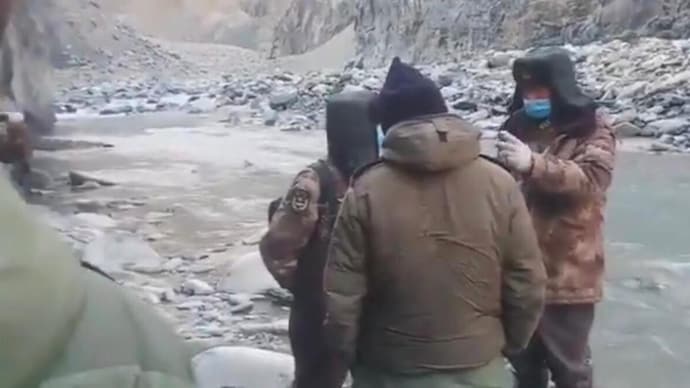
On the night of June 15, 2020, Indian Army soldiers went to Galwan Valley to verify and request the removal of Chinese structures in a disputed area. What started as a verbal disagreement soon turned into a violent confrontation.
There were no gunshots. This is because India and China have agreements that ban the use of firearms near the border. Instead, soldiers fought using sticks, stones, iron rods, and their bare hands.
How the Battle of Galwan Was Fought
The clash took place in darkness, at an altitude where oxygen levels are very low. The terrain was steep and dangerous, with the Galwan River flowing rapidly below.
Indian soldiers were outnumbered, but they stood their ground. The fight continued for several hours. Many soldiers were seriously injured, and some fell into the icy river during the struggle.
Despite the harsh weather, difficult terrain, and numerical disadvantage, Indian troops did not retreat.
“The Battle of Galwan proved that courage does not depend on weapons, but on resolve.”
Indian Army Casualties and National Loss
India officially confirmed that 20 Indian Army soldiers were martyred in the Galwan clash. Among them was Colonel B. Santosh Babu, who led his troops from the front and made the supreme sacrifice.
China later acknowledged the death of four PLA soldiers, though several independent reports suggested higher casualties. These additional numbers were never officially confirmed.
20 BRAVEHEARTS WHO LOST LIVES FIGHTING THE CHINESE IN LADAKH:
Among those killed, five soldiers were from Bihar, four from Punjab, two each from Odisha, Jharkhand and West Bengal and one each from Chhattisgarh, Himachal Pradesh, Madhya Pradesh, Tamil Nadu and Telangana.
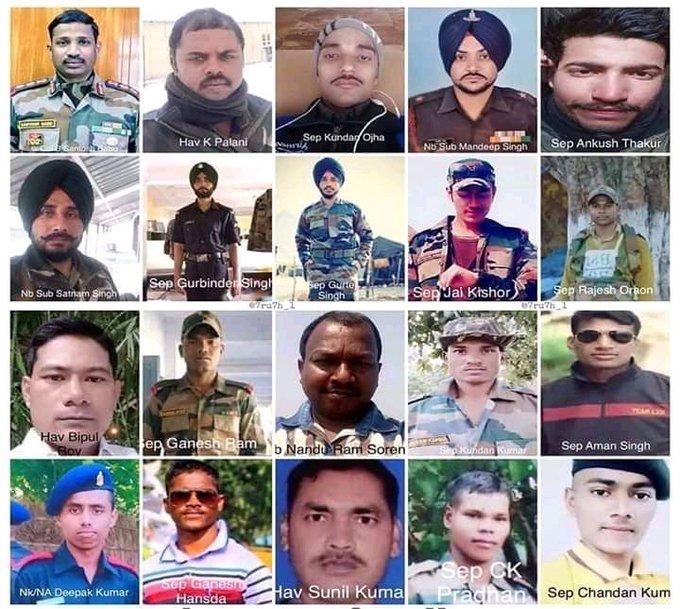
1. Colonel B Santosh Babu
2. Naib Subedar Nuduram Soren
3. Naib Subedar Mandeep Singh
4. Naib Subedar Satnam Singh
5. Havildar K Palani
6. Havildar Sunil Kuma
7. Havildar Bipul Roy
8. Naik Deepak Kumar
9. Sepoy Rajesh Orang
10. Sepoy Kundan Kumar Ojha
11. Sepoy Ganesh Ram
12. Sepoy Chandrakanta Pradhan
13. Sepoy Ankush
14. Sepoy Gurbinder
15. Sepoy Gurtej Singh
16. Sepoy Chandan Kumar
17. Sepoy Kundan Kumar
18. Sepoy Aman Kumar
19. Sepoy Jai Kishore Singh
20. Sepoy Ganesh Hansda
Was It Really 200 Indian Soldiers vs 1200 Chinese Troops?
Many social media posts and public discussions mention that 200 Indian soldiers fought against 1200 Chinese troops. While there is no official confirmation of these exact numbers, what is clearly established is that Indian soldiers were heavily outnumbered.
History remembers Galwan not because of exact figures, but because Indian soldiers refused to step back, even in impossible conditions.
“Galwan was not about numbers. It was about standing firm when retreat was easier.”
Why the Battle of Galwan Is Historically Significant
The Galwan clash was the deadliest India–China border incident in over 45 years. It changed how both countries viewed border security and military preparedness.
After Galwan:
-
India strengthened its border infrastructure
-
Troop deployments increased on both sides
-
Diplomatic and military talks became more frequent
Most importantly, Galwan reminded the nation that peace comes at a cost, and that soldiers often pay that price silently.
Lessons from the Battle of Galwan
The Battle of Galwan teaches us several important lessons:
-
Borders are protected even in peacetime
-
Soldiers face extreme danger without public attention
-
Courage is shown not only in wars, but also in restraint
“Galwan will be remembered as a battle fought without bullets, but with unmatched bravery.”
Conclusion: Why India Must Remember Galwan
The Battle of Galwan is not just a military incident. It is a story of duty, discipline, and sacrifice. Indian soldiers fought in freezing conditions, without guns, and against greater numbers — all to protect the nation’s dignity.
As citizens, remembering Galwan is the least we can do. It reminds us that while we live normal lives, someone is always standing guard at the edge of the nation.
“Galwan stands as a silent reminder that freedom is protected every single day.”
Enjoy Worthview?
Add Worthview as a Preferred Source on Google to see more of our stories in Search.

Worthview Editorial Team is the shared byline for content created collaboratively by Worthview’s editors and contributors. Since 2008, we’ve published thousands of articles across technology, AI, finance, health, home, travel, and lifestyle. Our editorial process emphasizes original research, reputable sources, regular content updates, and clear attribution. Articles covering higher-trust topics, including health and finance, may also undergo review by qualified subject-matter experts.