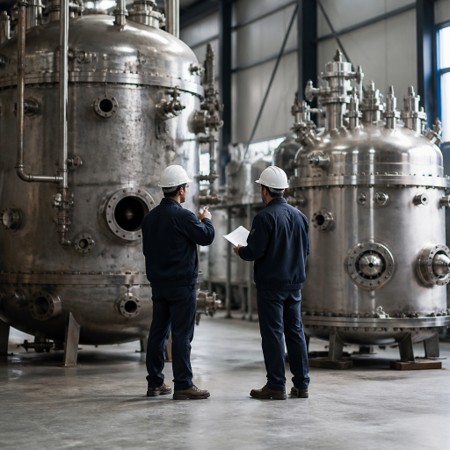
Process manufacturers face a common dilemma when existing reactor capacity falls short or equipment shows signs of wear: invest in retrofitting current assets or replace them entirely with proven used equipment. Both paths offer substantial savings compared to new machinery, but the right choice depends on the condition of existing reactors, production requirements, and timeline constraints. Understanding the technical and financial trade-offs helps plant managers make decisions that protect both product quality and capital budgets.
Assessing the Condition of Current Reactor Assets
The first step in any retrofit-versus-replace decision is a thorough condition assessment. Glass-lined reactors, for instance, can suffer enamel damage from thermal shock, mechanical impact, or chemical attack that compromises their protective barrier. Visual inspection using borescopes reveals cracks, chips, or discoloration that signal potential contamination risks. Stainless steel vessels may show pitting, crevice corrosion, or stress cracking, particularly in chloride-rich environments or at weld joints.
Nondestructive testing techniques provide deeper insight. Ultrasonic thickness gauging maps wall thinning patterns, while dye penetrant or magnetic particle inspection detects surface-breaking defects. For pressure vessels, hydrostatic testing confirms structural integrity, though this requires taking equipment offline. Documentation matters too: reactors with current ASME code compliance and National Board registration carry inherent value, while undocumented vessels may require costly re-certification regardless of physical condition.
Retrofit Options and Their Limitations
Re-glassing represents the most common retrofit for glass-lined equipment. Specialized contractors strip damaged enamel, prepare the steel substrate, and apply fresh glass coatings through multiple firing cycles. This process typically costs 40 to 60 percent of new vessel pricing and extends service life by 15 to 20 years when executed properly. However, re-glassing requires transporting the reactor to a facility equipped with large industrial furnaces, which adds logistics costs and downtime measured in months rather than weeks.
Mechanical components often benefit from targeted upgrades. Replacing worn agitator seals, upgrading to modern magnetic drive systems, or installing new baffles can dramatically improve mixing efficiency and reduce contamination risks. Modern agitator designs offer improved power efficiency and better shear control, making them worthwhile investments even when the vessel body remains sound. Control system upgrades similarly extend equipment relevance, bringing decades-old reactors into compliance with current process automation standards and data logging requirements.
Retrofits face clear boundaries, though. If the vessel shell itself shows widespread corrosion, structural modifications are needed to accommodate process changes, or capacity must increase beyond minor adjustments, retrofitting rarely makes economic sense. Chemical compatibility issues also constrain retrofit viability—a vessel originally specified for mild acids cannot be economically adapted for aggressive halogenated solvents or high-temperature oxidations without fundamental material changes that approach new equipment costs.
The Case for Pre-Owned Process Equipment
Acquiring used reactors from established surplus equipment suppliers offers several advantages over both new purchases and extensive retrofits. Lead times drop dramatically, often from 12 to 18 months for custom new equipment down to weeks for inventory items already inspected and ready to ship. Capital expenditure typically runs 40 to 50 percent below new equipment pricing, freeing funds for other plant improvements or working capital.
Companies like International Process Plants (IPP) maintain inventories of batch-type agitated reactors, glass-lined vessels, and specialized alloy equipment including Hastelloy and other corrosion-resistant materials, with units that have undergone inspection and testing. Buyers gain access to equipment originally built to specifications they might not afford when purchasing new, such as exotic metallurgy or larger capacity than current budget constraints would allow. This approach works particularly well when expanding production of established products, adding parallel capacity, or replacing aging equipment with similar proven technology.
Pre-owned equipment does require careful vetting. Buyers should verify pressure vessel certifications, review maintenance records, and understand the original operating environment. Material compatibility with planned chemistry remains paramount. A reactor that handled organic solvents may require extensive cleaning and inspection before pharmaceutical applications. Mechanical components like seals, gaskets, and internal coils typically need replacement regardless of vessel condition, but these costs remain modest compared to the base equipment investment.
Material Compatibility and Process Chemistry Constraints
The choice between retrofitting and replacing often hinges on material compatibility with current and future process requirements. Glass lining excels with corrosive media, acids, and abrasive slurries, but limits operating temperature ranges and creates contamination concerns when the glass surface fails. Stainless steel grades like 316L provide broader temperature capability and better mechanical strength, though they struggle with halogenated compounds and concentrated acids. Specialty alloys such as Hastelloy, Inconel, or tantalum offer superior corrosion resistance but command premium pricing whether purchased new or used.
Process manufacturers sometimes discover that material selection decisions made years ago no longer align with current production needs. A shift toward chlorinated intermediates, for example, may render existing stainless steel equipment unsuitable. In such cases, acquiring a used reactor built from appropriate materials proves more cost-effective than attempting to line or coat an incompatible vessel, which introduces quality risks and validation burdens.
Timeline and Production Continuity Factors
Production schedules heavily influence the retrofit-versus-replace decision. Retrofitting existing equipment means extended downtime—vessels must be emptied, cleaned, transported to service facilities, processed, returned, and reinstalled. For glass-lined reactor re-coating, this timeline stretches three to six months minimum. Control system upgrades or mechanical component replacement can often occur during planned maintenance windows, but shell repairs or extensive internal work forces longer shutdowns.
Used equipment acquisition compresses these timelines significantly. Once a suitable reactor is identified and purchased, delivery and installation typically complete within four to eight weeks. This speed matters when market demand surges, when existing equipment fails unexpectedly, or when contract manufacturing commitments create fixed production deadlines. Manufacturers can maintain output using temporary processing arrangements or parallel equipment while new assets integrate, rather than idling production lines for months during retrofit work.
Financial Analysis Beyond Purchase Price
A complete financial comparison extends beyond the initial capital outlay. Retrofits often carry hidden costs: transportation to and from service facilities, rigging and crane rental, temporary process modifications to route production around offline equipment, and validation work to demonstrate that refurbished systems meet quality standards. These ancillary expenses can add 25 to 40 percent to the base retrofit cost.
Used equipment purchases include their own cost layers. Buyers must budget for incoming inspection, any necessary repairs or component replacement, installation and commissioning, and validation protocols. However, these costs are typically more predictable and can be compressed into shorter timelines than extended retrofit projects. The opportunity cost of lost production during lengthy retrofits often tips the balance toward replacement, particularly for high-margin products or tight capacity situations.
Depreciation schedules and tax treatment also differ between retrofits and equipment purchases. Capital improvements to existing assets may extend useful life but follow different accounting rules than acquiring separate assets. Finance teams should model both scenarios to understand cash flow implications and tax optimization opportunities.
Making the Decision
The retrofit-versus-replace choice ultimately rests on a clear-eyed assessment of reactor condition, process requirements, timeline constraints, and total cost of ownership. Retrofits make sense when vessel shells remain structurally sound, material compatibility continues, and production schedules allow for extended downtime. Pre-owned equipment acquisition offers advantages when capacity must increase quickly, when existing equipment shows fundamental problems, or when material requirements have shifted beyond what current assets can accommodate.
Neither option should be dismissed reflexively. Process manufacturers benefit from evaluating both paths in parallel, gathering quotes and technical specifications for retrofits while simultaneously surveying available used equipment that meets process needs. This parallel approach reveals the true cost differential and timeline impact, enabling data-driven decisions that optimize both capital deployment and production continuity. The goal remains consistent regardless of path chosen: reliable, code-compliant reactor capacity that supports quality production at sustainable cost.
Enjoy Worthview?
Add Worthview as a Preferred Source on Google to see more of our stories in Search.

Worthview Editorial Team is the shared byline for content created collaboratively by Worthview’s editors and contributors. Since 2008, we’ve published thousands of articles across technology, AI, finance, health, home, travel, and lifestyle. Our editorial process emphasizes original research, reputable sources, regular content updates, and clear attribution. Articles covering higher-trust topics, including health and finance, may also undergo review by qualified subject-matter experts.