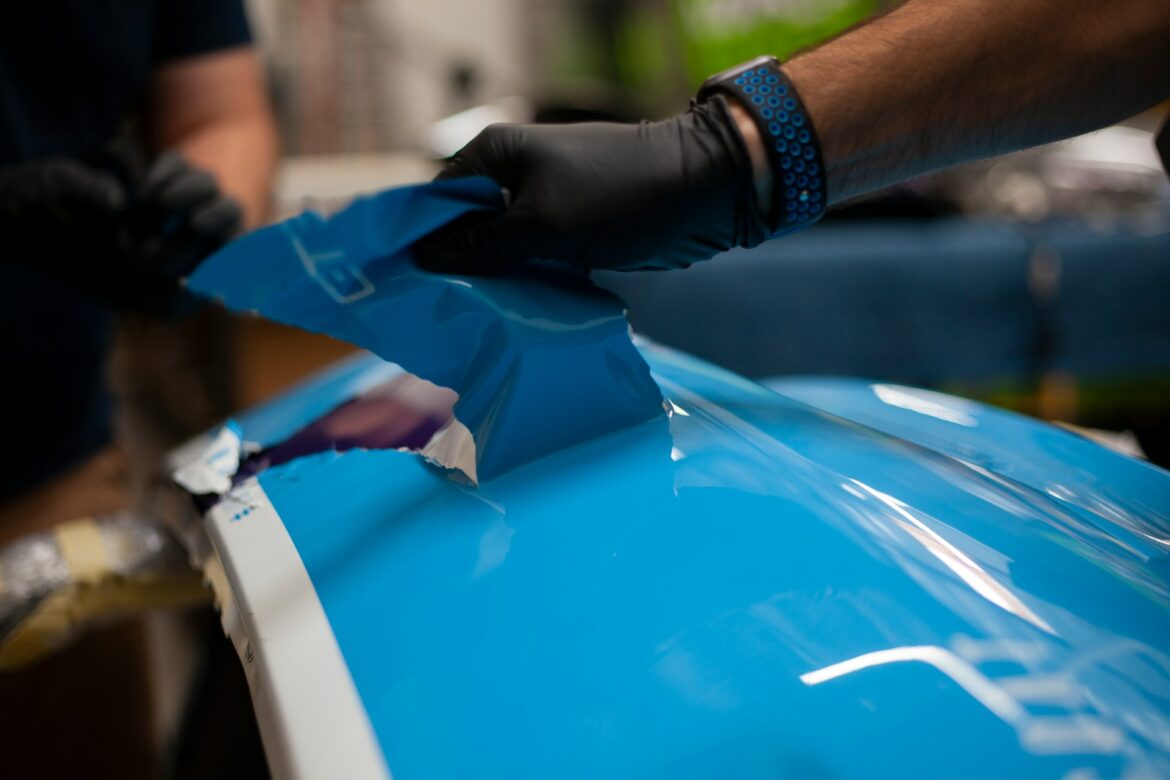
Want your car to look like the accident never even happened?
Collision car paint repair is one of the most underrated aspects of auto body work. Paint is what separates a repair job that looks “I was in a collision” vs one no one will ever know. When done correctly your paint job will:
- Match the original colour perfectly
- Protect your car from rust
- Hold up for years to come
However, to get it right you must know these 3 primary stages: prep, blending, and clearcoat.
Let’s jump in!
What you’ll uncover:
- Why Collision Car Paint Repair Matters
- The Paint Prep Process
- Paint Blending Techniques That Work
- Clearcoat Methods Explained
- Common Mistakes To Avoid
Why Collision Car Paint Repair Matters
Paint is more than just looks.
Most times when you are in a crash the factory finish will come away scratched, cracked or missing altogether. And when metal is left unprotected… rust will start to happen practically immediately. That’s why professional car paint repair is necessary after an accident.
It protects your investment.
Statistics prove this point as well. Based on 2025 industry numbers, the national average auto body repair job comes in at about $4,700. A large percentage of that cost is due to paint and refinishing. Therefore, doing it right the first time will save you money and frustration.
The problem is…..today’s cars have multi-stage paint applications. Primer/basecoat/clearcoat. Fail one stage and the entire process fails.
The Paint Prep Process
Prep work is 80% of any quality paint job.
If you don’t prepare, your paint job will never work. It’ll peel, bubble or just plain look bad. Painting professionals spend more time prepping than they do painting. That’s because preparation is magical.
Damage Assessment
Initially, the technician will assess the damaged area. What are we working with? Is it simply paint damage? Is the metal underneath misshapen or dented? This will determine all that follows.
Sanding
Once the damage is assessed, sanding begins. The goal is to:
- Remove damaged paint
- Smooth out the surface
- Create a base that primer can stick to
Many professionals begin with coarse sandpaper (about 180 grit) and progress to finer grits.
Cleaning & Masking
Now it’s time to clean the surface thoroughly. Dust, grease and debris will destroy your paint job. Most shops use a degreaser and tack cloths.
Then comes masking. You don’t want overspray on glass, trim, or other panels.
Primer Application
The final stage of preparation is priming. Primer provides a surface for the paint to adhere to. Primer will also help fill small surface imperfections and offer corrosion resistance.
Paint Blending Techniques That Work
Blending is where most amateurs get it wrong.
If you spray new paint directly beside old paint, the colour disparity will jump out at you. Subtle differences in shade become glaringly obvious in direct sunlight. That is why blendeds exist.
Blending means taking your new paint and softly mixing it into the old paint around it.
The Wet-On-Wet Method
Wet-on-wet is without a doubt the blending technique preferred by professionals. Let me explain.
- Spray the basecoat onto the damaged panel
- Extend the spray slightly onto the adjacent panel
- Feather the edge so new paint blends into old
- Apply clearcoat across the entire panel
This creates a seamless transition that’s almost impossible to spot.
The Spot Blend Method
Spot blending involves blending in small areas for repairs. The tech sprays new colour into a small area and then “feathers” the edges by decreasing the pressure of their spray gun. The new paint appears to slowly disappear into the old paint. Spot blending works well for minor scratches and chips.
Colour Matching
No matter how good your blending technique is, if you don’t have colour match it’s all for nothing. Colour matching systems these days are computer controlled and scan your vehicle paint colour to formulate an exact colour match. Paint and coatings held the largest market share at 60.5% in the North America automotive collision repair market in 2024.
However, the color code provided by the manufacturer is only a starting point. Sun fading, age and weathering alters the color you see on your car today. A trained technician will tweak the formula to arrive at the closest possible match.
Clearcoat Methods Explained
Clearcoat is your paint’s bodyguard.
The clearcoat is that shiny layer on top of your colour that protects it from UV damage, scratches, and chemicals. If you don’t have it, your paint will fade and peel within years.
Single Stage vs Two Stage
Classic cars often have single stage paint, where the colour and gloss are combined. Modern cars nearly all have two stage paint, with seperate basecoat and clearcoat.
Most modern collision repairs use the two stage system because it gives:
- Better durability
- A deeper, glossier finish
- Easier blending and repairs
Application & Curing
Clearcoat is applied by spray gun in 2-3 coats over the basecoat. Allow each coat to flash off before applying another. Applying another coat too soon will result in runs, sags, and other problems.
Once the final coat is applied the panel enters into a paint booth where heat is applied to accelerate cure. Most booths today will bake panels at approximately 140°F for 30-45 minutes.
Wet Sanding & Polishing
After the clearcoat has fully cured, final wet sanding and polishing is done by the technician. This gets rid of any small defects and enhances the deep shine that makes new paint work look spectacular. This step is what makes great paint jobs shine above the rest.
Common Mistakes To Avoid
3 Tips to Ensure Your Collision Car Paint Repair Won’t Chip – Avoid These Mistakes
- Skipping the prep: Bad prep means bad results.
- Poor colour matching: Don’t trust just the colour code.
- Rushing the cure time: Driving too soon causes swirl marks and damage.
- Choosing the cheapest shop: Shops cutting corners on materials give bad results.
Pretty important stuff, right?
The Final Word
Collision car paint repairs aren’t cosmetic. They’re functional. Good collision repairs extend the life of your vehicle by years. Remember:
- Prep work is 80% of the job
- Blending is what makes a repair invisible
- Clearcoat protects everything underneath
- Quality matters more than price
By doing all of this your car will look as good as new after an accident. Perhaps even better than before. The trick is to find an honest collision repair shop that uses quality materials and up to date equipment.
Frequently Asked Questions (FAQ)
Q: Why is professional collision car paint repair necessary after an accident?
It is essential because a crash often removes the factory finish, leaving the metal unprotected. Unprotected metal starts to rust immediately, meaning professional repair is needed to protect the vehicle and the owner’s investment.
Q: What is the importance of the paint prep process in collision car repair?
Preparation is considered 80% of any quality paint job because neglecting it can lead to peeling, bubbling, or a generally poor appearance. The process involves assessing damage, sanding, cleaning, masking, and applying primer to create a smooth, corrosion-resistant surface for the paint to adhere to.
Paint blending is the technique of softly mixing the new paint into the surrounding old paint to prevent a noticeable color disparity, especially in direct sunlight. The preferred professional technique is the Wet-On-Wet Method, which feathers the basecoat into the adjacent panel for a seamless transition before applying clearcoat.
The clearcoat acts as the paint’s bodyguard, forming a shiny top layer that protects the color underneath from UV damage, scratches, and chemicals. For modern collision repairs, the two-stage paint system is nearly always used because it offers better durability, a deeper finish, and easier blending than single-stage paint.
Key mistakes include skipping the prep work, as bad preparation guarantees poor results like peeling or bubbling, and rushing the cure time, which can cause swirl marks and damage. You should also avoid poor color matching by not relying only on the manufacturer’s color code and avoid choosing the cheapest shop, which may cut corners on quality materials.
Enjoy Worthview?
Add Worthview as a Preferred Source on Google to see more of our stories in Search.
Worthview Editorial Team is the shared byline for content created collaboratively by Worthview’s editors and contributors. Since 2008, we’ve published thousands of articles across technology, AI, finance, health, home, travel, and lifestyle. Our editorial process emphasizes original research, reputable sources, regular content updates, and clear attribution. Articles covering higher-trust topics, including health and finance, may also undergo review by qualified subject-matter experts.