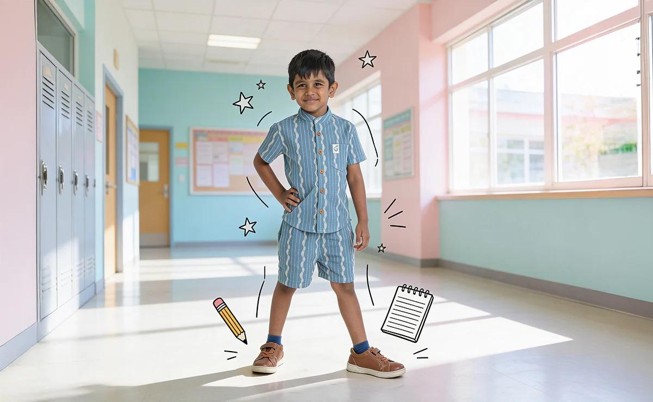
A child in Shillong needs a jacket. A child in Chennai is still sweating. A July afternoon in Mumbai sits heavy with moisture. January in Delhi is dry and cold. Four very different weather realities, and yet parents across all of them keep landing on the same fabric: 100% Cotton Kids Clothing.
This isn’t a summer trend. Cotton isn’t something you pull out in April and box up in October. Parents who make the switch for hot weather quickly realise it works just as well through monsoon, winter, and those confusing weeks in between. That’s why the switch sticks.
This blog covers what cotton does across India’s four seasons, what certifications actually mean, what to check before buying, and how SeedTot builds around these standards from the start.
Key Takeaways
- 100% cotton works year-round. It performs well in summer, monsoon, winter, and transition months.
- In hot and humid months, it pulls sweat away from the skin. Fewer rashes. Less chafing.
- In winter, it holds warmth without generating static. No shocks, no clingy fabric.
- In transition months, it follows body temperature instead of locking in outside conditions.
- GOTS certification covers every step from farm to finished garment. Every chemical used along the way is audited.
- OEKO-TEX Standard 100 tests the finished garment against 100+ harmful substances. It’s tested safety, not assumed safety.
- Azo-free dyes matter every day of the year. Your child wears their clothes constantly. The dye risk doesn’t take a break.
- Seedtot develops every garment from scratch using bio-washed, combed, certified cotton with azo-free dyes and multiple safety checks before production.
How Cotton Performs Across India’s Four Seasons
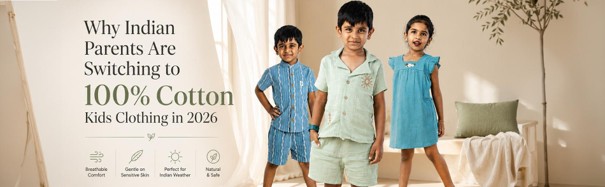
Cotton has clothed people on the Indian subcontinent for thousands of years. It survived every season India throws at it. That’s not coincidence. The fibre has physical properties that work differently from synthetics, and those properties are useful year-round.
Summer: It Breathes
Cotton fibres are hollow. Air moves through the weave in a way it cannot through polyester. When your child sweats in April or May, the moisture gets pulled into the fabric and releases as the fabric breathes. Skin stays drier. Body temperature drops slightly. Your child is more comfortable.
Cotton absorbs up to 27 times its own weight in water. A synthetic T-shirt on a playing child in May is a warm, damp wrapper against the skin. A cotton T-shirt actively manages that sweat. Heat rash, chafing, and that persistent irritation under the arms are far less common in cotton-wearing kids. Parents notice this within weeks of switching.
Monsoon: Damp Without the Misery
Monsoon humidity is its own category of discomfort. Kids come in from outdoors not exactly wet but not dry either. Synthetic fabric in this situation clings. It holds surface moisture against the skin and creates warm, airless conditions where fungal rashes thrive.
Cotton absorbs that surface moisture and releases it slowly. It doesn’t cling. A child in a cotton kurta on a humid July afternoon feels noticeably more settled than one in a polyester blend, even when the amount of sweat is identical. The fabric manages the moisture instead of trapping it.
Winter: Warm Without the Shock
Cotton is a natural insulator. It traps warm air in its fibre structure without generating the static electricity synthetic fabrics produce in dry winter air. Anyone who’s pulled a polyester sweater off a child in January knows the crackling and the small shocks. Cotton under layers skips all of that.
Cotton is also breathable in winter, which matters more than it sounds. Children running around indoors with the heater going heat up fast. Cotton handles that without trapping warmth against the skin the way synthetics do.
Spring and Early Autumn: The Unpredictable Months
March in Delhi. October in Bengaluru. Fourteen degrees at 7am, close to 28 by noon, a surprise shower in the afternoon. Synthetic fabrics respond to outside conditions. They lock in whatever temperature is happening and hold it. Cotton responds to the body. When your child is warm, it wicks. When it’s cooler, it insulates. It follows the person, not the weather.
What Certifications Actually Mean

A label that says 100% cotton tells you the fibre. It tells you nothing about how the cotton was grown, what chemicals touched it between field and garment, or whether the print dye is safe for a toddler who mouths everything. Certifications fill that gap.
GOTS: The Whole Chain
GOTS, the Global Organic Textile Standard, covers the entire supply chain. Not just the raw cotton. Not just the finished T-shirt. Every step in between: spinning, dyeing, finishing, manufacturing. Every stage is audited by a third party for chemical use.
Fabric passes through many hands before it becomes clothing. Each stage introduces chemicals. Some have cumulative effects. GOTS removes that accumulation. A child wearing GOTS-certified clothing wears something where every chemical decision along the way was scrutinised.
OEKO-TEX Standard 100: What’s in the Finished Garment
OEKO-TEX tests the finished product. Over 100 categories of harmful substances are tested, including heavy metals, formaldehyde, and pesticide residues. The standard has a specific product class for babies under 36 months with the strictest limits of any category.
Your child wears fabric every day, all year. OEKO-TEX means that exposure has been tested and verified as safe. Not assumed. Tested.
Azo-Free Dyes: The Risk Most Parents Don’t Know About
Certain azo dyes break down through contact with sweat or saliva and release aromatic amines. Some of those amines are classified as carcinogenic. Toddlers sweat constantly and mouth their clothing regularly. This is a real risk in cheaper printed garments.
Azo-free dyes remove this risk entirely. The colour quality is the same. The print looks just as bright. The only difference is the safety profile. For parents buying printed kids’ clothing, this is one of the most direct safety checks available.
How SeedTot Builds Around These Standards
Understanding certifications is useful. Seeing how a brand applies them is more useful.
At SeedTot, every garment starts with bio-washed, combed, premium certified cotton. Bio-washing uses enzymes to remove short loose fibres from the fabric surface. Those are the fibres responsible for pilling and roughness over time. The result is soft from the first wear and stays that way through real use and real washing.
Combing goes further. It removes even shorter fibres and aligns the longer ones into a stronger, more uniform yarn. Combined with bio-washing, combed cotton is softer and more durable. It doesn’t thin out or lose shape after twenty washes.
Every design is created in-house, built around a specific story or theme, and printed using azo-free, OEKO-TEX certified dyes. Every print goes through multiple rounds of safety and quality testing before production starts. SeedTot doesn’t source surplus or apply labels to bulk garments. Each product goes through a defined process from concept to shelf. That traceability is what parents ask for.
What to Check Before You Buy
Read the Composition Label
“Cotton blend” and “cotton-rich” are not 100% cotton. Look for a label that says “100% cotton” or “100% organic cotton” with no other fibre listed. Indian garment labelling rules require fibre composition on the tag. If it doesn’t say 100% clearly, it isn’t.
Verify Certification Marks
Both GOTS and OEKO-TEX maintain public databases where you search the certification number to confirm it’s genuine. A brand with real certifications will be transparent about them and provide the number. No number? That’s worth noting.
Feel the Fabric
Genuine combed, bio-washed cotton feels soft without being flimsy. It has a slight natural weight and a matte texture. Synthetics often feel slightly slippery or carry a subtle sheen. Running the fabric between your fingers tells you a lot before you read any label.
Ask About the Dyes on Printed Items
This should be on the product page or garment label, especially for babies and toddlers. If it’s not mentioned anywhere, ask before purchasing. For brightly printed kids’ clothing, this is not an unreasonable question.
Know the Difference Between a Brand and a Label
Some brands develop products from scratch with defined R&D; and quality testing at every stage. Others source bulk surplus and apply a label. Look for brands open about how their clothing is made, not just what certifications they hold.
The Switch Holds Because It Works Year-Round
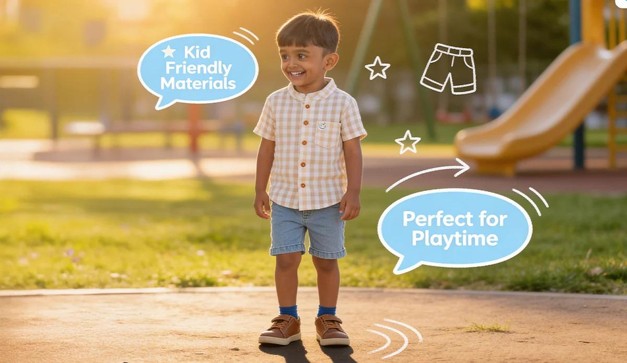
Indian parents in 2026 read labels. They ask what GOTS means. They notice when a persistent rash disappears after a fabric change, and they tell other parents about it. The conversation spreads through school groups and family chats, not through advertising.
Parents who make the switch in April for the heat find the same fabric serves them through July’s humidity, January’s dry cold, and the unpredictable weeks in between. The answer doesn’t change when the seasons change. That’s what makes it a real decision, not a seasonal workaround.
Certified, combed, bio-washed cotton made without harmful dyes is the most consistent, skin-safe fabric for Indian children across all seasons. Parents are finding this out on their own, one fabric change at a time.
FAQs
1. Is 100% cotton better than synthetic fabric for kids in India?
Yes, and not just in summer. Cotton breathes better, absorbs sweat more, and sits more gently on kids’ skin across every season. Certified cotton also removes the chemical exposure risk common in synthetic fabrics.
2. Why are Indian parents making this switch in 2026?
Awareness has grown. Parents read certification labels, research fabric safety, and connect skin issues to fabric choices. Widely available certified cotton clothing has made acting on that awareness easier.
3. What are the practical benefits of 100% cotton for kids?
Breathability, softness, moisture absorption, and all-season comfort. Certified cotton adds verified safety from harmful chemicals. It’s also biodegradable.
4. For Indian summers, cotton, linen, or something else?
100% combed cotton is the most practical choice for most Indian families. Linen breathes well but gets stiff and rough, which most children find uncomfortable. Cotton combines softness, durability, and breathability across all seasons.
5. Does certified cotton help with skin allergies in kids?
Yes, in many cases. Chemical residues from dyes and finishing agents in non-certified fabrics are a common trigger for skin irritation. Switching to certified cotton removes many of those triggers. Parents frequently notice improvement within weeks.
6. Why are kids’ clothing brands moving toward cotton certifications?
Parents ask for them. A brand with GOTS or OEKO-TEX certification backs its safety claims with third-party auditing, not just marketing language. That distinction matters to informed buyers.
7. Is cotton better for babies and toddlers specifically?
Especially so. Babies and toddlers have thinner skin that absorbs chemicals more readily. They have constant contact with fabric, including mouthing it. Soft, certified organic cotton is the safest option for this age group.
8. How do I identify genuine 100% cotton kids’ clothing?
Start with the composition label. It must say “100% cotton” with no other fibre listed. Look for GOTS or OEKO-TEX certification marks and verify the number on the organisation’s public database. Genuine cotton has a natural matte texture and slight weight synthetic blends don’t have.