
A wood deck is only as durable as its finish. In Bellevue, an unsealed deck soaks up rain and starts breaking down fast.
Deck sealing in Bellevue is the single most important thing you can do for a wood deck. It waterproofs the boards before our wet season arrives.
This guide covers when to seal, how to prep, and what products work here. Let us protect your deck.
Key Takeaways
- Bellevue’s rainy climate makes regular deck sealing essential.
- Moisture causes cracking, warping, moss, and wood rot.
- Seal only after several dry days for maximum penetration.
- Proper preparation accounts for most of the job’s success.
- Quality penetrating sealers outperform paint in wet climates.
- Routine maintenance extends deck life and lowers repair costs.
Why Deck Sealing Matters in Bellevue
Bellevue’s climate creates unique challenges for outdoor wooden structures. With frequent rainfall, damp winters, and changing temperatures throughout the year, untreated wood quickly absorbs moisture. Over time, this constant expansion and contraction weakens the wood, leading to cracks, warping, splinters, moss growth, and eventually wood rot.
Unlike drier climates where decks can go several years with minimal maintenance, homeowners in the Pacific Northwest need a proactive approach. Regular deck sealing creates a protective barrier that repels water while allowing the wood to breathe naturally. This simple maintenance step helps preserve your deck’s appearance, structural integrity, and overall lifespan.
Whether your deck is built from cedar, pressure-treated lumber, or another wood species, sealing it before the rainy season is one of the most effective ways to protect your investment.
Benefits of Sealing Your Deck
A professionally sealed deck offers several long-term advantages:
- Protects against Bellevue’s heavy rainfall and moisture.
- Reduces the risk of wood rot, cracking, and warping.
- Helps prevent moss, mildew, and algae growth.
- Preserves the deck’s natural color and wood grain.
- Improves resistance to UV damage during summer.
- Extends the life of the deck while lowering maintenance costs.
Why Sealing Is Non-Negotiable Here
Unsealed Wood Drinks the Rain
Bare or weathered wood absorbs our constant Pacific Northwest rain like a sponge. Every rainfall allows moisture to penetrate deep into the wood fibers. Over time, that trapped moisture causes the boards to expand when wet and shrink as they dry. This repeated cycle leads to swelling, cracking, warping, cupping, splitting, and eventually wood rot. Once rot begins, repairs become much more expensive than routine maintenance.
Professional deck sealing in Bellevue creates a durable protective barrier that repels water instead of allowing it to soak into the wood. A quality sealer helps prevent moisture damage while still letting the wood breathe naturally. It is the difference between a deck that lasts for many years with minimal repairs and one that deteriorates far sooner than expected. Considering Bellevue’s frequent rainfall, sealing is one of the smartest investments homeowners can make to protect their outdoor living space.
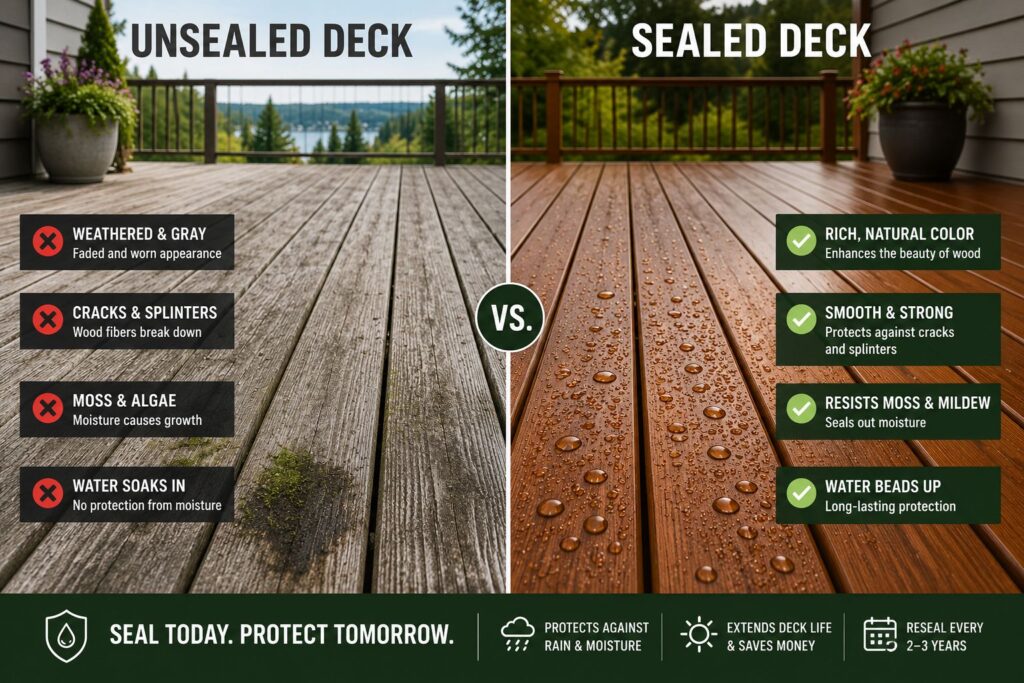
Moss and Gray Are Warning Signs
When water no longer beads on the surface and instead soaks into the wood, it is a clear sign that the previous sealer has worn away. Another obvious warning is when the deck begins turning gray due to prolonged exposure to sunlight and moisture. This weathered appearance is more than just cosmetic—it indicates that the wood is no longer protected from the elements.
Moss and algae growth on shaded areas are additional warning signs. These organisms thrive in damp conditions and can make your deck slippery and unsafe for family members and guests. Homes throughout Redmond, Bellevue, and Issaquah commonly experience these issues every spring after months of wet weather. If you notice gray boards, green moss, mildew stains, or standing water soaking into the wood, your deck is overdue for professional sealing. Addressing these problems early helps extend the life of the deck and prevents costly structural repairs.
What We Commonly See During Deck Inspections
During deck inspections across Bellevue, we often find decks that appear solid on the surface but have already started absorbing moisture beneath the wood fibers. Early signs such as fading color, small cracks, splinters, or moss growth are easy to overlook, but they often indicate that the previous protective coating has worn away.
Homeowners who schedule deck sealing before the rainy season can usually avoid more extensive repairs later. Regular inspections and timely maintenance help preserve both the appearance and structural integrity of the deck while extending its overall lifespan.
The Right Timing
Seal During the Dry Season
Timing plays a major role in the success of a deck sealing project. The ideal period for sealing a deck in Bellevue is during the dry months, typically from mid-summer through early fall. During this time, the wood has a chance to dry thoroughly, allowing the sealer to penetrate deeply into the fibers instead of sitting on the surface.
Scheduling deck sealing in Bellevue before October helps ensure the protective coating has enough time to cure completely before the heavy fall and winter rains arrive. A properly cured sealer forms a long-lasting shield that stands up much better against months of moisture, freezing temperatures, and changing weather conditions.
Dry Wood Is Essential
Applying sealer to damp wood is one of the most common mistakes homeowners make. Moisture trapped inside the boards prevents the sealer from penetrating properly, reducing its effectiveness and causing it to peel, blister, or wear away prematurely.
After significant rainfall, a deck usually needs several consecutive dry days before it is ready for sealing. Professional contractors often use moisture meters to verify that the wood has reached the proper moisture level before beginning the application. Waiting for the right conditions may take a little longer, but it ensures a stronger bond, a more attractive finish, and longer-lasting protection. Patience during preparation ultimately saves both time and money.
Prep Makes the Difference
Clean and Brighten the Surface
Proper preparation is the foundation of a successful deck sealing project. Before applying any sealer, the deck should be thoroughly cleaned to remove dirt, moss, mildew, algae, pollen, leaves, and any remnants of old failing finishes. Specialized deck cleaners and brighteners restore the natural color of the wood while opening its pores for better sealer penetration.
A clean, brightened surface allows the protective coating to bond evenly and perform as intended. Applying sealer over dirt, mold, or peeling stain simply traps contaminants beneath the finish, reducing adhesion and shortening the lifespan of the coating. Many professionals agree that preparation accounts for the majority of the work involved in achieving long-lasting results.
Sand and Repair Before Sealing
After cleaning, inspect every board, stair tread, and railing for damage. Sand rough areas, remove splinters, and smooth raised wood fibers to create an even surface that accepts sealer consistently. Replacing soft, cracked, loose, or rotting boards before sealing ensures the deck remains safe and structurally sound.
This inspection stage is also an excellent opportunity to identify early signs of decay, loose fasteners, popped nails, or weakened support components before they become major problems. Taking care of small repairs now prevents expensive restoration work later. A well-prepared deck not only looks better after sealing but also enjoys significantly longer protection against Bellevue’s challenging weather conditions. Proper cleaning, repairs, and sanding create the ideal foundation for a durable finish that preserves both the beauty and lifespan of your outdoor living space.
Choosing the Right Product
Penetrating Sealers and Stains
Penetrating, water-repellent sealers soak into the wood and shed water well. Semi-transparent stains add color and UV protection while showing the grain.
In our climate, a quality deck-rated product is key. A local pro matches it to your wood and exposure.
Reapply on Schedule
Even the best seal wears under our heavy rain. Reapplying every couple of years keeps the protection strong.
Staying on schedule prevents the wood from ever falling behind. Consistency is everything.
Working With a Local Deck Pro
Done Right, Done Once a Season
A pro cleans, repairs, and seals in one efficient visit, timed for the weather. That saves you the labor and the guesswork.
When our deck started graying, Optima Fence and Deck cleaned and brightened the boards, then sealed them during a dry stretch. The crew that got our deck waterproofed before the rains hit prepped every board first, and you can see how they handle deck work from build to upkeep.
Protect the Investment
A sealed deck stays safe, attractive, and rot-free for years. Skipping it shortens the deck’s life dramatically.
Regular deck sealing in Bellevue is the cheapest insurance there is. It keeps your deck going strong.
Frequently Asked Questions
When should I seal my deck in Bellevue?
The best time to seal a deck in Bellevue is during the dry season, typically from mid-summer through early fall. These months provide the warm temperatures and low moisture levels needed for the sealer to penetrate deeply into the wood and cure properly. Ideally, your deck should remain dry for at least 48 to 72 hours before the application.
Scheduling deck sealing before October helps prepare the wood for the long, wet Pacific Northwest winter. A properly sealed deck is far more resistant to rain, freezing temperatures, and moisture-related damage throughout the colder months.
How do I know if my deck needs resealing?
Several signs indicate that your deck is ready for resealing. The easiest test is to sprinkle water on the boards. If the water quickly soaks into the wood instead of beading on the surface, the protective finish has worn away.
Other common warning signs include:
- Gray or faded wood color
- Moss or algae growth
- Splintering boards
- Small surface cracks
- Rough texture
- Peeling or flaking stain
Addressing these issues early helps prevent moisture penetration, wood rot, and costly structural repairs.
Can you seal a damp deck in the Pacific Northwest?
No. Applying sealer to damp wood usually leads to poor results because moisture trapped inside the boards prevents proper absorption. Instead of penetrating the wood, the sealer may remain on the surface where it can peel, blister, or wear away prematurely.
After rainfall, a deck typically requires several consecutive dry days before sealing. Professional contractors often use moisture meters to verify that the wood has reached the proper moisture level before beginning the project.
How often should a deck be sealed in Bellevue?
Most wood decks in Bellevue benefit from professional sealing every two to three years. However, decks that receive full sun, frequent rain exposure, or heavy foot traffic may require maintenance every one to two years.
Factors that affect resealing frequency include:
- Wood species
- Type of previous finish
- Sun exposure
- Drainage around the deck
- Amount of rainfall
- Overall maintenance routine
Annual inspections help determine whether your deck needs cleaning, touch-ups, or a complete resealing.
What is the best sealer for a Bellevue deck?
For Bellevue’s rainy climate, high-quality penetrating water-repellent sealers and semi-transparent deck stains generally provide the best protection. Penetrating sealers soak into the wood rather than forming a thick surface film, making them less likely to peel over time.
Semi-transparent stains offer additional UV protection while enhancing the wood’s natural grain and color. The ideal product depends on your deck’s age, wood species, condition, and sun exposure. A professional can recommend the best option based on your specific deck.
How long does deck sealing last?
A professionally applied deck sealer generally lasts between two and three years, although lifespan varies depending on weather conditions, product quality, and foot traffic. Decks exposed to direct sunlight and heavy rainfall may require more frequent maintenance.
Regular cleaning and annual inspections can significantly extend the life of the protective coating and help maintain the deck’s appearance.
Should I pressure wash my deck before sealing?
Yes. Pressure washing is often an important part of deck preparation because it removes dirt, mildew, algae, moss, pollen, and loose coatings. However, excessive pressure can damage wood fibers if not performed correctly.
Many professionals combine gentle pressure washing with specialized deck cleaners and brighteners to restore the surface before sealing. Proper preparation ensures better adhesion and a longer-lasting finish.
Is deck sealing better than painting?
For most natural wood decks, sealing or staining is generally a better option than painting. Paint forms a thick surface coating that can crack and peel under constant moisture exposure, especially in the Pacific Northwest.
Penetrating sealers soak into the wood, allowing it to expand and contract naturally while providing excellent moisture protection. They are also easier to maintain because they typically require cleaning and resealing rather than complete paint removal.
How long should I wait before using my deck after sealing?
Most deck sealers require 24 to 48 hours before light foot traffic is recommended. Furniture, grills, and heavy items should usually remain off the deck for 48 to 72 hours, depending on the product used and weather conditions.
Cool temperatures and high humidity can increase drying times, so it’s important to follow the manufacturer’s recommendations.
Does sealing protect against mold and moss?
Yes. While no product completely prevents mold or moss, a quality deck sealer greatly reduces moisture absorption, making it much harder for moss, algae, mildew, and mold to grow.
Regular sweeping, keeping leaves off the deck, trimming nearby vegetation, and maintaining good airflow also help minimize biological growth.
Can an old weathered deck be sealed?
In many cases, yes. Even older decks can often be restored with thorough cleaning, sanding, and replacing damaged boards before applying a high-quality sealer. However, if the wood has extensive rot or structural damage, repairs should be completed before sealing.
A professional inspection can determine whether restoration is possible or if portions of the deck need replacement.
Why should I hire a professional for deck sealing?
Professional deck sealing provides better and longer-lasting results than most DIY projects. Experienced contractors know how to properly clean, repair, sand, and prepare the wood before selecting the appropriate sealer for your deck and local climate.
Professionals also understand Bellevue’s weather patterns and apply products under ideal conditions, helping maximize durability, improve appearance, and protect your investment for years to come.
Enjoy Worthview?
Add Worthview as a Preferred Source on Google to see more of our stories in Search.

Worthview Editorial Team is the shared byline for content created collaboratively by Worthview’s editors and contributors. Since 2008, we’ve published thousands of articles across technology, AI, finance, health, home, travel, and lifestyle. Our editorial process emphasizes original research, reputable sources, regular content updates, and clear attribution. Articles covering higher-trust topics, including health and finance, may also undergo review by qualified subject-matter experts.