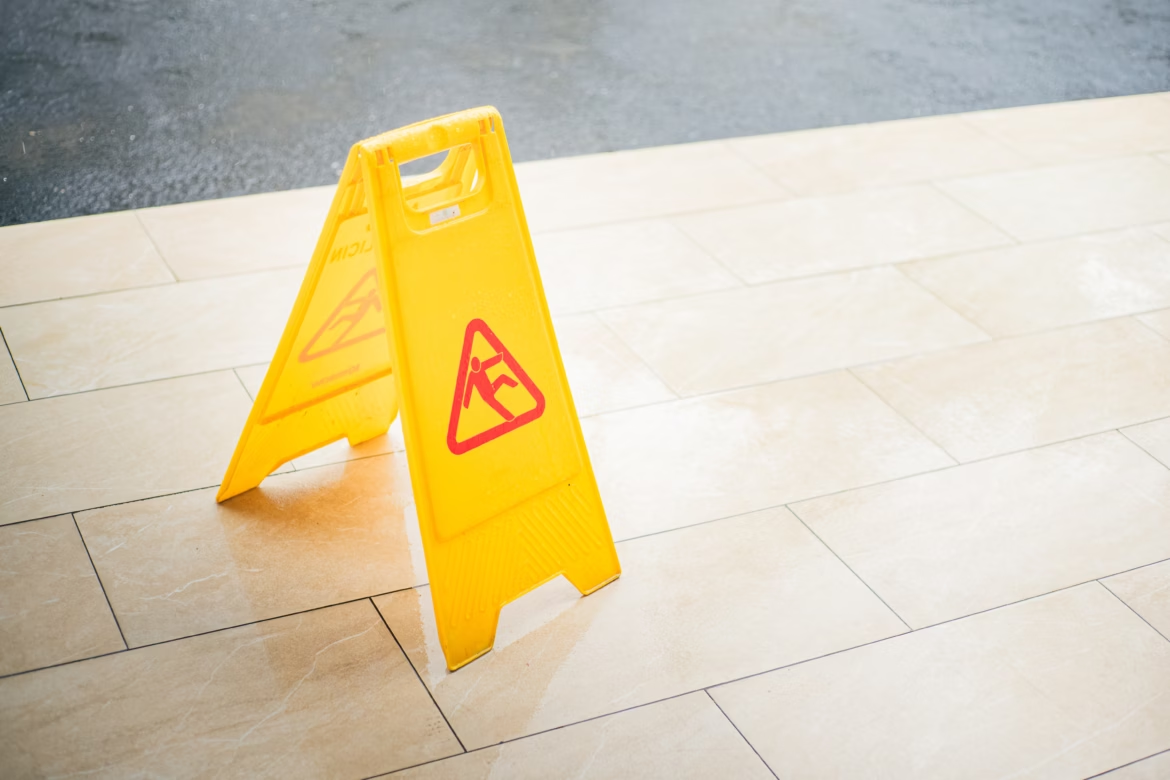
Ever slipped on a wet supermarket floor and wondered who actually pays for it?
That is the key question in premises liability. Just because someone is injured on your property doesn’t necessarily mean you’re going to have to pay them… but you will have to much more often than you think.
Here’s the good news:
The rules behind it are much simpler than they sound.
What Premises Liability Actually Means
Premises liability is a legal doctrine which states that the person in control of a property has a duty to maintain that property in a reasonably safe condition for entrants.
That’s the whole idea in one sentence.
If there’s a hazard, the owner must correct it, restrict access to it, or warn others about it. Throw out all three options and now someone’s injury is your problem as well. Not just the injured visitor’s.
It’s easy to see why falling is such a big deal when you look at the numbers. The National Safety Council reports there were 48,308 fall deaths at home and on the job in 2024. That’s about a quarter of all preventable injury fatalities nationwide. Another 8.8 million victims went to the ER because of fall injuries. Not all of those occur on another person’s property… but many, many fall accidents do.
It’s also why personal injury lawyers pore over maintenance logs, inspection reports and security camera footage for hours on end. Responsibility for these types of claims is often hidden in minutia: How long before the spill was cleaned up? Who walked by before you slipped? Was a caution sign ever placed? If you find yourself dealing with a serious injury on someone else’s property in Texas, you’ll discover an experienced Houston personal injury lawyer can help determine who was in charge of maintaining the area and who was responsible for failing to do their job. The best attorneys will construct a timeline before discussing compensation.
Pretty straightforward, right?
The Three Types Of Visitors
Not all visitors are entitled to the same level of care. Visitors are classified into three categories by the courts, and the category determines the duty of care owed by the owner.
Invitees
An invitee enters the property for the owner’s advantage. This includes customers, diners at a restaurant, hotel patrons, tenants, and delivery persons.
They get the highest level of protection. Owners must:
- Regularly inspect the property for hazards
- Repair the dangers they find
- Warn about anything that can’t be fixed straight away
Emphasis on the word “inspect.” You can’t say that as an owner, you “never knew” about the broken step. If your inspection should have revealed the issue, the law considers you as having knowledge of it.
Licensees
A licensee enters the property for his or her own purposes under license. This would include social guests like a neighbour visiting or a friend coming over for coffee.
They don’t owe them as much. Owners must make known of dangerous conditions. They do not have to search for dangerous conditions they did not know existed.
Trespassers
Trespassers get owed the least amount of consideration. A landowner only has to refrain from intentionally injuring them — no traps, no purposely concealed hazards.
Except for one notable exception: kids. Swimming pools, trampolines, abandoned refrigerators and construction vehicles are known in legal terms as “attractive nuisances.” If it draws children to a property, the owner needs to childproof it, invited or not.
What “Reasonable Care” Looks Like In Real Life
Reasonable care sounds vague until you break it down.
Courts typically inquire whether the owner failed to perform “routine, mundane tasks that a reasonable person would undertake.” Such tasks include sweeping spills and placing warning signs, fixing loose railings and cracked pavements, replacing burned-out lighting in staircases and parking lots, removing ice and debris, and securing properties where crime is foreseeable.
Look at how unsexy that list is. Most premises cases are about mundane maintenance that no one wanted to do.
The price gets really steep with older users. According to the CDC, every year one in four adults age 65+ suffers a fall. The cost to treat falls is estimated at $80 billion a year. A single missed stair tread can take away someone’s ability to live independently forever.
Where These Accidents Happen Most
Premises liability covers far more ground than wet floors. Claims regularly come out of:
- Retail stores and supermarkets — spills, cluttered aisles, falling merchandise
- Apartment complexes — broken locks, dark stairwells, weak security
- Restaurants and bars — greasy floors, uneven patios
- Hotels — pool accidents, faulty balconies, poorly lit corridors
- Construction sites — open holes and unmarked hazards
- Private homes — dog bites, rotting decks, unfenced pools
Dog bites and swimming pool injuries seem surprising but they are both classic premises claims. So too is an assault occurring in a parking garage where the owner had knowledge that the lighting had been out for months and failed to replace it.
What Has To Be Proven To Win A Claim
Being injured on someone’s property is just one of four parts that must fit together:
- Duty — the owner controlled the property and owed the visitor care
- Knowledge — they knew, or should have known, about the hazard
- Breach — they failed to fix it or warn anyone about it
- Damages — the injury caused real, measurable losses
The numbers are doing the heavy lifting for you. An accident that occurred thirty seconds ago typically falls under nobody’s responsibility. That same accident laying there for 2 hours and walked by four employees says a whole different story.
Evidence doesn’t stick around long either. Surveillance cameras roll over in days, if not hours, and the danger is typically disposed of well before anyone considers snapping a photo of it.
That’s why the first few hours matter more than the first few months:
- Photograph the hazard right away
- Report it and ask for a written incident report
- Collect names of witnesses and staff
- Get medical treatment the same day
Bringing It All Together
Premises liability is one simple concept. Visitors go where owners invite them. In exchange, owners maintain the property safely.
To quickly recap:
- Owners owe the most to invitees, less to licensees, and least to trespassers
- Children get extra protection under the attractive nuisance rule
- Reasonable care is mostly routine maintenance and honest warnings
- Proving the owner knew about the hazard is the hardest part
- Evidence vanishes quickly, so acting early changes everything
Just what you should know: Most of these injuries were preventable. A mop, a light bulb, a warning sign …that’s all it would’ve taken.
Enjoy Worthview?
Add Worthview as a Preferred Source on Google to see more of our stories in Search.

Worthview Editorial Team is the shared byline for content created collaboratively by Worthview’s editors and contributors. Since 2008, we’ve published thousands of articles across technology, AI, finance, health, home, travel, and lifestyle. Our editorial process emphasizes original research, reputable sources, regular content updates, and clear attribution. Articles covering higher-trust topics, including health and finance, may also undergo review by qualified subject-matter experts.