Last Updated: May 2026
In short, N95 masks are generally considered better than KN95 masks because they meet stricter U.S. NIOSH testing standards and provide a tighter facial seal. However, certified KN95 masks can still offer strong protection when properly fitted and worn correctly.
Face masks are no longer just associated with the COVID-19 pandemic. In 2026, millions of people still use high-filtration masks during flu seasons, virus outbreaks, crowded flights, hospital visits, wildfire smoke events, and heavy air pollution days.
But one question continues to confuse many people:
Which mask is actually better — KN95 or N95?
At first glance, both masks look similar and claim to filter at least 95% of airborne particles. However, there are important differences in certification standards, facial fit, comfort, leakage protection, and real-world performance.
An authentic N95 mask is generally considered the gold standard because it meets strict U.S. testing standards approved by NIOSH. KN95 masks, on the other hand, follow Chinese manufacturing standards and are often designed for easier everyday use.
In this guide, we’ll compare KN95 vs N95 masks in simple terms, including:
- Filtration efficiency
- Safety standards
- Comfort and fit
- Virus protection
- Best use cases
- Expert recommendations
- How to spot fake masks
By the end, you’ll clearly understand which mask is better for your needs in 2026.
With the dawn of the pandemic, a lot has been put under the surgical spotlight, so to speak. Acronyms such as N95 and KN95 masks have become a daily part of our communication. But with their names sounding so similar, what is their difference? Is the KN95 mask the same as the N95 mask?
What Is an N95 Mask?
An N95 mask is a high-filtration respirator designed to filter at least 95% of tiny airborne particles, including dust, smoke, bacteria, and certain viruses. These masks are regulated and approved by the National Institute for Occupational Safety and Health (NIOSH) in the United States.
Unlike regular surgical or cloth masks, N95 respirators are designed to create a tight seal around the face. This helps reduce air leakage from the sides and provides stronger protection in crowded or high-risk environments.
N95 masks are commonly used by:
- Healthcare workers
- Hospital staff
- Construction workers
- Industrial employees
- Travelers during outbreaks
- People exposed to smoke or pollution
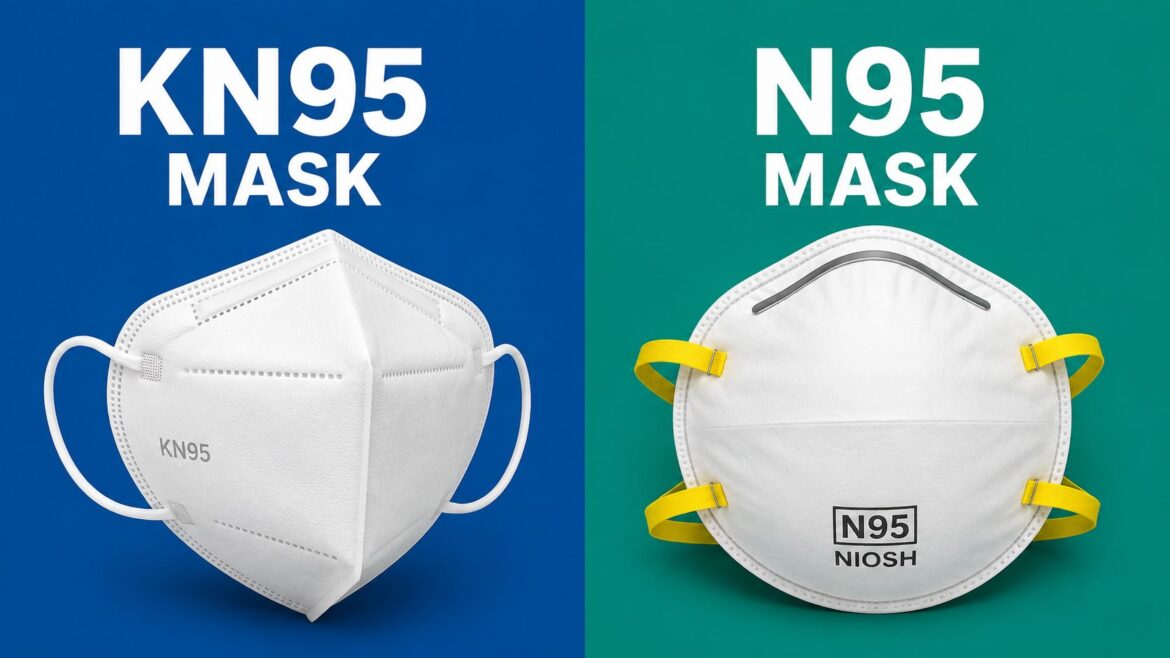
Most N95 masks use two headbands instead of ear loops. This design helps improve the facial seal and overall filtration performance.
Key Features of N95 Masks
- Filters at least 95% of airborne particles
- Approved by NIOSH in the United States
- Tight facial fit for better protection
- Commonly used in hospitals and medical settings
- Effective against smoke, dust, and airborne particles
- Usually designed with head straps instead of ear loops
One important thing to remember is that not all masks labeled “N95” are genuine. Counterfeit masks became a major issue during and after the pandemic, so always check for official NIOSH markings and approval numbers before buying.
What Is a KN95 Mask?
A KN95 mask is a disposable respirator designed to filter at least 95% of airborne particles, similar to an N95 mask. However, KN95 masks follow Chinese manufacturing standards known as GB2626 instead of U.S. NIOSH standards.
KN95 masks became extremely popular worldwide because they are easier to find, more affordable, and often more comfortable for daily use.
Unlike most N95 masks, KN95 masks usually use ear loops instead of headbands. Many people prefer this design because it feels lighter and easier to wear for long periods.
KN95 masks are commonly used for:
- Daily commuting
- Flights and travel
- Public transportation
- Crowded indoor places
- Air pollution protection
- Seasonal flu protection
Key Features of KN95 Masks
- Filters at least 95% of airborne particles
- Follows Chinese GB2626 standards
- Usually uses ear-loop design
- More comfortable for casual daily use
- Widely available and affordable
- Offers good protection when properly fitted
The biggest concern with KN95 masks is quality consistency. Some low-quality or fake products may not provide proper filtration or fit. That’s why buying from trusted brands and verified sellers is important.
KN95 vs N95 Masks
N95 masks are generally considered better than KN95 masks because they must pass stricter U.S. testing and fit standards set by NIOSH. They usually create a tighter seal around the face, reducing air leakage and improving protection against airborne particles.
However, certified KN95 masks can still provide strong protection when worn correctly and fitted properly.
Both masks are designed to filter at least 95% of tiny airborne particles, including:
- Dust
- Smoke
- Pollution
- Respiratory droplets
- Certain airborne viruses
The biggest difference is usually the fit and certification process, not the filtration percentage itself.
Here’s a quick comparison:
| Feature | N95 Mask | KN95 Mask |
|---|---|---|
| Certification Standard | NIOSH (United States) | GB2626 (China) |
| Filtration Efficiency | At least 95% | At least 95% |
| Facial Fit | Tighter seal | Slightly looser fit |
| Strap Design | Headbands | Ear loops |
| Leakage Protection | Better | Moderate |
| Comfort Level | Less comfortable for long use | More comfortable |
| Common Usage | Hospitals, healthcare, industrial work | Daily public use, travel |
| Regulatory Testing | Strict U.S. testing | Chinese testing standards |
| Availability | Sometimes limited | Widely available |
| Counterfeit Risk | Moderate | Higher |
The main difference between the KN95 mask and the N95 mask is that KN95 is designed as per the Chinese standard while the N95 is designed according to United States standards.
1. Certification Standards
N95 masks are tested and approved by NIOSH in the United States. The testing process is extremely strict and focuses on filtration efficiency, airflow resistance, and fit performance.
KN95 masks follow China’s GB2626 standards, which are similar in filtration requirements but may differ in testing methods and quality control.
Because of stricter oversight, N95 masks are generally trusted more in healthcare environments.
2. Filtration Efficiency
Both masks are designed to block at least 95% of very small airborne particles under testing conditions.
This includes:
- Dust particles
- Smoke
- Air pollution
- Respiratory droplets
- Some airborne viruses
In terms of filtration material alone, both can perform similarly. However, real-world protection also depends heavily on how well the mask seals around the face.
3. Facial Fit and Air Leakage
This is where N95 masks usually perform better.
Most N95 respirators use headbands that pull the mask tightly against the face. This reduces gaps around the nose and cheeks, helping prevent unfiltered air from leaking in.
KN95 masks typically use ear loops, which are often more comfortable but may create small side gaps for some users.
A mask with poor fit can reduce overall protection, even if the filter material itself is strong.
4. Comfort and Daily Wear
KN95 masks are often considered more comfortable for long daily use because:
- They are lighter
- Ear loops feel less tight
- They are easier to wear casually
N95 masks can feel tighter and warmer, especially during long hours of use. Some people may also find the headbands uncomfortable after extended wear.
For quick errands, commuting, or travel, many people prefer KN95 masks for convenience.
5. Which Mask Is Better for Viruses?
For maximum protection against airborne particles and viruses, health experts usually recommend a genuine N95 respirator because of its tighter facial seal and stricter certification standards.
However, a high-quality KN95 mask that fits properly can still provide excellent protection for everyday situations.
The most important factor is wearing the mask correctly and consistently.
Both the N95 and the KN95 mask are referred to as filtering facepiece respirators ( FFR). An FFR is a respirator with a filtering medium that is perhaps the most integral part of the piece.
The filtering medium has been certified to filter out at least 95% of airborne bacteria or materials in its path. These masks form a seal around the wearer’s face and are classed under disposable respirators.
How to Spot Fake N95 and KN95 Masks
Fake and low-quality masks became a major problem during the pandemic, and counterfeit products are still widely sold online in 2026. A fake mask may look real on the outside but fail to provide proper filtration or facial protection.
That’s why it’s important to know how to identify a genuine N95 or KN95 mask before buying one.
Signs of a Genuine N95 Mask
A real N95 respirator should include:
- The word “NIOSH” printed on the mask
- A TC approval number
- Manufacturer name or brand
- Filter class such as “N95”
- Proper packaging and labeling
Most authentic N95 masks also use two headbands instead of ear loops because they are designed to create a tighter facial seal.
Warning Signs of a Fake N95 Mask
Be careful if you notice:
- No NIOSH marking
- No approval number
- Decorative designs or flashy prints
- Ear loops marketed as “N95”
- Extremely cheap pricing
- Poor packaging or spelling mistakes
- Claims like “100% virus protection”
Many counterfeit masks copy the appearance of real respirators but fail official safety testing.
How to Check if a KN95 Mask Is Legitimate
For KN95 masks:
- Buy from trusted brands or verified sellers
- Check for GB2626 standard labeling
- Look for clear manufacturer information
- Avoid products with missing packaging details
- Read verified customer reviews carefully
Since KN95 masks are produced by many manufacturers, quality can vary significantly between brands.
Best Tips Before Buying Any Mask
To improve safety and protection:
- Buy from reputable pharmacies or official stores
- Avoid suspiciously cheap bulk deals
- Check product certifications carefully
- Make sure the mask fits snugly around your face
- Replace damaged or worn-out masks
Even the best mask will not work properly if it does not fit well or comes from an unreliable manufacturer.
Conclusion
Both N95 and KN95 masks are designed to provide strong protection against airborne particles, but they are not exactly the same.
If maximum protection is your priority, a genuine NIOSH-approved N95 mask is usually the better choice because it offers stricter testing standards and a tighter facial seal. This is why N95 respirators are widely trusted in hospitals and healthcare settings.
On the other hand, KN95 masks remain a popular option for everyday use because they are more comfortable, widely available, and often easier to wear for long periods.
In the end, the best mask is the one that:
- Fits your face properly
- Comes from a trusted manufacturer
- Feels comfortable enough to wear consistently
- Matches your environment and protection needs
Whether you choose an N95 or KN95 mask, wearing it correctly is what matters most for effective protection in 2026.
Frequently Asked Questions (FAQs)
Is an N95 mask better than a KN95 mask?
Yes, N95 masks are generally considered better because they meet stricter U.S. NIOSH certification standards and usually provide a tighter facial seal. This helps reduce air leakage and improves overall protection.
Do KN95 masks really filter 95% of particles?
Yes, certified KN95 masks are designed to filter at least 95% of airborne particles under testing conditions. However, the actual protection also depends on proper fit and mask quality.
Why do hospitals prefer N95 masks?
Hospitals and healthcare facilities prefer N95 masks because they are tested under strict U.S. standards and provide a more secure seal around the face. This makes them more reliable in high-risk medical environments.
Are KN95 masks approved in the United States?
KN95 masks are not officially approved by NIOSH like N95 respirators. However, many KN95 masks are legally sold and used in the United States if they meet quality and safety standards.
Which mask is better for flights and travel?
For maximum protection during flights or crowded travel, many experts recommend N95 masks because of their tighter fit. However, a high-quality KN95 mask can also provide strong protection for most travelers.
Can N95 and KN95 masks protect against viruses?
Both N95 and KN95 masks can help reduce exposure to airborne particles and respiratory droplets when worn properly. They are commonly used for protection during flu seasons, outbreaks, pollution events, and crowded indoor situations.
How can I tell if an N95 mask is genuine?
A genuine N95 mask should have:
- “NIOSH” printed on the mask
- A TC approval number
- Manufacturer name or logo
- Proper labeling and packaging
Avoid buying from unknown sellers or suspiciously cheap listings.
Are KN95 masks more comfortable than N95 masks?
Many people find KN95 masks more comfortable because they usually use ear loops instead of tight headbands. They are often easier to wear for daily errands, commuting, or long travel hours.
Can I reuse an N95 or KN95 mask?
Some masks can be reused for limited periods if they remain clean, dry, and undamaged. However, masks should be replaced if they become dirty, wet, difficult to breathe through, or lose their shape and fit.
Which mask is better for pollution and wildfire smoke?
Both N95 and KN95 masks can help filter smoke particles and air pollution. However, N95 masks are usually preferred during severe wildfire smoke conditions because they often provide a tighter seal.
Disclaimer
This article is for informational and educational purposes only and should not be considered medical advice, diagnosis, or treatment. Mask effectiveness can vary depending on fit, quality, usage, and individual health conditions. Always follow guidance from healthcare professionals, local health authorities, and official organizations such as the CDC or WHO when making health and safety decisions. If you have breathing difficulties, medical concerns, or require specialized respiratory protection, consult a qualified healthcare provider before using any mask or respirator.
Enjoy Worthview?
Add Worthview as a Preferred Source on Google to see more of our stories in Search.

Worthview Editorial Team is the shared byline for content created collaboratively by Worthview’s editors and contributors. Since 2008, we’ve published thousands of articles across technology, AI, finance, health, home, travel, and lifestyle. Our editorial process emphasizes original research, reputable sources, regular content updates, and clear attribution. Articles covering higher-trust topics, including health and finance, may also undergo review by qualified subject-matter experts.