Roof leaks can be subtle. Water could enter through a damaged section of the roofing, travel along the decking, and eventually appear as a stain several feet from where it entered. By the time you notice the problem, the insulation or wood beneath the roof may already be damp. Knowing when to arrange roof leak repair can help avoid the damage, particularly in South Florida, where frequent downpours and high humidity can make moisture problems worse. Regular inspections and essential home maintenance tasks can help homeowners identify potential problems before they develop into expensive repairs.
Some warning signs are easy to recognize. Others look like problems with ventilation or ordinary wear and tear. Here are seven signs worth paying attention to and what they might tell you about the condition of your roof.
Key Takeaways:
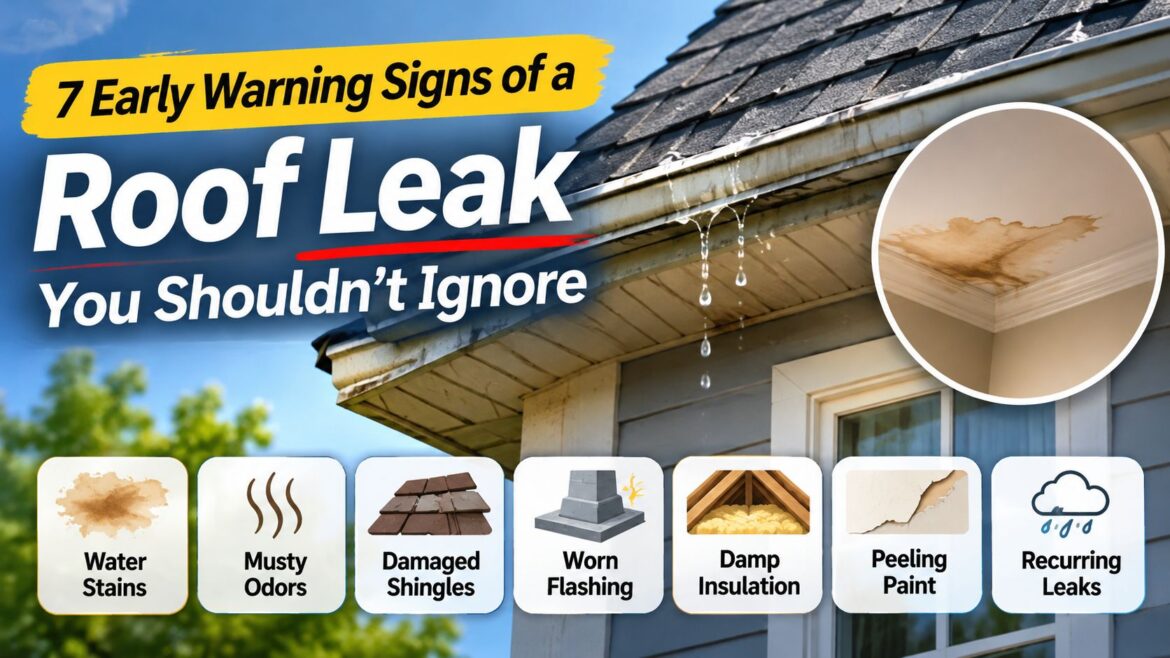
- Water stains on ceilings and walls – Brown marks or discoloration that darkens after rainfall.
- Musty smells in upstairs rooms or the attic – Persistent odors may indicate hidden moisture or mold growth.
- Cracked, displaced, or missing roofing materials – Damaged tiles or shingles can expose the underlying roofing system.
- Deteriorating flashing around skylights and vents – Loose, corroded, or damaged flashing can allow water to enter.
- Damp insulation or dark marks in the attic – Wet insulation and discolored roof components may indicate moisture intrusion.
- Peeling paint and bubbling drywall – Blistering paint, swelling, or soft drywall can signal water damage.
- Leaks that return during heavy rain – Recurring leaks may indicate roofing weaknesses that worsen during storms.
These signs do not always confirm a roof leak. Condensation, plumbing problems, and ventilation issues can cause similar symptoms. A qualified roofing contractor can identify the source and recommend appropriate repairs.
1. Water Stains on Ceilings and Walls
A brown ring on the ceiling is one of the more familiar signs of a roof leak, but water damage doesn’t always leave a neat, circular stain. Discoloration can spread unevenly across plaster or drywall, following joints and areas where moisture collects.
Pay particular attention to marks that appear after rain or gradually become darker with each storm. A stain that dries between periods of rainfall can still mean there’s an ongoing leak.
The position of the stain may be misleading. Water often follows the underside of roof decking, rafters, or other structural components before dripping onto the ceiling below. The damaged roofing material might be several feet away from the visible mark.
Painting over the discoloration might improve the appearance of the room, but it won’t stop water from entering. The source of the leak must be found before any interior repairs are made.
2. Musty Smells In Upstairs Rooms or the Attic
A persistent musty smell can be an early sign that moisture is collecting somewhere it shouldn’t, particularly in attics, upstairs bedrooms, and rooms that remain closed for long periods.
A leaking roof can introduce moisture into insulation, wood framing, and enclosed spaces. If these materials stay damp, conditions might encourage mold growth.
The Environmental Protection Agency (EPA) recommends drying water-damaged materials within 24 to 48 hours to help prevent mold growth.
South Florida’s humidity makes things more complicated because condensation and poor ventilation can look similar to a leaking roof. A musty smell doesn’t mean a roof leak, but one that becomes stronger after heavy rain deserves a closer look.
An experienced roofing contractor can see whether moisture is coming through the roof or if it’s something else.
3. Cracked, Displaced, or Missing Roofing Materials
South Florida homes often have tile or shingle roofs, and both can develop problems as they age.
Concrete and clay tiles can crack if something falls on them, or tiles can move during strong winds. Shingles can curl, lift, or lose their protective granules as they get old. Missing sections of roofing are a big deal because they leave the underlying system more exposed to the weather.
A cracked tile doesn’t automatically mean water is entering the house. Tile roofs generally rely on an underlayment beneath the tiles to provide additional protection against moisture. If that layer is damaged or deteriorating, however, water may reach the roof decking.
The same principle applies to shingles. Their effectiveness depends on the condition of the complete roofing system, including the materials underneath.
After a storm, pieces of roofing material on the ground or damage visible from inside the home may indicate a problem. Homeowners should leave closer roof assessments to professionals, as walking on roofing materials can cause further damage and presents a serious fall risk.
Depending on the condition of the roof, repairs may involve replacing individual tiles or shingles, repairing the underlayment, or addressing damage to surrounding materials.
4. Deteriorating Flashing Around Skylights and Vents
Some of the most troublesome roof leaks happen where the roof meets another structure.
These areas include chimneys, plumbing vents, skylights, roof-to-wall connections, and places where two roof sections join. They need additional protection because roofing materials alone cannot always prevent water from entering around openings and joints.
Flashing, usually made from metal, directs water away from these vulnerable connections. It can loosen, corrode, or separate from adjoining materials over time. Deteriorated wall flashing, particularly where a roof meets an exterior wall, can also allow rainwater to enter the roofing system
A failed seal around a skylight, for example, may allow rainwater to enter the ceiling cavity even when the surrounding tiles appear undamaged.
Leaks around these areas can be difficult to trace because the water may move along the framing before becoming visible indoors.
An experienced contractor can assess the flashing, surrounding roofing materials, and waterproofing details to establish where repairs are needed. Repeatedly applying sealant without identifying the underlying defect may leave the actual problem unresolved.
5. Damp Insulation or Dark Marks in the Attic
A roof leak may leave evidence in the attic long before it reaches the rooms below.
Moisture can darken wooden rafters or decking, leave marks where water has travelled, and soak into insulation. Depending on the extent of exposure, damp materials may also begin to deteriorate.
Wet insulation is a particular concern because moisture can reduce its effectiveness. Prolonged exposure can also affect wooden roof components and create conditions that encourage mold growth.
These symptoms aren’t exclusive to roof leaks. Condensation, poorly insulated air-conditioning ducts, A/C condensate drainage problems, and ventilation issues can also introduce moisture into an attic
The distinction matters because replacing damaged roofing materials won’t solve a condensation problem, just as improving ventilation won’t repair a leaking roof.
If moisture is suspected in the attic, a qualified professional can investigate without the homeowner having to enter confined or potentially unsafe spaces.
6. Peeling Paint and Bubbling Drywall
Water doesn’t always leave a visible stain. Sometimes the first sign appears in the finish of a wall or ceiling.
Paint may blister, peel or separate from the surface. Drywall can develop soft patches, swelling or cracks along its joints. These changes occur when moisture affects the materials beneath the finished surface.
Damage around ceiling corners, upper walls and skylight openings may be associated with water entering through the roof.
There are other possible explanations, including plumbing leaks, condensation and indoor humidity. The pattern of damage and its relationship to rainfall can help a professional narrow down the cause.
Replacing damp drywall or repainting a damaged ceiling before identifying the moisture source may result in the same problem returning.
Where roofing defects are responsible, the source of the leak should be repaired before the affected interior materials are restored.
7. Leaks That Return During Heavy Rain
An intermittent leak can be easy to dismiss. Water appears during a storm, stops once the rain passes, and the ceiling eventually dries.
Unfortunately, the disappearance of visible water doesn’t mean the opening has closed.
Some roofing defects only allow water through under particular conditions. Wind-driven rain may enter beneath lifted shingles or tiles, while prolonged downpours can expose weaknesses in flashing and other roof connections.
South Florida’s hurricane season runs from June through November, bringing an increased risk of strong winds and heavy rainfall. Existing weaknesses can become more troublesome when roofing systems are exposed to these conditions.
It can help to keep a record of when an indoor leak appears, where the water becomes visible and whether strong winds accompanied the rain. Photographs taken safely from inside the home can also help explain the problem to a contractor.
Even when the leak stops between storms, repeated moisture exposure can gradually damage insulation, wood and interior finishes.
When Does a Roof Leak Need Professional Attention?
A roof doesn’t have to be visibly deteriorating to develop a leak. Problems can originate in a small section of damaged underlayment, a failed flashing connection or roofing materials displaced during a storm.
The extent of the repair depends on where water is entering and how much of the surrounding roofing system has been affected. In some cases, replacing a few tiles or repairing flashing may be sufficient. More extensive damage may require work on the underlayment or roof decking.
A professional assessment should establish the likely source of the leak, the condition of the affected materials, and which repairs are appropriate. Interior damage may also need attention once the source of water intrusion has been addressed.
Addressing a Roof Leak Before It Spreads
The earliest signs of a leaking roof are often found indoors: a stain that darkens after rainfall, paint beginning to bubble, or a musty smell that won’t disappear. None of these symptoms proves that the roof is responsible, but each warrants attention.
Roof leaks can also remain hidden between storms, allowing moisture to affect materials beneath the roof covering without producing an obvious drip.
Early roof leak repair can limit further water intrusion and reduce the amount of damaged material that needs replacing. Where the source is uncertain, having a qualified roofing contractor investigate is the safest way to determine what needs fixing. Taking preventive steps to protect your home against water damage can help preserve its structural condition and reduce the risk of costly repairs.
Frequently Asked Questions About Roof Leaks
1. What are the first signs of a roof leak?
The first signs of a roof leak often include brown water stains on ceilings or walls, musty odors in upstairs rooms, peeling paint, and damp insulation in the attic. These symptoms may appear before water starts visibly dripping into the home.
2. Can a roof leak go unnoticed for a long time?
Yes. Roof leaks can remain hidden when water travels along roof decking, rafters, or insulation before becoming visible inside the home. Moisture may gradually damage wooden structures and insulation even when there are no obvious ceiling drips.
3. Why does my roof only leak when it rains heavily?
Some roofing defects allow water to enter only under specific weather conditions. Wind-driven rain can get beneath lifted shingles or displaced tiles, while prolonged downpours can expose weaknesses in flashing, roof joints, and other vulnerable areas.
4. Can a musty smell indicate a roof leak?
Yes. A persistent musty smell in an attic or upstairs room may indicate moisture entering through the roof. However, condensation, poor ventilation, and other moisture problems can produce similar odors, so the source should be investigated.
5. Can damaged roof shingles cause water leaks?
Yes. Cracked, lifted, curled, or missing shingles can expose the underlying roofing system to rainwater. However, the condition of the underlayment also matters because it provides an additional layer of protection against moisture.
6. Is a ceiling water stain always a sign of a roof leak?
No. Ceiling stains can also result from plumbing leaks, condensation, or other moisture problems. Their location and whether they become darker after rainfall can help a professional determine the likely source.
7. When should I call a roofing contractor for a roof leak?
Contact a qualified roofing contractor when you notice recurring water stains, damp attic insulation, damaged roofing materials, deteriorating flashing, or leaks that return during heavy rain. Early assessment can help identify the source and prevent further moisture damage.
Enjoy Worthview?
Add Worthview as a Preferred Source on Google to see more of our stories in Search.

John Famularo is the founder and president of ABC Roofing Corp., a family-owned roofing company based in Coral Springs, Florida. With nearly four decades of industry experience, he brings practical insight into residential and commercial roofing, roof maintenance, and the challenges of protecting South Florida properties. His approach emphasizes dependable service, employee care, and adapting to homeowners’ changing needs.