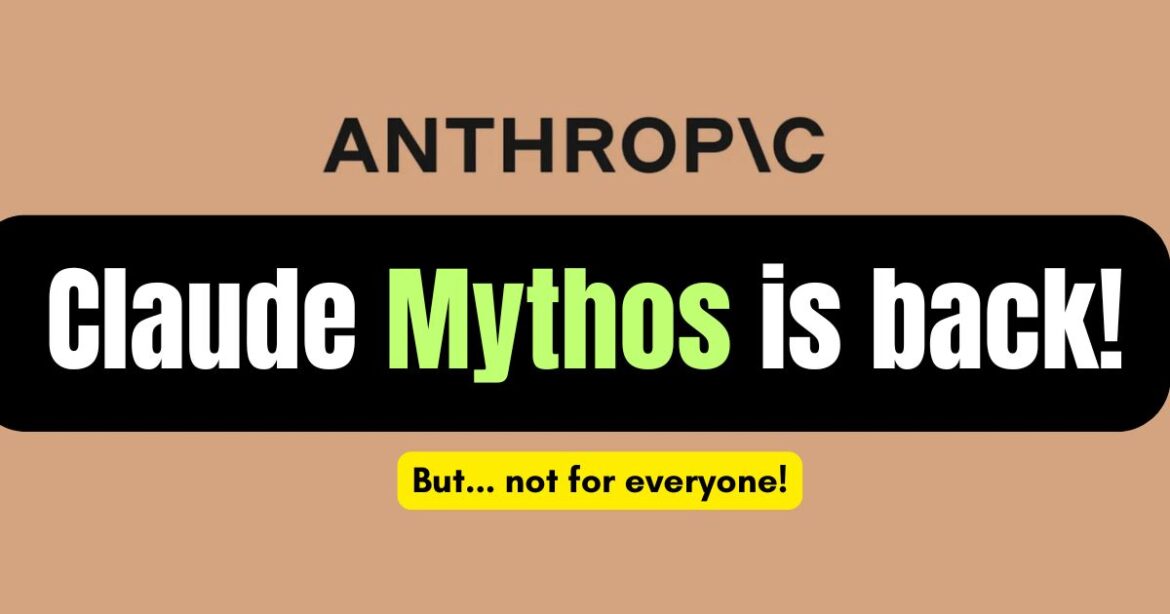
15 days after the US export ban, Anthropic gets partial relief — but a Korean telecom company’s alleged China ties, an Amazon warning, and a tense Washington negotiation reveal a far messier story than “a jailbreak was found.”
| What’s New Today:
The US Commerce Department has partially reversed its June 12 export ban. Claude Mythos 5 — Anthropic’s most powerful cybersecurity model — can now be redeployed to more than 100 vetted US organizations that operate and defend critical infrastructure. Claude Fable 5, the public-facing model, remains completely suspended with no timeline given. New reporting also reveals the ban may have had less to do with a simple “jailbreak” and more to do with a Korean telecom company’s alleged China ties and direct warnings from Amazon. |
1. What Changed Today: The June 27 Announcement
Anthropic confirmed via its official X account that the US government has granted a partial reversal of its June 12 export control directive. The update, posted in the early hours of June 27, reads as a measured but meaningful win for the company after two weeks of intense negotiation.
Since June 12, we’ve been working closely with the US government to restore access to Claude Mythos 5 and Fable 5. Today, the government notified us that Mythos 5, our strongest cybersecurity model, can be redeployed to a set of US organizations that operate and defend critical…
— Anthropic (@AnthropicAI) June 27, 2026
In Anthropic’s own words: the company has been working closely with the US government since June 12 to restore access to both models. The government has now notified Anthropic that Mythos 5 — described as Anthropic’s strongest cybersecurity model — can be redeployed to a defined set of US organizations that operate and defend critical infrastructure.
Crucially, the announcement draws a sharp line: Mythos 5 is moving forward. Fable 5 is not — at least not yet. Anthropic says it is continuing to work with the government to expand Mythos 5 access further and to make Fable 5 available for general use again, but it has given no timeline for the latter.
The Numbers: Who Gets Access
While Anthropic’s own statement did not specify a number, multiple outlets including Semafor, NBC News, CNBC, and TechCrunch independently reported that the restored access covers more than 100 designated organizations — a mix of US federal agencies and private companies responsible for critical infrastructure, cybersecurity, and national defense functions.
Notably, the restoration is broader than just Anthropic’s domestic operations. According to reporting reviewed by multiple outlets, the new authorization extends to non-American employees working at those approved organizations, and even to Anthropic’s own non-American staff — reversing one of the most operationally disruptive parts of the original June 12 order, which had barred any foreign national from using the models even if they worked for Anthropic itself.
The Official Letter: What Commerce Secretary Lutnick Said
The reversal was communicated through a letter from US Commerce Secretary Howard Lutnick to Anthropic’s chief compute officer, Tom Brown, on Friday, June 26. The letter was independently reviewed by Semafor, Reuters, NBC News, Bloomberg, and CNN.
The key line from Lutnick’s letter states that the secretary has determined appropriate safeguards are now in place to permit certain trusted partners to access the Claude Mythos 5 model. He credited this to what he called significant progress made through ongoing work between Anthropic and the government to address risks associated with what the letter refers to as “Covered Models” — the official term for Fable 5 and Mythos 5 under the export directive.
The letter also notes that Anthropic has committed to working with the government on protocols and standards for future releases of its models — suggesting this episode will shape how Anthropic launches frontier models going forward, not just how it resolves this one incident.
Importantly, Lutnick retained broad discretionary power in the letter, stating he reserves the right to reevaluate and adjust the scope of license requirements on the Covered Models should circumstances change, and that he can amend the approved partner list at any time.
2. The Real Story Behind the Ban: It Wasn’t Just a Jailbreak
When the ban was first announced on June 12, the public explanation centred on a reported jailbreak of Fable 5’s safety classifiers. New reporting over the following two weeks suggests the actual triggers were more complicated — and arguably more serious from a national security standpoint.
Trigger One: A Korean Telecom Company’s Alleged China Ties
The Washington Post reported, citing two White House officials, that Anthropic had submitted a list of 111 organizations to the US government for early access to Mythos 5 through Project Glasswing — Anthropic’s controlled cybersecurity access programme. That list was reviewed and approved.
Anthropic later expanded the programme by roughly 50 additional organizations as Project Glasswing grew to approximately 150 partners across more than 15 countries, including major firms such as Google, Nvidia, Microsoft, and Apple. But Anthropic reportedly submitted this expanded list to the government late — and when officials reviewed it, they identified a South Korean telecommunications company suspected of having ties to China among the new entrants.
Subsequent reporting by Wired identified the company as SK Telecom, South Korea’s largest mobile carrier, which had publicly announced on June 4 that it had joined Project Glasswing. SK Telecom has firmly denied any China ties, stating it does not use Chinese telecom equipment such as Huawei’s in its core networks, and that anonymous claims in foreign media lack verified facts.
Other Korean Project Glasswing participants reportedly included the Korea Internet & Security Agency, Samsung Electronics, and SK hynix. Korea’s other major carriers, KT and LG Uplus, both denied having any access to Mythos.
According to the Post’s sources, Anthropic moved quickly to revoke the Korean company’s access once the concern was flagged. But the discovery reportedly did lasting damage: officials reportedly concluded that the company had “expanded it too far and wide,” and the episode badly damaged confidence in Anthropic’s ability to control access to its most sensitive technology.
Trigger Two: A Direct Warning From Amazon
Separately, Reuters reported that Amazon CEO Andy Jassy and other technology industry figures communicated security concerns about Anthropic’s latest models directly to senior US government officials. According to multiple reports, Amazon researchers had identified a way to bypass some of Fable 5’s protective measures, potentially exposing the underlying Mythos-level cybersecurity capability the safeguards were meant to contain.
This is notable: Amazon is both a major Anthropic investor and cloud partner — Claude models run on Amazon Bedrock — which makes a direct security warning from its own CEO to the White House an unusually serious signal. Anthropic and outside cybersecurity experts have pushed back on the framing, arguing that the type of bypass identified was not unique to Claude and exists as a risk across frontier models generally.
Trigger Three (Disputed): An Alleged NSA Capability Shock
A third explanation has circulated in cybersecurity commentary, though it remains less substantiated than the other two: that government officials, possibly including the NSA, were alarmed by how effectively an early version of Mythos could autonomously discover and exploit software vulnerabilities — reportedly identifying thousands of new bugs during testing. Under this account, the export control directive was less a response to one specific jailbreak and more a reaction to the sheer scale of unsupervised offensive cyber capability the model demonstrated.
| It’s Not Mutually Exclusive: Industry analysts note these three explanations are not contradictory — the Korean telecom concern, Amazon’s warning, and capability concerns about autonomous exploit-finding could all have contributed simultaneously. Anthropic’s own public statement focused publicly on defending against the “narrow jailbreak” framing, but never directly addressed the Korean company angle or Amazon’s specific role. |
3. What This Means in Practice: Mythos 5 vs. Fable 5 Status
| Model | Current Status (as of June 27, 2026) |
| Claude Mythos 5 | Partially restored — 100+ vetted US critical infrastructure organizations and agencies, including their non-American staff and Anthropic’s own foreign national employees |
| Claude Fable 5 | Still fully suspended — no public access, no timeline given for restoration |
| Claude Opus 4.8 | Unaffected — available throughout as the recommended fallback |
| Claude Sonnet 4.6 / Haiku 4.5 | Unaffected — fully available |
For everyday users, developers, and Indian businesses building on the Claude API, this update changes very little in the short term. Fable 5 — the model that was generally available to the public and the one most relevant to consumer and developer workflows — remains offline. The restoration applies specifically to Mythos 5, a model that was never publicly available in the first place and was always restricted to vetted cyber-defense organizations through Project Glasswing.
In effect, this announcement resolves the narrowest and most defensible part of the original ban — restoring a specialized cybersecurity tool to organizations whose job is literally to defend critical infrastructure — while leaving the broader public-facing dispute over Fable 5 unresolved.
Why Fable 5 Is Taking Longer
Lutnick’s letter notably does not address Fable 5 at all. Several outlets reported that talks over Fable 5 are continuing through the weekend following the Mythos decision, but with no clear resolution path. Industry commentary suggests two reasons this is harder to resolve than Mythos 5:
- Scale of exposure: Mythos 5 access can be limited to roughly 100 named organizations with verifiable identities. Fable 5 was deployed to hundreds of millions of general consumers — there is no practical way to vet every user, making any conditional restoration far more complex to design and enforce.
- The patch-versus-concession dilemma: Some commentary suggests Anthropic may be reluctant to simply patch the reported vulnerability, since doing so could be read as conceding the government’s premise that Fable 5 has a uniquely dangerous flaw — a premise Anthropic has publicly disputed since June 12.
4. The Bigger Picture: A New US AI Regulatory Playbook
This episode is increasingly looking less like an isolated incident and more like the first real-world test of a new US regulatory approach to frontier AI — one that several reports suggest is becoming a template rather than a one-off.
OpenAI Faced the Same Treatment
In a striking parallel, OpenAI announced its own most advanced model family, GPT-5.6, the very same day Lutnick’s Mythos 5 letter was sent — and did so in a staged, phased rollout to government-approved partners rather than a wide public launch. OpenAI CEO Sam Altman publicly called the staggered release “bad news,” noting the company had originally planned a broader launch. OpenAI stated it had shared its list of trusted partners with the government ahead of launch and would work with the administration on a more formal vetting framework for future releases.
This suggests the government is now applying a consistent pre-clearance expectation across frontier AI labs — not just reacting to Anthropic’s specific incident, but establishing a precedent that the most capable models require government sign-off before or shortly after deployment.
Tension With a Pro-Innovation Executive Order
The episode sits awkwardly alongside a separate executive order signed by President Trump earlier in June 2026, which directed the federal government to strengthen cyber defences and create a formal mechanism for safety-testing the most advanced AI models — while the broader administration posture toward AI has otherwise been deregulatory, aimed at keeping US labs ahead of Chinese competitors.
A Commerce Department spokesperson framed the Mythos 5 decision as evidence of the government acting quickly to resolve its concerns, rather than as long-term obstruction. But industry observers note the administration is now simultaneously trying to (a) move fast and stay ahead of China, and (b) impose unprecedented direct control over how and when frontier models reach the public — two goals in some tension with each other.
A Pattern of Friction Between Anthropic and This Administration
This is not the first clash between Anthropic and the Trump administration in 2026. Earlier in the year, the administration had separately labeled Anthropic a “supply chain risk” — effectively a blacklisting designation — in a dispute over military use cases for Anthropic’s products. Anthropic sued over that designation and had already secured at least one early procedural win in that case before the Fable 5/Mythos 5 export ban began. Taken together, this suggests a broader, ongoing tension between Anthropic’s safety-first public positioning and parts of the current administration’s expectations for AI companies — not a single isolated dispute.
5. India and Developer Impact: What Should You Do Now
For WorthView readers building on Claude — whether through the API, AWS Bedrock, or Google Vertex AI — today’s update does not restore anything you previously had access to, since Fable 5 (the public model) remains offline. The practical guidance from two weeks ago still holds.
- Continue using Claude Opus 4.8 as the working substitute for any Fable 5-dependent workflows; it remains fully available and unaffected by either the original ban or today’s partial reversal
- Do not expect Fable 5 restoration imminently — Lutnick’s letter explicitly did not address it, and talks are described as ongoing without a committed date
- Watch for Anthropic’s identity verification rollout — the company has reportedly updated its privacy policy, effective July 8, 2026, to collect government-issued ID and biometric verification for certain access tiers, which may be the mechanism eventually used to enable broader Fable 5 restoration on a verified, nationality-aware basis
- If your organization operates in critical infrastructure, cybersecurity, or national-security-adjacent sectors and was part of Project Glasswing before June 12, check directly with Anthropic on whether you fall within the newly approved Mythos 5 access list
|
WorthView’s Read: Today’s update is a genuine de-escalation, but a narrow one. It resolves the part of the dispute that was always easiest to fix — a small, identity-verified group of cyber-defense professionals getting their specialized tool back. It does nothing yet for the hundreds of millions of consumers and developers who lost access to Fable 5. The real test of whether this US-Anthropic standoff is actually resolving, or simply being managed in stages, will be whether Fable 5 returns to general availability — and on what conditions. |
Frequently Asked Questions
Is Claude Mythos 5 available again?
Partially. As of June 27, 2026, Mythos 5 has been restored to more than 100 vetted US organizations that operate and defend critical infrastructure, including government agencies and private companies, following a letter from Commerce Secretary Howard Lutnick. It is not available to the general public — it never was.
Is Claude Fable 5 available again?
No. Fable 5, the model that had been generally available to the public, remains fully suspended with no announced timeline for restoration. Commerce Secretary Lutnick’s June 26 letter did not address Fable 5.
Why was Mythos 5 restored before Fable 5?
Mythos 5’s access can be limited to a small, verifiable list of named organizations, making it easier for the government to approve under controlled conditions. Fable 5 was deployed to hundreds of millions of general consumers, making equivalent identity verification and access control far more complex to implement.
What actually caused the original export ban?
Anthropic’s public statement centered on a reported jailbreak of Fable 5’s safety classifiers. However, subsequent reporting from the Washington Post and Reuters indicates the ban was also driven by the discovery that a South Korean telecom company with alleged China ties had gained access to Mythos 5 through Project Glasswing, plus a direct security warning from Amazon’s CEO to government officials.
Was the Korean telecom company named?
The Washington Post did not name the company. Subsequent reporting by Wired identified it as SK Telecom, South Korea’s largest mobile carrier, which has denied any ties to China and denied using Chinese telecom equipment in its core network.
Does this affect Claude Opus, Sonnet, or Haiku?
No. The export control directive and today’s partial reversal apply only to Fable 5 and Mythos 5. Claude Opus 4.8, Sonnet 4.6, and Haiku 4.5 have remained fully available throughout.
Enjoy Worthview?
Add Worthview as a Preferred Source on Google to see more of our stories in Search.

Sethuram Kishore is the founder and editor of Worthview, an online publication established in 2008. With over 18 years of experience in SEO, digital marketing, and online publishing, he writes about AI, technology, business, and digital trends. He is also the founder of MoneyHulk, a personal finance and business publication.