Wheel hub and bearing repairs can become time-consuming when corrosion, tight fittings or difficult access complicate removal and installation. Using the right tools helps you work more efficiently while reducing the risk of damage to surrounding components. From specialised pullers to precision installation equipment, selecting tools suited to each stage makes it easier to complete repairs accurately without unnecessary disassembly or repeated adjustments.
Hub Pullers and Drive Shaft Pushers Ease Removal
Removing a seized wheel hub or drive shaft can require considerable force, particularly when corrosion has developed between mating surfaces. Dedicated hub pullers provide controlled extraction force, helping you separate components without excessive hammering or damaging the steering knuckle.
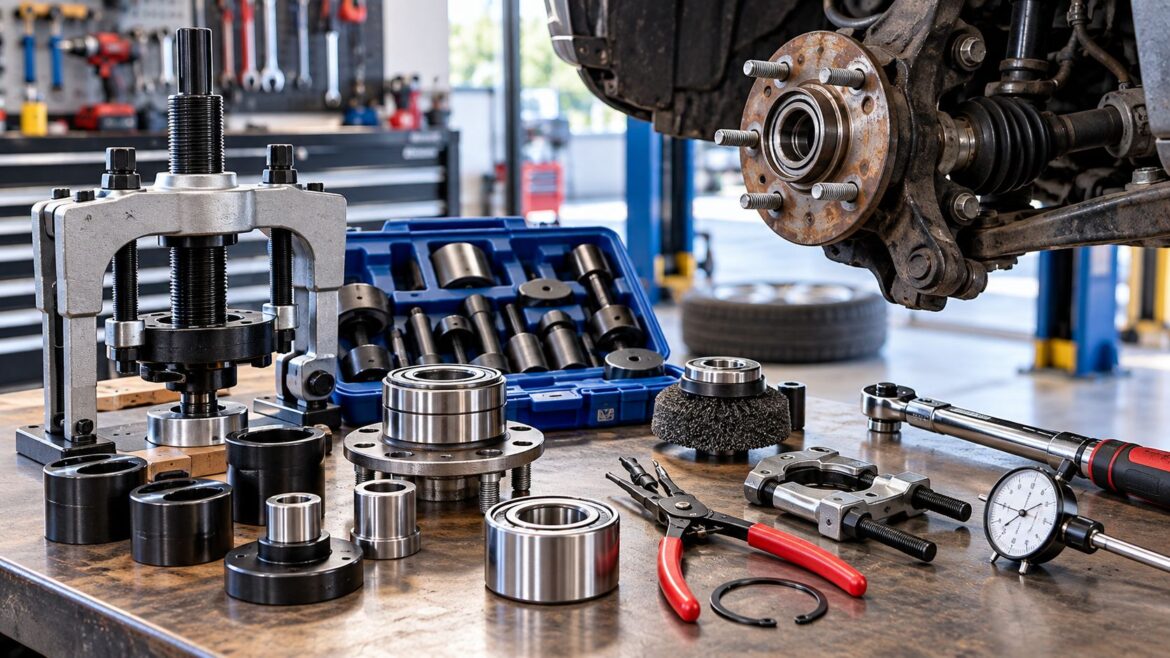
A drive shaft pusher can also help release stubborn splined connections while protecting exposed threads. Purpose-built options, including Mueller automotive tools for professional workshops, offer specialised equipment for handling these removal challenges. Matching the tool’s mounting configuration and capacity to the vehicle helps you apply force accurately and avoid unnecessary strain on surrounding parts.
Bearing Press Kits Control Installation Force
Press-fit wheel bearings require careful handling because incorrect loading can damage their internal components. Bearing press kits with interchangeable sleeves, adaptors and support plates allow you to remove and install bearings while maintaining alignment.
When pressing a bearing into a steering knuckle, the installation force should act on the outer bearing race. Pressing the hub into the bearing instead requires support against the inner race. Using the appropriate adaptor prevents force from passing through the rolling elements, which could damage the bearing before the vehicle returns to service.
Mechanical spindle kits can be practical when you need to work with the knuckle in position, provided the application permits it. A hydraulic workshop press offers another option when the assembly has been removed, particularly where greater controlled force is necessary.
Hub Grinders Prepare Contact Surfaces
Corrosion on wheel hub mounting faces can prevent brake discs and wheels from seating evenly. Dedicated hub grinders and cleaning attachments help remove surface rust and accumulated deposits without relying on prolonged manual scraping.
A properly prepared mounting face also makes it easier to identify pitting, distortion or other damage that might affect assembly. Choose cleaning attachments designed for the surface being treated, and avoid removing sound metal or altering critical dimensions.
Bearing bores require particular care. Fine cleaning tools can remove minor contamination, but aggressive grinding may affect the interference fit needed to retain the bearing securely.
Circlip Pliers and Bearing Separators Simplify Removal
Some press-fit bearings are retained by circlips seated inside the steering knuckle. Suitable circlip pliers allow you to compress or expand these retaining rings without damaging their grooves. Long-reach or angled designs are especially useful when access is restricted.
Bearing separators are equally valuable when an inner bearing race remains attached to the hub after removal. Their tapered edges can grip behind the race, providing a secure position for applying extraction force.
Using a separator with a compatible puller helps you avoid cutting or prying against precision mounting surfaces. Check the available clearance and support the component correctly before applying force.
Torque Wrenches and Measuring Tools Verify Assembly
Accurate tightening is essential once the replacement bearing and hub components are installed. A calibrated torque wrench helps you tighten axle nuts and mounting fasteners according to the vehicle manufacturer’s specifications.
Incorrect tightening can affect bearing preload or clamping force, potentially shortening bearing life. Where the manufacturer specifies a replacement axle nut or a particular tightening sequence, follow those instructions rather than relying on previously used hardware.
Measuring tools also support final checks. A dial indicator can help you measure axial end play where the service procedure requires it, while visual inspection and rotation checks can reveal seating or alignment problems before reassembly is completed.
Better Tool Selection Means More Reliable Repairs
Efficient hub and bearing work depends on using equipment that matches the component and the operation. Pullers reduce removal difficulties, press kits protect replacement bearings, and cleaning and measuring tools support accurate assembly. By selecting suitable tools and following vehicle-specific repair procedures, you can reduce avoidable delays, protect components and achieve more consistent workshop results.
Enjoy Worthview?
Add Worthview as a Preferred Source on Google to see more of our stories in Search.

Worthview Editorial Team is the shared byline for content created collaboratively by Worthview’s editors and contributors. Since 2008, we’ve published thousands of articles across technology, AI, finance, health, home, travel, and lifestyle. Our editorial process emphasizes original research, reputable sources, regular content updates, and clear attribution. Articles covering higher-trust topics, including health and finance, may also undergo review by qualified subject-matter experts.