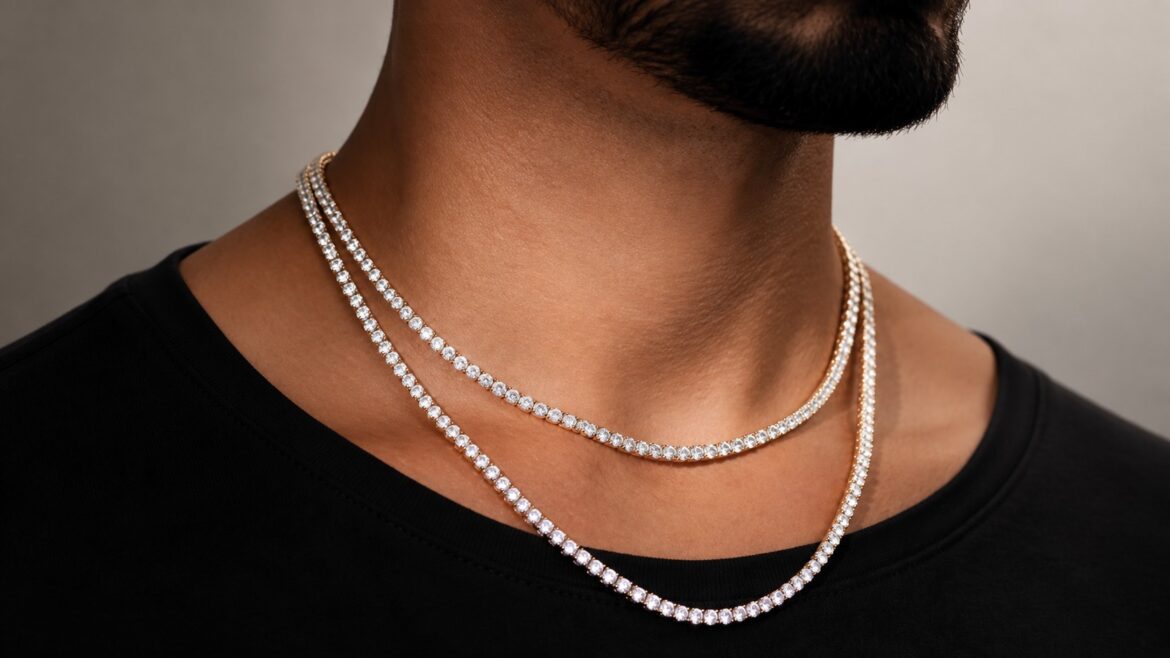
Few pieces in the world of fine jewelry command the same enduring respect as the diamond tennis chain. Rooted in a legacy of elegance and refined craftsmanship, this style of necklace has transcended decades of shifting trends to remain a cornerstone of luxury adornment. Whether worn alone as a statement piece or layered with other necklaces for a more contemporary look, the diamond tennis chain occupies a unique position — simultaneously classic and modern, understated and bold. Understanding what makes this piece so persistently desirable requires a closer look at its construction, its cultural significance, and the quality standards that separate a truly exceptional chain from a merely adequate one.
Key Takeaways
- Diamond tennis chains feature a continuous row of individually set diamonds that creates an uninterrupted line of brilliance.
- The style became associated with tennis after Chris Evert’s famous diamond bracelet incident at the 1987 U.S. Open.
- Diamond consistency, cut, color, clarity, setting quality, and metal all influence the appearance and durability of a tennis chain.
- Tennis chains can be worn alone or layered with other necklaces and can work for both formal and everyday looks.
- When buying one, consider diamond quality, metal purity, chain length, total carat weight, setting security, and certification.
- Lab-grown diamonds and advances in diamond production have expanded the range of options available to buyers.
The Origins of an Iconic Style
The name “tennis chain” traces back to a now-legendary moment in sports history. During the 1987 U.S. Open, professional tennis player Chris Evert lost her diamond bracelet mid-match and requested the game be paused until it was recovered. The incident captured public imagination, and the style of jewelry she was wearing — a continuous line of individually set diamonds — became permanently associated with the sport and the moment. Over time, jewelers extended this concept from the wrist to the neckline, creating what we now recognize as the diamond tennis chain.
What began as a bracelet style evolved into one of the most sought-after necklace formats in fine jewelry. The appeal lies in its structural simplicity: a uniform row of diamonds, each set in a consistent mount, creating an unbroken line of brilliance that catches light from every angle. This design philosophy — where the stones do the speaking — is precisely why the tennis chain has never gone out of fashion.
Construction and Craftsmanship: What Sets Quality Apart
Not all diamond tennis chains are created equal. The difference between a chain that dazzles and one that disappoints often comes down to the precision of its construction. Each diamond in a tennis chain must be individually set, typically in a prong, bezel, or channel setting, and the uniformity of these settings across the entire length of the chain is a direct reflection of the jeweler’s skill. Even minor inconsistencies in stone size, setting depth, or spacing can disrupt the visual flow that makes this piece so striking.
The metal used in the chain also plays a critical role. High-quality tennis chains are typically crafted in 14k or 18k gold — white, yellow, or rose — or in platinum. The choice of metal affects not only the aesthetic but also the durability and long-term wearability of the piece. A well-constructed tennis chain should flex naturally with movement while maintaining the security of each stone setting.
Understanding Diamond Quality in Tennis Chains
When evaluating the diamonds within a tennis chain, the traditional four Cs — cut, color, clarity, and carat weight — remain the essential framework. However, in the context of a tennis chain, cut and color take on heightened importance. Because the stones are displayed in a continuous line, any variation in brightness or hue becomes immediately visible. A chain set with diamonds of inconsistent color grades will appear uneven, undermining the seamless brilliance that defines the style. For a thorough breakdown of what to look for when selecting quality diamonds, understanding these grading criteria is an essential first step before making any significant purchase.
The Cultural Staying Power of Diamond Tennis Chains
Part of what makes the diamond tennis chain so enduring is its remarkable versatility across cultural contexts. In the world of high fashion, it appears on runway models and editorial spreads as a symbol of refined luxury. In hip-hop and streetwear culture, it has been embraced as an emblem of success and self-expression, often worn in multiples or in heavier, more dramatic weights. This cross-cultural appeal is rare in fine jewelry and speaks to the design’s fundamental strength — it communicates value and beauty in a language that transcends any single aesthetic tradition.
Celebrities, athletes, and style icons across generations have worn tennis chains as a signature accessory, reinforcing their status as a timeless investment rather than a passing trend. This cultural longevity is not accidental — it is the natural result of a design that prioritizes the intrinsic beauty of diamonds above all else.
Innovation in Diamond Production and Its Impact on Tennis Chains
The jewelry industry is not static, and the way diamonds are sourced and produced has undergone significant transformation in recent years. Lab-grown diamonds, advances in cutting technology, and new ethical sourcing standards have all reshaped what consumers can expect from fine jewelry. These developments have made high-quality diamonds more accessible without compromising on the brilliance or structural integrity that defines a premium tennis chain. To understand how these shifts are reshaping the industry, exploring the future of jewelry innovation in diamond production offers valuable perspective on where the market is headed and how buyers can benefit.
Leon Diamond: Precision Craftsmanship in Every Link
When it comes to sourcing a tennis chain that meets the highest standards of craftsmanship and diamond quality, the reputation of the jeweler matters enormously. Leon Diamond has built a distinguished name in the fine jewelry space by prioritizing precision setting, consistent stone grading, and exceptional customer service. Their collection reflects a deep understanding of what makes a tennis chain truly exceptional — not just the diamonds themselves, but the way each stone is secured, aligned, and presented within the overall design. For buyers who take their jewelry seriously, Leon Diamond represents a benchmark of quality that is difficult to overlook.
How to Style a Diamond Tennis Chain
One of the most compelling arguments for investing in a diamond tennis chain is its extraordinary styling flexibility. Worn alone against a simple neckline, it creates an effect of effortless sophistication. Layered with longer chains or pendants, it anchors a more complex, fashion-forward look. It transitions seamlessly from formal occasions — black-tie events, weddings, galas — to elevated everyday wear, making it one of the most cost-effective investments in a jewelry wardrobe when measured by versatility and longevity.
The weight and length of the chain also offer significant room for personalization. Lighter chains with smaller stones project quiet elegance, while heavier chains with larger diamonds make an unmistakable statement. Most jewelers offer a range of carat total weights and chain lengths, allowing buyers to select a piece that aligns with both their aesthetic preferences and their budget.
Making the Investment: What Buyers Should Know
For those considering their first diamond tennis chain — or adding to an existing collection — the most important guidance is to prioritize quality over quantity. A single, well-crafted chain with consistently graded diamonds will outperform a heavier chain with inferior stones in both appearance and long-term value. Request certification for the diamonds where possible, ask about the metal purity, and examine the setting style to ensure it offers both security and visual elegance.
The diamond tennis chain is not merely a piece of jewelry. It is a considered investment in lasting beauty, a wearable expression of refined taste, and a piece that — when chosen wisely — will remain as relevant and striking decades from now as it is today. In a market filled with fleeting trends, that kind of enduring value is genuinely rare.
The Context Paragraph: Bringing It All Together
For those ready to explore a curated selection of expertly crafted pieces, the collection of diamond tennis chains at Leon Diamond offers an exceptional starting point. Each piece in the collection reflects the brand’s commitment to precision craftsmanship, consistent diamond grading, and designs that honor the timeless appeal of this iconic jewelry style. Whether you are purchasing your first tennis chain or seeking to upgrade an existing piece, the selection provides a range of options that balance quality, aesthetics, and value with genuine expertise behind every link.
Conclusion
The diamond tennis chain endures because it earns its place in every era. Its design is honest — there is nowhere to hide inferior craftsmanship or inconsistent stones, which means a truly beautiful tennis chain is a genuine achievement of skill and quality. As the jewelry industry continues to evolve through innovation in diamond production and shifting consumer values, the tennis chain remains a constant: a piece defined by brilliance, precision, and an elegance that requires no explanation. For the discerning buyer, it remains one of the most rewarding investments in fine jewelry available today.
Frequently Asked Questions
What is a diamond tennis chain?
A diamond tennis chain is a necklace featuring a continuous row of individually set diamonds. The stones are arranged closely together to create an uninterrupted line of brilliance around the neckline.
Why is it called a tennis chain?
The name is associated with a famous 1987 U.S. Open incident involving tennis player Chris Evert. During a match, her diamond bracelet came loose, and she asked for play to be paused while it was recovered. The incident helped popularize the connection between the continuous diamond jewelry style and tennis.
What should you look for when buying a diamond tennis chain?
Look at the 4Cs—cut, color, clarity, and carat weight—as well as the setting, metal purity, chain length, and overall construction. Consistency between the individual diamonds is especially important because differences in brightness or color can be noticeable across the continuous design.
Which metals are used for diamond tennis chains?
Diamond tennis chains are commonly made from 14k or 18k gold in white, yellow, or rose gold, as well as platinum. The choice of metal affects the chain’s appearance, durability, and wearability.
Can you wear a diamond tennis chain every day?
A well-constructed tennis chain can be suitable for regular wear. Secure diamond settings and a flexible construction are important for maintaining the chain’s durability during movement and everyday use.
Can you layer a diamond tennis chain with other necklaces?
Yes. A tennis chain can be worn on its own for a simple look or layered with longer chains and pendants for a more contemporary style.
Do diamond tennis chains come in different lengths and weights?
Yes. They are available in different chain lengths and total carat weights. Lighter chains with smaller stones create a more understated look, while heavier chains with larger diamonds make a stronger statement.
Are lab-grown diamonds used in tennis chains?
Yes. Lab-grown diamonds are among the developments that have expanded the choices available in diamond jewelry. Advances in diamond production have also made high-quality diamonds more accessible.
Enjoy Worthview?
Add Worthview as a Preferred Source on Google to see more of our stories in Search.

Worthview Editorial Team is the shared byline for content created collaboratively by Worthview’s editors and contributors. Since 2008, we’ve published thousands of articles across technology, AI, finance, health, home, travel, and lifestyle. Our editorial process emphasizes original research, reputable sources, regular content updates, and clear attribution. Articles covering higher-trust topics, including health and finance, may also undergo review by qualified subject-matter experts.